


Vaginal dryness makes sexual intimacy uncomfortable with friction, itching, burning, or pain. It occurs when vaginal tissues lose their softness, often due to low estrogen levels. About 1 in 5 women face it before Menopause, and over half after. It can also come from pregnancy, breastfeeding, some medicines, Chemotherapy, Sjögren’s syndrome, or harsh soaps.
Stress or hormonal shifts can also cause it. No need to worry, it’s often simple to fix. You do not always need to jump straight to medical treatment. This guide provides you with four easy tips, from daily care and natural remedies to long-term habits, to help you feel comfortable again. It also tells you when to seek medical help for doctor-guided options to restore moisture and comfort.
Tip 1. Start with safe daily at-home care
Now that you recognize the signs of dryness, it’s time to gently nurture your body. Many women find relief with simple daily habits before needing medical treatment. These include using vaginal moisturizers, which provide long-term moisture when used every few days.
Lubricants offer immediate relief during sex and are typically water- or silicone-based. Natural options, such as coconut oil and aloe vera, as well as staying adequately hydrated, can also help.
1. Follow gentle lifestyle care
Start caring for your vaginal skin by supporting it from the inside and outside. Adopt these daily habits to restore comfort naturally:
- Drink plenty of water throughout the day.
- Wear breathable cotton underwear.
- Avoid scented soaps, sprays, and douches.
- Choose loose-fitting bottoms.
- Limit very hot baths or showers.
- Reduce caffeine and alcohol intake.
These habits help your skin retain moisture and reduce irritation. If discomfort persists, topical support can provide an additional layer of relief.
2. Use safe vaginal moisturizers and lubricants
Topical products, such as moisturizers and lubricants, work directly where dryness occurs and are excellent for restoring softness and flexibility.
Use external products safely by following these simple actions:
- Choose fragrance-free, water-based vaginal moisturizers.
- Apply externally around the vaginal opening.
- Use lubricants before intimacy, which also helps increase libido.
- Avoid petroleum or oil-based products internally.
- Reapply moisturizers 2-3 times weekly.
Tip: Apply a water-based vaginal moisturizer externally after bathing, when the skin is slightly damp. This helps seal in hydration and improves softness over time.
Tip 2. Try natural remedies alongside daily home care
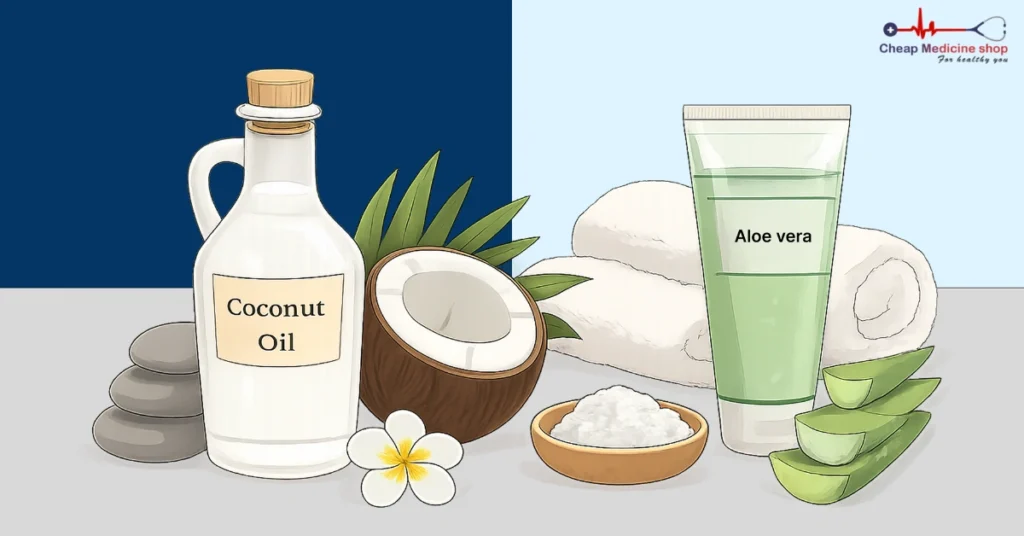
If you prefer more natural solutions, there are gentle options that you can layer alongside your routine for added comfort. These will be helpful if vaginal dryness is impacting orgasm during intimacy.
Use plant-based and nutritional support to gently calm and nourish your skin. Try these safe, natural support options:
- Apply a thin layer of pure coconut oil externally.
- Use medical-grade aloe vera gel on external skin.
- Increase your intake of Omega-3 fatty acids in your diet.
- Add flaxseeds and healthy fats to meals.
- Practice stress-reduction techniques, such as yoga or deep breathing.
These methods gently support skin comfort and help reduce vaginal dryness.
If you don’t see improvement after a few weeks of at-home care, including natural remedies, it is time to consider medical guidance. Seeking medical attention is the safest next step rather than forcing stronger self-treatments.
Tip 3. Use medical treatments only with a doctor’s guidance

If home and natural care aren’t enough, medical treatments can restore moisture safely. After evaluating you with the help of diagnostic measures, such as hormonal blood tests, doctors may suggest scientifically supported treatments. Follow doctor-guided therapies, which typically include Estradiol products, such as:
- Vaginal estrogen creams
- Estrogen vaginal tablets
- Vaginal estrogen rings
- Non-hormonal prescription moisturizers
These treatments are scientifically proven. Research confirms local Estrogen therapy improves vaginal tissue health and dryness.
Tip 4. Adopt habits that maintain long-term vaginal comfort

Once moisture improves, daily self-care helps prevent dryness from returning. Maintain your body’s natural balance with steady care.
Build these habits that help maintain moisture in your routine for lasting comfort:
- Stay hydrated: Drinking plenty of water throughout the day supports your body’s overall fluid balance, which directly aids vaginal tissue hydration from the inside out. Drinking enough water helps your body make its natural wetness and keeps vaginal tissues soft and flexible. Aim for at least 8 glasses daily to sustain this benefit.
- Manage stress: Chronic stress elevates cortisol (a hormone that helps regulate metabolism, immune response, and stress management), which disrupts estrogen levels and reduces vaginal moisture production. Techniques like deep breathing or meditation lower stress hormones, helping restore hormonal balance for sustained lubrication. Prioritizing mental wellness keeps your body resilient against dryness triggers.
- Stay physically active: Regular exercise, such as walking or yoga, improves blood circulation to the pelvic area, enhancing tissue oxygenation and natural moisture retention. It also boosts estrogen circulation and reduces inflammation linked to sedentary lifestyles. Aim for 30 minutes most days to support long-term vaginal health.
These habits keep your tissues healthy and resilient over time. Consistency helps your body stay comfortable and responsive.
As you try different gentle remedies and doctor-recommended options step by step, you’ll start to feel more in control of your comfort. Little changes can make a big difference over time. You can build that soft, relaxed feeling again. It isn’t gone, it just needs a bit of patience and care.
When to consult a doctor

Many women worry that dryness always means a serious problem. That isn’t true. Mild dryness comes and goes naturally. Medical care becomes helpful when symptoms don’t improve.
Observe your body and take action when symptoms persist. Look for these clear signs that a doctor visit is helpful:
- Dryness lasting more than a few weeks, for example, 4 to 6 weeks
- Repeated pain during intimacy
- Light bleeding or spotting
- Strong burning or itching
- Unusual discharge or odor
A doctor can only prescribe treatments after seeing you in person. This visit helps determine whether hormonal issues like Sjögren’s Syndrome, infections such as Vaginitis, or skin conditions are contributing to the problem.
Frequently Asked Questions
What to drink for vaginal dryness?
You can drink plenty of water to help your body stay moist. Try coconut water, milk, and herbal tea. Eat juicy fruits like watermelon and oranges. These drinks help keep your private area soft, healthy, and comfortable.
How to treat vaginal dryness during pregnancy?
You can treat vaginal dryness during pregnancy by drinking more water and using doctor-approved water-based lubricants. Wear soft cotton underwear, avoid scented soaps, and do not douche. Always talk to your doctor before using any cream or product.
Can birth control pills cause vaginal dryness?
Yes, some hormonal birth control lowers estrogen and can dry out tissues. Switch to non-hormonal options like a copper Intrauterine Device (IUD) if approved by your doctor. Symptoms are often reversible after stopping hormonal birth control.
How to treat vaginal dryness due to Sjogren’s?
Vaginal dryness due to Sjögren’s syndrome is commonly managed with regular use of vaginal moisturizers and lubricants. In some cases, a healthcare provider may recommend low-dose topical estrogen. Supportive measures include adequate hydration, a balanced diet, and ongoing medical evaluation to control symptoms.
Is vaginal dryness a normal part of aging?
Yes, vaginal dryness becomes more common with age, especially around Menopause, but it is not something you must accept as normal or permanent. Many women experience changes at different life stages, and support options are available at any age.
How long does it take for vaginal dryness treatments to work?
Relief timelines vary depending on the number of days treatments take to work. Some feel improvement within days, while others need a few weeks. Daily moisturizers may take 1 to 2 weeks to show results, while natural remedies typically take 2-4 weeks. Prescription options often work faster with medical guidance.
Cheap Medicine Shop only refers to credible, authoritative sources for our content. If you’re curious about how we ensure the integrity of our content, we encourage you to read our Content Information Policy.