

Sildenafil, which is highly recognized for treating Erectile Dysfunction (ED) in men, is currently being studied for its potential advantages in women experiencing sexual arousal problems. While Sildenafil is not FDA-approved for Female Sexual Dysfunction (FSD), research suggests that it can enhance vaginal blood flow, sensitivity, and overall sexual response in some women. It is particularly effective for those with Female Sexual Arousal Disorder (FSAD).
Additionally, doctors prescribe it off-label to women when hormonal changes, Menopause, medical issues, or psychological factors reduce arousal. However, its efficiency varies from person to person, and precautions must be taken before use.
This article will highlight how Sildenafil for women works, its possible benefits, and the risks associated with its use in women.
How does Sildenafil for women work?
Sildenafil, a Phosphodiesterase Type 5 (PDE5) inhibitor, functions by blocking the enzyme PDE5, which degrades cyclic Guanosine Monophosphate (cGMP). cGMP is a substance that relaxes, broadens smooth muscles and promotes blood flow.
In men, this mechanism encourages blood flow to the penis, supporting erectile function. In women also Sildenafil works in the same way. A research article published in the journal Urology in 2002 suggests that the PDE5 enzyme is also found in the tissues of the female vagina.
These tissues require good blood flow to promote swelling, lubrication, and sexual pleasure. By blocking PDE5, Sildenafil raises cGMP levels. This, in turn, relaxes smooth muscles and boosts blood flow to the vaginal tissues.
The enhanced genital blood flow boosts clitoral sensitivity, increases lubrication, and improves arousal in women. While individual outcomes vary, this mechanism shows that Sildenafil may benefit some women by treating the physical components of reduced sexual desire rather than the hormonal or psychological factors.
Save up to 90% on your medicine bills

Lovegra 100 Mg

Femalegra 100 Mg

Super Lovegra Tablet
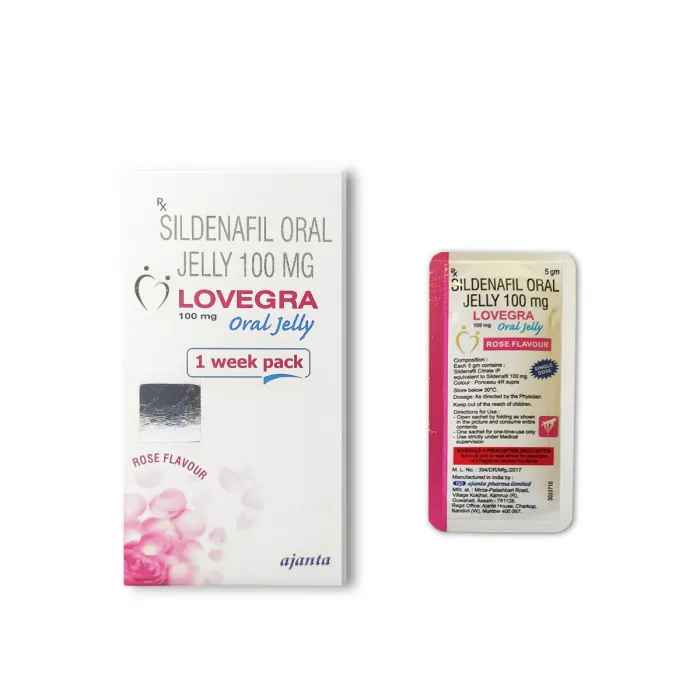
Lovegra Oral Jelly
Sildenafil for Female Sexual Dysfunction
Although not FDA-approved for women, Sildenafil is occasionally used off-label to treat Female Sexual Dysfunction that involves persistent issues like low sexual desire, arousal difficulties, orgasm problems, or pain during sex. However, it primarily addresses Female Sexual Arousal Disorder, which includes concerns such as Low Libido or sexual desire, arousal problems, orgasm difficulties, or discomfort during sex.
As per a clinical trial published by The Journal of Urology in 2003, Sildenafil appears to function best in a specific population, such as postmenopausal women with FSAD or accompanied Hypoactive Sexual Desire Disorder (HSDD). In this case, dosages of 25-100 mg significantly enhanced arousal, orgasm, lubrication, and satisfaction.
Additionally, Sildenafil is also helpful for women with antidepressant-induced sexual side effects, such as those caused by Selective Serotonin Reuptake Inhibitors (SSRIs). Sildenafil at dosages between 50 mg and 100 mg leads to reductions in sexual side effects in a treatment group of 98 premenopausal women. These side effects include decreased sexual desire and decreased vaginal lubrication,
However, more research is needed to establish strong evidence on the effects of Sildenafil in women.
Besides its off-label use for FSAD, Sildenafil has been approved by the FDA under the brand name Revatio to treat Pulmonary Arterial Hypertension (PAH) in both men and women by relaxing blood arteries. PAH is a severe medical condition in which the blood arteries in the lungs constrict, increasing pressure and requiring the heart to work harder to pump blood.
Risks and side effects
Sildenafil is usually well-tolerated in women when used to treat FSAD. However, women should be mindful of risks and side effects before taking it. Common side effects include:
- Headaches
- Nasal congestion
- Dizziness
- Indigestion
- Nausea
These side effects are similar to those in men and are mild and temporary. In some rare cases, women might experience cardiac issues, irregular heartbeat, or chest discomfort. If any adverse effects persist or worsen, contact a certified healthcare expert.
Necessary precautions
Women using Sildenafil should take the following necessary precautions to guarantee its safety and effectiveness:
- The medicine should only be used under medical supervision, since it is not officially approved for FSAD and may not treat all underlying problems.
- A thorough health examination is required to rule out cardiovascular problems, Low Blood Pressure, and medication interactions.
- Women should avoid Sildenafil if they are on nitrates, alpha-blockers, or certain blood pressure medications since the combination can result in a severe decrease in blood pressure.
- Alcohol consumption should be reduced since it could worsen dizziness and diminish the effectiveness of the medication.
- Women with kidney or liver issues, eyesight or hearing impairments, or who are pregnant or breastfeeding should seek medical guidance before use.
- Avoid exceeding the Sildenafil dose on your own to prevent accidental overdose or serious side effects.
Alternative medications to Sildenafil for women
Flibanserin, Bremelanotide, and Lovegra are the three alternative medications to Sildenafil for women, specifically for FSAD and HSDD.
Flibanserin
Marketed under the brand name Addyi, Flibanserin is a daily oral medicine approved for the treatment of decreased sexual desire in premenopausal women, as well as some postmenopausal women up to the age of 65. It works by regulating brain chemicals like serotonin and dopamine to gradually boost desire. However, it takes constant usage over several weeks and is only approved for women with HSDD.
Bremelanotide
It is a self-administered subcutaneous (under the skin) injection that is taken on demand before sexual activity. Sold under the brand Vyleesi, Bremelanotide is an approved Sildenafil alternative for premenopausal women with poor sexual drive. It acts by stimulating melanocortin receptors to increase sexual desire, with effects visible within hours and lasting up to a day.
Lovegra
Lovegra, often known as female Viagra, is a Sildenafil-based medication, marketed to help women with FSAD. It works by increasing blood flow to the genital area, which can improve sensitivity, natural lubrication, and responsiveness to sexual stimulation when taken before intimacy. However, unlike Flibanserin and Bremelanotide, its usage in women is not approved by major authorities such as the FDA.
Due to a lack of evidence of its efficacy and safety, it is advisable to consult a certified healthcare provider before its safe and effective usage.
Conclusion
Although not approved by the FDA, Sildenafil can be used off-label to address sexual health issues, particularly Female Sexual Arousal Disorder in some women. It can be quite helpful for women experiencing difficulties with sexual arousal, particularly those with physical causes like poor blood flow or lubrication problems.
It works by boosting blood flow to the vaginal region, potentially improving sensitivity, lubrication, and the ability to achieve orgasm. While clinical trials show mixed outcomes, many women, particularly those who have experienced postmenopausal symptoms or who have had sexual adverse effects from antidepressants, have benefited from its usage.
Sildenafil for women is generally considered safe when used under the guidance of a medical professional. The side effects are usually mild and temporary, including headache and dizziness. But the results vary among individuals. It may not be suitable for everyone, particularly if emotional or psychological concerns are the primary source of sexual problems.
However, women with sexual dysfunction can also consider other alternatives to Sildenafil like Flibanserin, Bremelanotide, and Lovegra after consulting their doctor.

Frequently Asked Questions
How long does Sildenafil take to work in women?
Sildenafil usually takes 30–60 minutes to show its effect in women. Its effect depends on individual metabolism, food intake, and dosage. It only works with sexual stimulation, as it enhances physical arousal but does not boost desire on its own.
Can Sildenafil be taken daily?
No, daily use of Sildenafil is generally not recommended unless specifically advised to do so by a doctor. Research on long-term daily use in women is limited, and frequent dosing may increase side effects or interactions. Hence, occasional, as-needed use is usually preferred.
What dose of Sildenafil is recommended for women?
There is no officially approved dose of Sildenafil for women. Doctors usually recommend a low dose, such as 25–50 mg, depending on an individual’s health and response. Self-adjusting the dose is not recommended.
How long do the effects of Sildenafil last in women?
Similar to men, the effects of Sildenafil in women typically last 4–6 hours; however, this duration can vary depending on individual metabolism, health conditions, and dosage. Its benefits require sexual stimulation, and the intensity of effects may gradually decrease as the medication wears off.
Can a woman take her husband’s Viagra?
No, it is not recommended for a woman to take her husband’s Viagra, as it is not meant to be used by women. While Sildenafil in Viagra is sometimes used off-label for women, her husband’s dose can be unsafe. It can cause serious side effects like irregular heartbeat or severe interactions with other medications and health conditions.
Cheap Medicine Shop only refers to credible, authoritative sources for our content. If you’re curious about how we ensure the integrity of our content, we encourage you to read our Content Information Policy.
Recent Web Stories






Related Articles

Why Am I Suddenly So Horny Over 40? Is It Normal?
 Written by:
Janet Fudge, Pharma-D
Written by:
Janet Fudge, Pharma-D

What Happens If You Take Viagra and Fall Asleep?
Written by:
Janet Fudge, Pharma-D

All You Need to Know About Prostate Massage
Written by:
Janet Fudge, Pharma-D

What is Avanafil? Uses, How It Works, Dosage and Safety
 Written by:
Jim Carson, PhD - Life sciences
Written by:
Jim Carson, PhD - Life sciences

Does Viagra Show Up on a Drug Test? Everything You Must Know
Written by:
Janet Fudge, Pharma-D

Ejaculation in Older Men: Is it Possible and What to Expect?
Written by:
Janet Fudge, Pharma-D

