

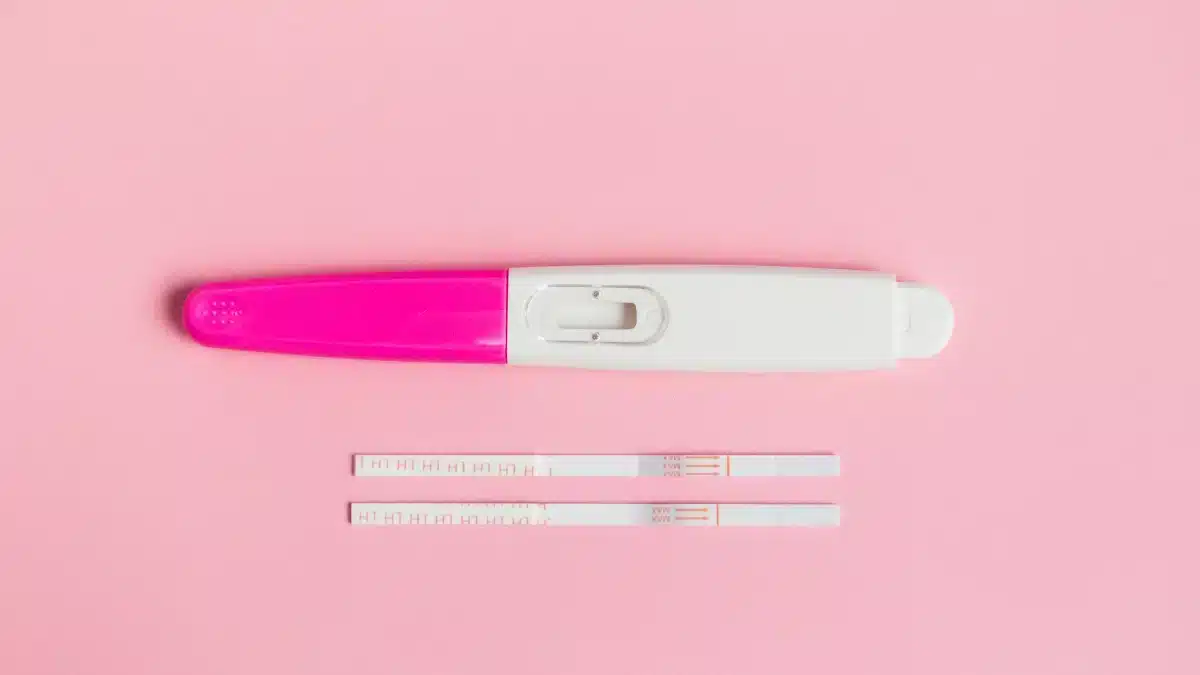
If you are trying to get pregnant, chances are you must have heard of ovulation tests.
These tests provide a reliable way to monitor your ovulation to increase the chances of pregnancy.
However, many women may unknowingly be using these ovulation test strips incorrectly.
In fact, some of these tests can also give faulty ovulation reports in certain cases.
Therefore, understanding the working and reliability of these ovulation tests better is important to get the most out of them.
This comprehensive article will help you become more informed about ovulation tests.
How Do Ovulation Tests Work
As you are aware, engaging in unprotected intercourse during ovulation maximizes the chances of conception.
Ovulation test kits provide a convenient way to detect this phase in the menstrual cycle when conception is most likely.
These tests monitor an increase in Luteinizing Hormone (LH) in urine.
LH is a hormone produced by the pituitary gland that plays a key role in regulating the menstrual cycle.
This surge in the LH hormones signals the ovary to release an egg, resulting in ovulation.
Typically, the rise in LH levels is observable around 24 – 48 hours before ovulation begins.
It may be accompanied by other discomforting signs of ovulation, including pain, bleeding, bloating, or cramps.
It is important to seek medical help if you experience these uncomfortable signs of ovulation.
Save up to 90% on your medicine bills

Naprosyn 500 mg

Brufen 400 mg
Progynova 2 mg

Oestrogel 2.5 gm / 1.5 mg
Ovulation Tests: How Reliable Are They
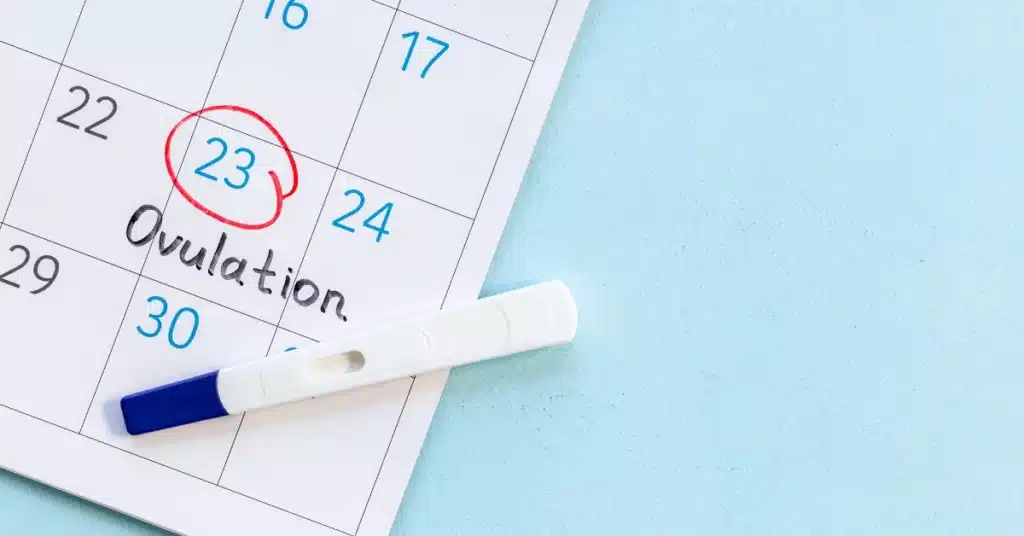 Source: 9dreamstudio_from_GettyImages
Research indicates that an ovulation kit is up to 99% accurate in identifying the most fertile window for pregnancy.
Therefore, ovulation strips are mostly considered reliable methods of early ovulation detection.
However, false test results are also a possibility with these tests.
In fact, a study concluded that ovulation test kits give false results in approximately 7% of cases.
Therefore, it is advised to undergo proper diagnostic tests under a certified doctor if you wish to detect your ovulation accurately.
How to Take an Ovulation Test
Most ovulation tests are similar to pregnancy detection tests. You hold the stick in the urine stream for the duration specified to detect the hormonal surge.
Alternatively, urine can be collected in a cup to dip the stick into it for the prescribed duration.
Also, it is recommended to test with the first urine of the day, as LH levels are typically higher in the morning hours.
Some doctors may also suggest taking ovulation tests twice a day for better detection.
These ovulation tests are taken around when you expect to ovulate, usually between two consecutive menstrual periods.
However, if you have irregular periods due to conditions such as Polycystic Ovarian Syndrome (PCOS) or Perimenopause, it can become harder to determine the accurate testing time.
Nevertheless, it is still possible to accurately detect ovulation with such conditions. If you wish to learn in-depth about tracking ovulation with irregular periods, Read “Understanding Ovulation with Irregular Periods: Tracking Methods”
Conclusion
Ovulation tests are popular tools used to detect the most probable time for conception.
These tests work by monitoring the levels of Luteinizing Hormone (LH) in the urine, which determines ovulation.
Studies show that at-home ovulation tests are highly accurate, with a success rate of up to 99%.
However, these tests can also give false positive results at times.
To perform an ovulation test, hold the stick in the urine stream for the recommended duration and await the display of test results.
You can also collect the urine sample and dip the stick for the specified duration.
It is best to take ovulation tests under the guidance of your doctor for accurate results.

Frequently Asked Questions
How to do an ovulation test correctly?
To perform an ovulation test correctly, collect a urine sample or use the test strip according to the instructions.
Typically, testing is done daily around the expected time of ovulation, usually in the morning.
Are there any downsides or risks of using ovulation strips?
Using ovulation strips is generally safe.
However, some downsides include false positives or negatives and variability in accuracy between brands.
Additionally, excessive testing may cause unnecessary stress.
What is the best time to take ovulation test?
The most ideal time to take an ovulation test is usually in the morning, as LH levels tend to be highest in the first urine of the day.
Aim to test around the same time each day, starting a few days before you expect to ovulate.
Can you get pregnant without ovulation tests?
Yes, it is possible to get pregnant without using ovulation tests.
Many couples conceive without tracking ovulation.
However, ovulation tests can help identify the most fertile days, increasing the chances of conception.
How long after a positive ovulation test are you fertile?
Following a positive ovulation test, your peak fertility typically lasts for the next 24-48 hours.
This is because ovulation usually occurs 12-36 hours after the LH surge detected by the test.
Cheap Medicine Shop only refers to credible, authoritative sources for our content. If you’re curious about how we ensure the integrity of our content, we encourage you to read our Content Information Policy.
Recent Web Stories