
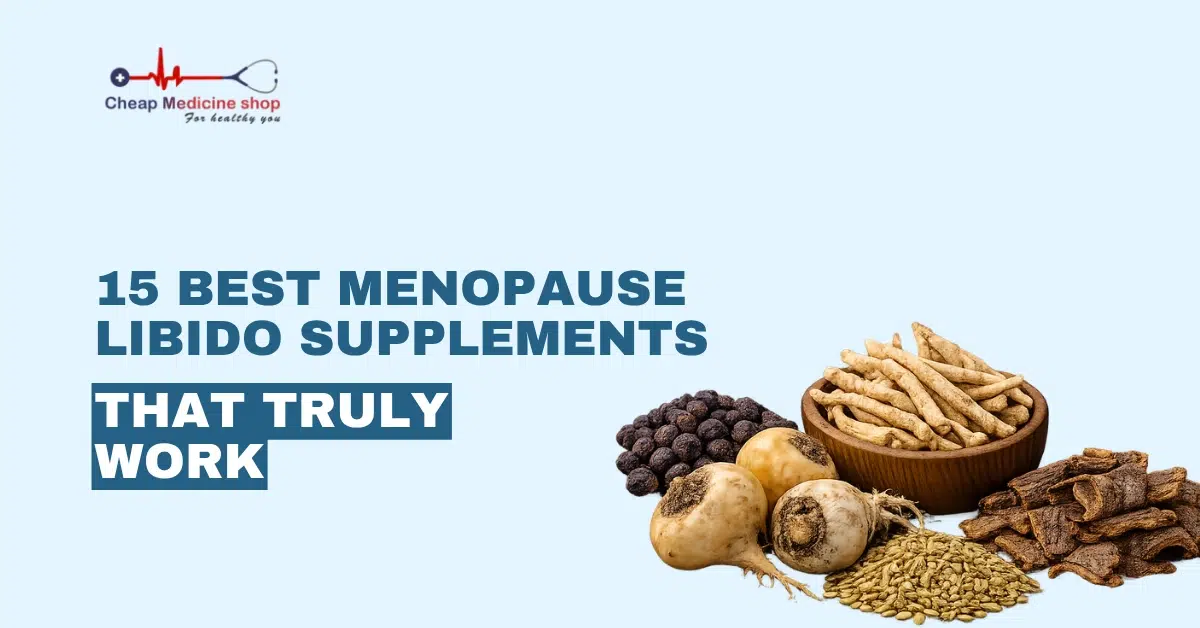
Reduced sexual desire and low libido during and after menopause are quite common and can cause frustration, guilt and emotional distance in relationships. With vaginal dryness piling onto it, it often leads to avoidance of intimacy, Anxiety or Depression. This is typically due to a decline in estrogen, testosterone and progesterone (sex hormones) in Assigned Females at Birth.
To combat this dip, additional hormone and nutrient support may sometimes be necessary during menopause. You can either opt for plant-based libido supplements or herbs that help lower the stress hormone (cortisol). Moreover, you can choose over-the-counter (OTC) vitamins, amino acids, and blends to correct nutrient deficiencies commonly seen in women over 40.
However, it can become hard to identify what actually works and what is just wellness marketing. This guide lists the best menopause libido supplements, including herbal remedies and vitamins for sexual desire, backed by clinical evidence. You will also learn how each supplement works and how to use it safely to rediscover comfort in your sex life after 40.
1. Chasteberry (Vitex agnus-castus)
Chasteberry is among the most popular herbal natural remedies for female arousal and hormone regulation. Rather than acting as a direct estrogen, it supports the pituitary gland to help balance estrogen and progesterone levels. This improves mood swings and cycle-related discomfort, which, in turn, enhances sexual desire during menopause.
Naturally, chasteberry comes from the fruit of the chaste tree, but it is not consumed as food. You can find it over-the-counter in capsule, tincture, or herbal tea form.
Save up to 90% on your medicine bills
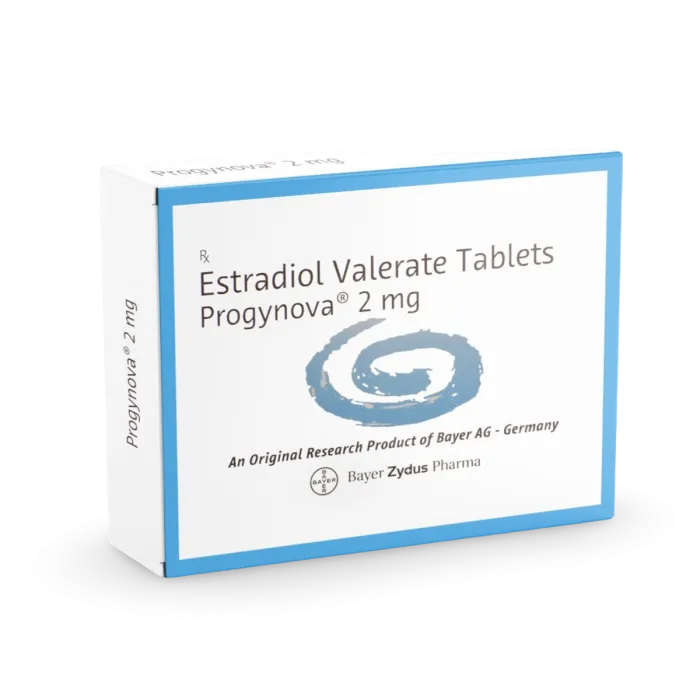
Progynova 2 mg

Estrabet 2 Tablet

Carmel Organics Ashwagandha Tablets

Neuherbs Ashwagandha 1000 Plus
2. Red ginseng (Panax ginseng)
Red ginseng is proven to enhance energy, blood flow, and sexual responsiveness. It works by improving Nitric Oxide (NO) production, which helps increase sensitivity and blood flow to the genitals. This is important for sexual arousal and satisfaction during and post-menopause.
It is derived from the root of the Panax ginseng plant and can be consumed as an herbal tea. For consistent dosing, choose capsules or standardized extracts, which are typically recommended once or twice daily with meals.
3. Maca (Lepidium meyenii)
Maca, a Peruvian root vegetable, supports mood and libido without altering hormone levels. This makes it a popular option for women seeking hormone-free libido support. It is commonly available as powder or capsules. You can add maca root to your smoothies, oatmeal, or warm milk each day for gradual, safe results.
A study published in the journal Menopause in 2008 found that 14 postmenopausal women taking maca experienced a significant improvement in sexual dysfunction, Anxiety, Depression and fatigue. Since newer studies with bigger sample sizes have yet to establish its effectiveness in increasing libido, medical guidance is recommended.
4. Ashwagandha (Withania somnifera)
Ashwagandha supplementation has been shown to reduce stress hormones while supporting testosterone balance in women. This dual action helps improve sexual responsiveness in terms of sexual function, arousal and orgasm.
Its root is traditionally consumed as Ashwagandha powder mixed with warm milk or water. However, it is also available in convenient capsule and tablet forms, typically advised once or twice a day.
5. Shatavari (Asparagus racemosus)
Shatavari is a traditional Ayurvedic herb popularly known as a female reproductive tonic. It contains natural phytoestrogens that support estrogen balance and improve lubrication, making intimacy more comfortable in perimenopausal and menopausal women.
Shatavari is found naturally in asparagus roots and is available as a powder, capsule, or herbal tonic. Take it once or twice daily for 2-4 weeks for noticeable improvements in sex drive over 40.
6. Red clover (Rifolium pratense)
Red clover is rich in phytoestrogens termed isoflavones. These compounds support estrogen balance and manage vaginal dryness. By doing so, it even helps improve reduced desire in perimenopausal and menopausal women.
It is available in various forms, including tea, powder, and supplement capsules. You can take it once or twice daily, depending on the product formulation, strength and doctor’s advice.
7. Tribulus terrestris (Puncture vine)
Tribulus terrestris (TT) is a plant used in traditional medicine to help boost sex drive in both men and women. It influences androgen (testosterone) activity necessary for libido and improves sexual responsiveness during intimacy. Thus, a 90-day TT supplementation has been shown to enhance sexual desire, arousal and orgasms in menopausal women by almost 70%.
It is available as tablets or capsules in strengths ranging from 250 to 500 mg. Consult a healthcare provider for the most effective and safe dosage to relieve your menopausal symptoms.
8. Fennel (Foeniculum vulgare mill)
Fennel has traditional estrogen-supportive qualities that help ease vaginal dryness and sexual discomfort during menopause. It can be used in food, tea, or as a supplement, depending on your choice of consumption and your doctor’s advice.
9. Fenugreek (Trigonella foenum-graecum)
Fenugreek is traditionally used to support women’s hormonal health. It thus helps manage menopause-related symptoms such as vaginal dryness, mood changes, and reduced comfort during intimacy.
In fact, a short-term study of 80 menstruating women found a significant increase in sexual desire and arousal with a dose of 600 mg per day. Thus, there are indications for a similar effect on menopausal women, too.
You can easily incorporate it into your food preparations or take it as capsules.
10. Magnolia Bark (Magnolia officinalis)
Magnolia bark is less commonly discussed but plays an essential role in addressing mood swings, sleep disturbances and anxiety during menopause. By reducing cortisol levels and calming the nervous system, magnolia bark indirectly supports libido. This is particularly useful when low desire is linked to emotional stress or poor sleep.
Magnolia bark is not commonly consumed as food; it is taken in capsule form or as part of a combined herbal formula. It is recommended to take this supplement in the evening to promote relaxation for improved sleep quality.
11. L-arginine, L-theanine and L-citrulline
These amino acids play a crucial role in producing Nitric Oxide, a compound that enhances genital blood flow. This improves physical arousal and sexual desire in women over 40, especially when low libido is linked to circulation issues.
L-arginine is found naturally in foods like nuts, seeds, legumes, turkey, and fish, while L-citrulline is abundant in watermelon. L-theanine is primarily found in green tea (especially matcha, black tea, and oolong.
For therapeutic use, all are available as capsules or powders, which you can take once or twice daily. Take it on an empty stomach for better absorption or as your doctor advises.
12. Magnesium
During menopause, low magnesium levels can worsen Insomnia, Anxiety, and fatigue, all of which can significantly reduce sexual desire. Thus, incorporating it into your daily diet through black beans, spinach, and almonds could help support better sleep, hormonal stability, and libido. Additionally, you can take Magnesium as capsules or combined powders daily.
13. Vitamins D and E
Deficiencies in these vitamins are common during menopause and may contribute to fatigue, low mood, vaginal dryness, and reduced sexual desire. Vitamin D regulates hormone production, while vitamin E improves circulation and vaginal tissue health.
Both vitamins are found in foods such as fatty fish, eggs, nuts, and seeds. They are also widely available as capsules or softgels and are safe to take once daily with meals.
14. Prebiotic-probiotic blends
A healthy gut supports good hormone metabolism, mood regulation, and inflammation control, all of which influence libido during menopause. Prebiotics feed beneficial gut bacteria, while probiotics maintain a healthy microbiome. Together, they improve digestion, mood, energy levels and sexual desire.
You can incorporate prebiotic fibers through a menopause diet, including foods such as onions, bananas, garlic, and oats. Probiotics are found in yogurt, kefir, and other fermented foods. You can also opt for OTC supplements as capsules or sachets, to be taken once daily with meals.
15. DHEA (Dehydroepiandrosterone)
DHEA is a hormone precursor from the adrenal glands that helps the body produce estrogen and testosterone. Levels of DHEA decline with age, and this drop may contribute to low libido, reduced energy, and vaginal discomfort in postmenopausal women. Supplementing it may restore sexual interest by supporting hormone levels.
DHEA should be taken at low doses under medical supervision to prevent hormonal imbalance or unwanted side effects.
How to get quicker results with menopause supplements
Most natural libido supplements take 4-8 weeks of consistent use for noticeable benefits to appear. It is recommended that you consult your healthcare provider for proper dosage, usage, and safety guidelines for effective outcomes.
Additionally, to get better and faster results:
- Eat a diet rich in healthy fats, lean protein, flaxseeds, soy, and chickpeas.
- Stay hydrated and avoid skipping meals.
- Try to get 7-8 hours of sleep every night.
- Manage stress through yoga, meditation, or deep breathing.
- Limit alcohol, tobacco, smoking and caffeine.
If you do not feel any improvement in sexual desire even after 2-3 months of use, consult your doctor for menopause treatments.
Save up to 90% on your medicine bills
Progynova 2 mg

Oestrogel 2.5 gm / 1.5 mg
Estrabet 2 Tablet
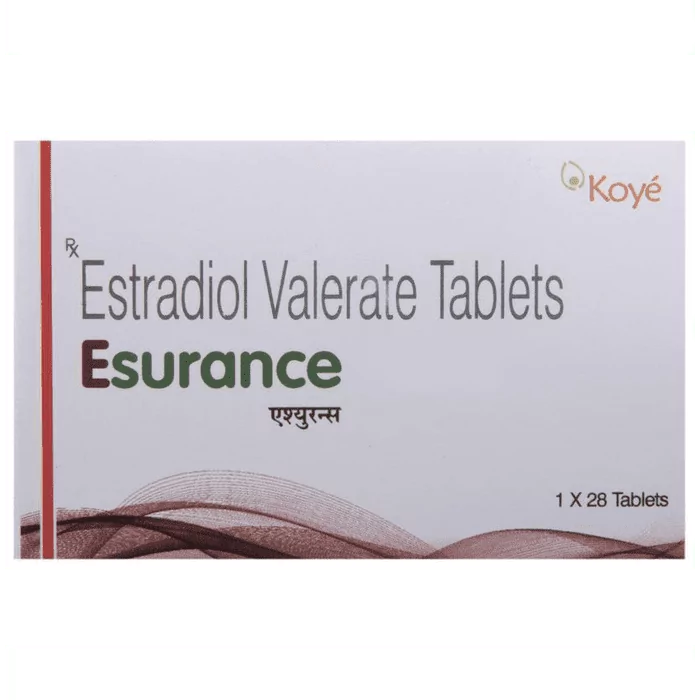
Esurance Tablet
Conclusion
Reduced sexual desire before and during menopause is common, real, and treatable. From herbal remedies to OTC options, there are multiple ways to support arousal and comfort after 40.
Clinically-backed menopause libido supplements include herbal options such as maca, ashwagandha and ginseng that support natural arousal. While essential nutrients like vitamin D, magnesium, and DHEA work to improve energy and circulation.
Paired with balanced nutrition, adequate sleep, and stress management, you can effectively take charge of your well-being. However, if symptoms persist beyond 4 weeks of consistent use, consult your doctor about medications and further guidance.
Frequently Asked Questions
Does sex drive return after menopause?
Yes, for several women, their sex drive returns automatically after menopause. Once hormonal fluctuations stabilize and symptoms like vaginal dryness or sleep disturbances are managed, sexual desire often improves.
Are menopause libido supplements safe?
Yes, most menopause libido supplements are safe when used as directed. However, mild effects like nausea, headache, or sleep changes can occur. If you have hormone-sensitive cancers, heart or liver disease, Hypertension, or Diabetes, you should avoid them. Consult your doctor as these may also interact with antidepressants, blood thinners or thyroid medications.
Should menopause libido supplements be taken daily?
Yes, most libido supplements work best when taken daily and consistently at the recommended dose. Take them at the same time every day as directed by your healthcare provider. Skipping doses may delay results or reduce effectiveness.
Can supplements replace Hormone Replacement Therapy (HRT)?
No, while supplements can help mild symptoms of low libido, fatigue or sexual function, they cannot replace HRT in men or women with significant hormonal deficiency. Hormone Replacement Therapy (as pills, gels, patches or pellets) should only be taken under medical guidance.
Cheap Medicine Shop only refers to credible, authoritative sources for our content. If you’re curious about how we ensure the integrity of our content, we encourage you to read our Content Information Policy.
Recent Web Stories






Related Articles

How Small Is Too Small for a Woman: What Science Says
 Written by:
Jim Carson, PhD - Life sciences
Written by:
Jim Carson, PhD - Life sciences

Why Am I Suddenly So Horny Over 40? Is It Normal?
 Written by:
Janet Fudge, Pharma-D
Written by:
Janet Fudge, Pharma-D

What Happens If You Take Viagra and Fall Asleep?
Written by:
Janet Fudge, Pharma-D

All You Need to Know About Prostate Massage
Written by:
Janet Fudge, Pharma-D

What is Avanafil? Uses, How It Works, Dosage and Safety
Written by:
Jim Carson, PhD - Life sciences

Does Viagra Show Up on a Drug Test? Everything You Must Know
Written by:
Janet Fudge, Pharma-D

