

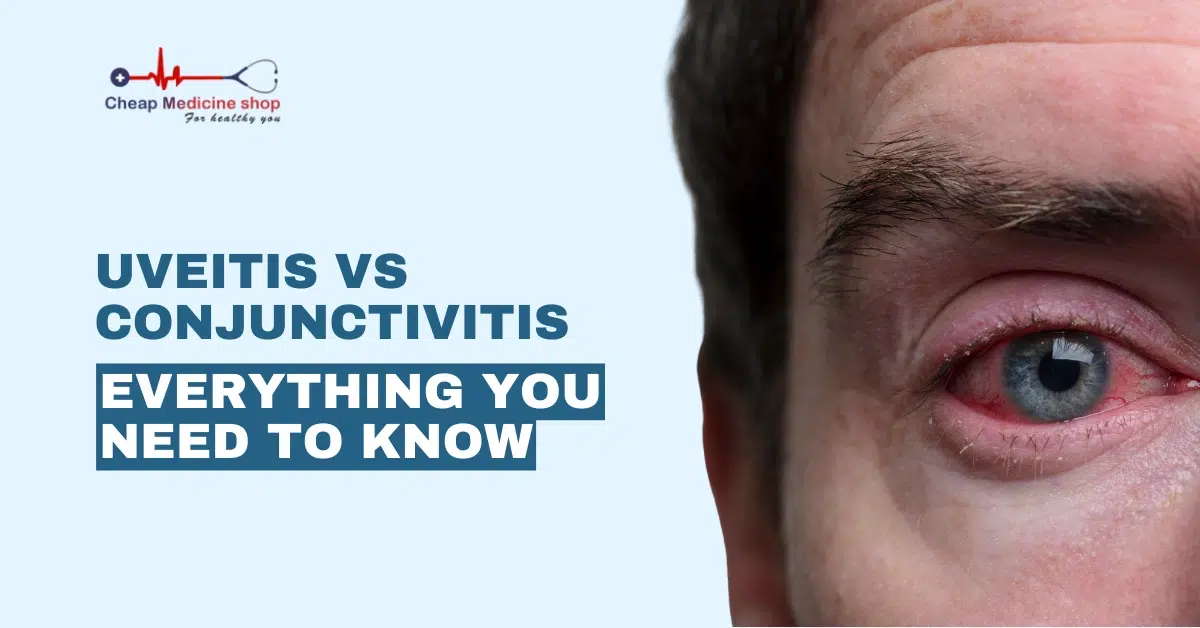
Redness in one or both eyes can be caused by many problems, but two of the most common ones are Uveitis and Conjunctivitis. These two conditions may look similar from the outside, yet they affect completely different parts of the eye.
Conjunctivitis usually affects the outer layer, which causes irritation and discharge, while Uveitis occurs deep inside the eye and can threaten vision if left untreated. Because the symptoms may overlap, especially redness and discomfort, many people confuse the two. However, Conjunctivitis is often mild and short-lasting, whereas Uveitis can lead to long-term damage if ignored.
This article explains in detail all the Uveitis vs Conjunctivitis differences based on symptoms, causes, risks, and treatments.
Uveitis vs Conjunctivitis: A brief overview
Although these conditions may look similar from the outside, they behave very differently inside the eye. Before diving into detailed explanations, here is a simple overview that highlights exactly what sets Uveitis and Conjunctivitis apart.
| Feature | Uveitis | Conjunctivitis |
| Part of the eye affected | Middle layer (uvea), including iris (coloured part of the eye), ciliary body (helps focus the eye), and choroid (supplies blood to the retina) | Conjunctiva, the thin outer membrane covering the white of the eye |
| Types | Anterior, Intermediate, Posterior, PanUveitis (based on location of inflammation inside the eye) | Viral, Bacterial, Allergic, Irritant, Chemical (based on cause or trigger affecting the outer surface) |
| Severity | Often serious and vision-threatening | Usually mild and self-limiting |
| Symptoms | Deep eye pain, light sensitivity, blurred vision | Redness, discharge, irritation, and tearing |
| Common causes | Autoimmune disorders, infections, trauma | Viral, bacterial, and allergic triggers |
| Treatment | Needs urgent medical care, steroid drops or systemic therapy | Antibiotics, antihistamines, and lubricants |
| Risk of complications | High (Glaucoma, Cataract, permanent vision loss) | Low (rare long-term effects) |
| Duration | Weeks to months | Days to two weeks |
Save up to 90% on your medicine bills

Vigamox 5 ml

Oflox 5 ml

MFC 5 ml

Xinep 5 ml
How they affect the eye differently
Uveitis develops inside the eye, within the uveal tract, which controls blood flow to structures responsible for vision. When this area becomes inflamed, it disrupts normal function and can harm delicate tissues like the retina, which is the light-sensing layer at the back of the eye.
Conjunctivitis, also known as Pink Eye, remains on the outer surface of the eye. It causes irritation, which is uncomfortable but does not influence deeper structures. This difference in location is the key reason Uveitis is considered more serious than Conjunctivitis.
Types of the condition
Uveitis is classified into several types based on where the inflammation occurs inside the eye. The main types include Anterior, Intermediate, Posterior, and Panuveitis, each affecting different internal structures involved in vision. The location of inflammation influences symptom severity, treatment approach, and the likelihood of complications such as vision loss if not managed properly.
Conjunctivitis, in contrast, is classified primarily by its underlying cause rather than location. It may be viral, bacterial, allergic, irritant, or chemical in nature. These types differ in discharge pattern, level of contagiousness, duration of symptoms, and how quickly they improve with appropriate treatment or avoidance of triggers.
Symptoms
The symptoms of Uveitis tend to be more intense. People often feel a deep, aching pain that does not improve when they blink. Bright light becomes uncomfortable because the iris is inflamed and struggles to adjust. Vision may become cloudy, smoky, or noticeably blurred.
Conjunctivitis typically causes mild to moderate symptoms, including itching, burning, excessive tearing, and eye discharge. The discharge is usually watery in viral conjunctivitis and thicker or stickier in bacterial cases. Vision usually remains normal, except when mucus temporarily spreads over the surface.
Both conditions cause redness, but the pattern is different. Uveitis redness sits deeper and closer to the Iris, while Conjunctivitis redness spreads across the entire white area.
Causes
Uveitis can stem from autoimmune diseases such as Ankylosing Spondylitis or inflammatory bowel disease. Sometimes infections within the eye or injuries trigger it. In many cases, doctors cannot pinpoint a clear cause, making it unpredictable.
Conjunctivitis usually begins after contact with viruses, bacteria, allergens, dust, or chemical irritants. Viral Conjunctivitis is extremely common and spreads easily through touch or contaminated surfaces. Allergic Conjunctivitis appears in people sensitive to pollen, animal dander, or pollution.
Severity and risks
Uveitis is considered an urgent medical condition because internal eye inflammation can quickly damage delicate structures if not treated promptly. Without proper control, complications such as Glaucoma, Cataracts, retinal swelling, and long-term scarring may develop. Some of these complications can lead to permanent vision loss.
Conjunctivitis is usually mild. Allergic and viral types often recover on their own. Bacterial Conjunctivitis improves with antibiotic drops and rarely leads to complications. Serious risks happen only in unusual circumstances, such as untreated infections in people with weak immunity.
Uveitis can have serious long-term effects on vision if not treated properly, while Conjunctivitis is typically less dangerous and often resolves without lasting problems.
Treatment
Uveitis treatment must be started promptly. Steroid eye drops are the most common line of therapy because they reduce inflammation quickly. Doctors may also use dilating drops to keep the iris relaxed and reduce pain. If the condition is linked to an autoimmune problem, oral steroids or other immune-modifying medicines may be needed.
Conjunctivitis treatment depends on its underlying cause. Bacterial conjunctivitis typically improves with antibiotic eye drops. Viral conjunctivitis has no specific cure but usually resolves on its own with supportive care such as rest, lubricating drops, and cold compresses. Allergic conjunctivitis responds well to antihistamines and avoiding known triggers.
Duration
Uveitis can last weeks, months, or even longer, depending on the cause and severity. Many people experience repeated flare-ups, which require long-term monitoring and follow-up appointments. It is a condition that must be taken seriously even after symptoms improve.
Conjunctivitis heals quickly in most cases. Viral cases resolve in about a week, while bacterial cases improve within two to five days after treatment begins. Allergic cases may reappear during specific seasons, but each episode is usually short-lasting.
When to consult a doctor
Eye redness can sometimes settle on its own, but certain symptoms need quick medical attention to prevent complications. These include:
- Eye pain that feels deep or persistent
- Increasing light sensitivity
- Blurry vision or new floaters
- Symptoms that worsen within 1–2 days
- Redness that keeps returning
- No relief from basic lubricating drops
- Any sudden change in vision (seek urgent care)
You should also see a doctor if symptoms last more than a few days, recur frequently, or if you have an autoimmune disease or recent infection. Prompt treatment helps prevent complications and protects long-term vision.
Conclusion
Uveitis and Conjunctivitis may appear similar because both cause redness and irritation, but they are very different in the way they affect the eye and the level of risk they carry. Conjunctivitis stays on the outer surface and often heals within days, while Uveitis occurs deeper inside the eye and can lead to serious risks if treatment is delayed.
Uveitis also tends to cause more intense pain and light sensitivity, whereas Conjunctivitis mostly brings itching and discharge instead of deep discomfort. Another major difference is that Uveitis frequently requires long-term monitoring as it can last for months or even longer, while Conjunctivitis usually resolves quickly with simple treatment in 2-5 days.
Recognising these Uveitis vs Conjunctivitis distinctions helps you understand when redness is harmless and when it may signal something more serious. If symptoms include deep eye pain, light sensitivity, blurred vision, or worsening discomfort, prompt medical evaluation is essential.

Frequently Asked Questions
Can stress trigger Uveitis flare-ups?
No, stress does not directly cause Uveitis, but it can weaken immune regulation and contribute to flare-ups in people with autoimmune-related uveitis. Poor sleep, emotional strain, and illness may worsen inflammation. Stress management supports overall immune balance but does not replace medical treatment.
How long is Conjunctivitis contagious?
Viral Conjunctivitis is contagious as long as symptoms like tearing and redness persist, usually 7–10 days. Bacterial Conjunctivitis becomes less contagious after 24–48 hours of starting antibiotics. Proper hygiene and avoiding eye contact help prevent spreading the infection.
Can children get Uveitis?
Yes, children can develop Uveitis, often associated with juvenile idiopathic Arthritis or autoimmune conditions. Symptoms may be subtle, with little pain or redness. Regular eye screening is crucial, as untreated childhood uveitis can silently cause long-term vision damage.
Is Conjunctivitis linked to sinus or throat infections?
Yes, Viral Conjunctivitis is commonly associated with upper respiratory infections, including sore throat, cold, or sinus congestion. The same virus can affect both the respiratory tract and the eyes. Symptoms often improve as the underlying infection resolves.
Cheap Medicine Shop only refers to credible, authoritative sources for our content. If you’re curious about how we ensure the integrity of our content, we encourage you to read our Content Information Policy.