
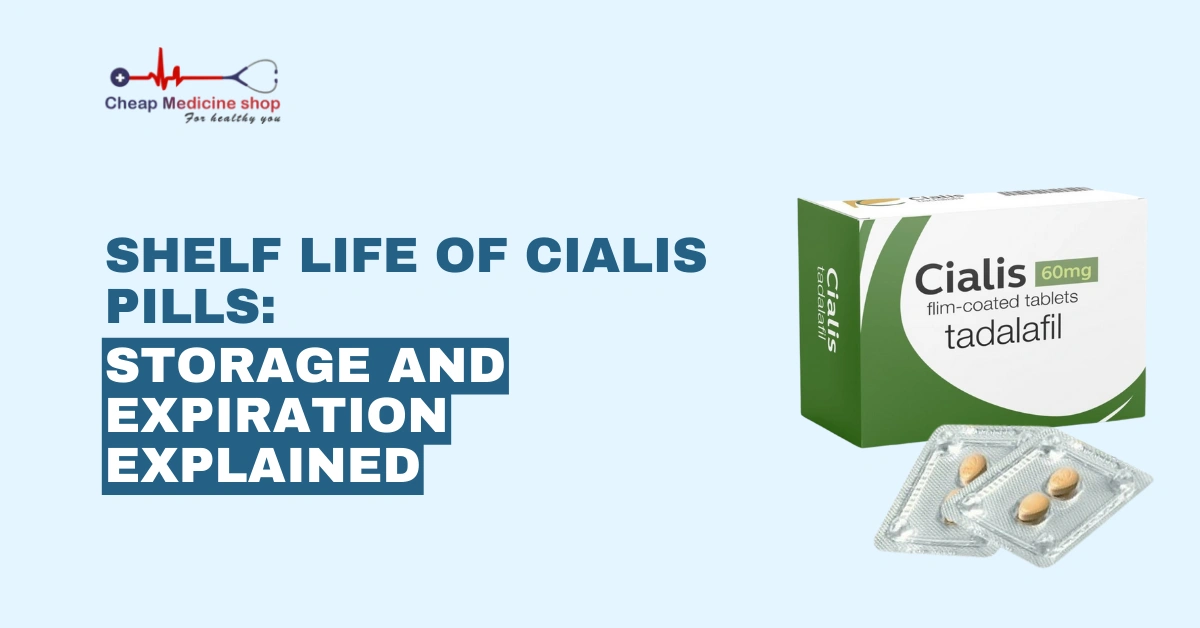
Cialis is a popular brand medication containing Tadalafil, which treats Erectile Dysfunction (ED) and an enlarged prostate. When stocking the medicine, its shelf life is a critical consideration for anyone using it for effective treatment.
While Cialis is designed to remain effective for 2-3 years, improper storage, such as exposure to heat or moisture, can lead to reduced effectiveness and a shorter shelf life. Using the medication beyond its recommended timeframe can also cause potential health risks.
This article explores everything you need to know about the shelf life of Cialis. It covers everything from best storage practices to the risks associated with expired medicine, helping you make informed decisions about the safety or efficacy of your medication.
Shelf life of Cialis and how to store it?
The shelf life of Cialis typically ranges from 2-3 years from the manufacturing date, when stored under optimal conditions. The shelf life represents the period during which Cialis maintains at least 90% of its original potency, ensuring therapeutic effectiveness. This standardized measure applies to all dosage strengths of Tadalafil, whether you’re using 2.5 mg, 5 mg, 10 mg, or 20 mg tablets.
Several factors affect the shelf life of Cialis. Proper storage is needed for preserving the longevity and effectiveness of the medicine. Following these Tadalafil storage guidelines can help ensure your medication remains potent until its expiration date:
- Temperature control: Keep Cialis at room temperature, ideally between 68°F-77°F (20°C-25°C). However, it can be safely exposed to 59°F-86°F (15°C-30°C). Avoid storing it in places prone to temperature variations, such as near windows, heating vents, or in vehicles.
- Moisture protection: The humidity can cause Cialis tablets to break down prematurely. Instead, choose a dry place, such as a bedroom drawer or kitchen cabinet, away from the sink.
- No direct light exposure: Direct sunlight and bright artificial light can accelerate chemical degradation. Keep Cialis in its original opaque packaging, which is specifically designed to block light exposure.
- Store in original packaging: The blister packs or bottles that contain Cialis are designed to maintain optimal conditions for the medication. Don’t remove tablets from blister packs until you’re ready to take them. If using a bottle, ensure the cap is tightly sealed after each use.
- Keep away from children and pets: Store Cialis in a secure location that’s out of reach of children and animals.
By following these storage practices, you can ensure that your Cialis maintains its full potency throughout its intended shelf life. However, these will not help you extend the shelf life beyond the given period.
Save up to 90% on your medicine bills

Orgie 20 Mg Oral Strips
Vidalista 60 Mg
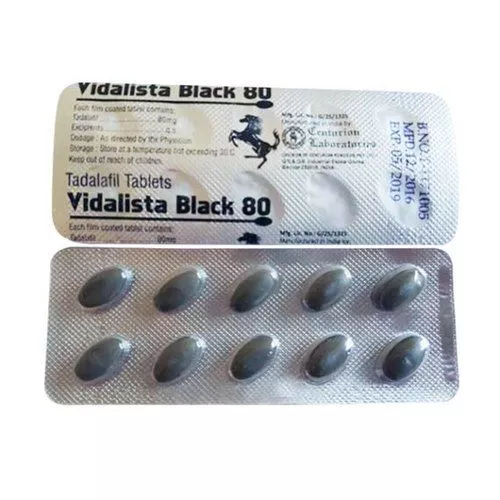
Tadalafil Black 80 Mg
Cenforce 200 Mg
Does Cialis expire?
Yes, Cialis does expire, and using it after this date is not recommended. The expiration date printed on Cialis packaging represents the manufacturer’s guarantee that the medication will remain safe and fully potent until that date, provided it’s been stored correctly.
While both shelf life and expiration are related, they are different. Shelf life refers to the optimal period of use, while the expiration date marks the legal cutoff point after which the manufacturer no longer guarantees the safety or efficacy of the medicine. While the shelf life typically ends with expiration, it can sometimes be reduced due to poor storage conditions, even if the product has not yet reached its expiration date.
What are the risks of taking expired Cialis?
Taking expired Cialis poses several risks that stem from chemical degradation and reduced potency. Understanding these risks can help you assess the safety of your medication.
- Reduced effectiveness: As Tadalafil degrades over time, the amount of active ingredient in each tablet decreases. This means an expired tablet may not provide the effect you expect, potentially failing to treat Erectile Dysfunction (ED) or enlarged prostate symptoms adequately.
- Chemical degradation: As Cialis ages beyond its expiration date, the Tadalafil molecule can break down into degradation products. These breakdown products may be inactive or, in some cases, could potentially cause unexpected reactions in the body.
- Unpredictable side effects: Expired medications may produce unusual or intensified side effects, such as back pain, headaches, flushing, indigestion, or changes in blood pressure.
If you’ve accidentally taken expired Cialis, monitor yourself for any unusual signs and contact your doctor immediately if you experience unexpected reactions.
What to do with expired Cialis?
Once Cialis reaches its expiration date, proper disposal is essential for safety and environmental reasons. Never flush Cialis down the toilet or drain, as the FDA does not approve this practice. The safest disposal method is through authorized medication take-back programs or locations, such as hospitals and pharmacies, that collect expired medicines.
If you cannot access a take-back program, the FDA recommends this disposal method:
- Remove Cialis from its original container.
- Mix the tablets with an unpalatable substance, such as dirt or used coffee grounds.
- Place the tablet mixture in a sealed plastic bag or container.
- Remove or black out all personal information from the medication packaging before recycling or discarding it.
- Throw the plastic bag or container in your household trash.
Conclusion
The shelf life of Cialis typically extends 2 to 3 years from manufacture when stored properly at room temperature, away from moisture and light. Understanding the distinction between shelf life and expiration dates helps ensure you use medication that maintains its full effectiveness.
Proper storage in original packaging, away from humidity and temperature fluctuations, is essential for preserving effectiveness. Taking expired Cialis poses significant risks, including reduced potency, unpredictable side effects resulting from chemical degradation, and the potential for treatment failure.
When your Cialis reaches its expiration date, dispose of it responsibly through medicine take-back programs rather than flushing it or disposing of it directly. If that service is not accessible, you should mix it with dirt or used coffee grounds, and then seal it in a plastic bag or container before discarding it.
By following these guidelines for Tadalafil storage and disposal, you can maximize the effectiveness of your medication while minimizing safety risks and environmental impact. Always check expiration dates before use and consult your pharmacist or doctor if you have questions about your Cialis prescription.

Frequently Asked Questions
Can Cialis be stored in a pill organizer for the entire month?
No, avoid storing Cialis in pill organizers for extended periods. They can expose medication to more air and light than the original packaging. If you use Cialis daily, only transfer the amount you’ll use within 7-10 days, and keep the organizer in a cool, dry area away from direct sunlight.
Does freezing Cialis extend its shelf life?
No, freezing Cialis is not recommended and may actually damage the medication. Extreme cold can alter the tablet’s chemical structure and reduce its effectiveness. Store it at room temperature between 15°C-30°C for optimal shelf life.
How can I tell if my Cialis has degraded before the expiration date?
You should look for signs of degradation, including discoloration, unusual odor, crumbling or cracking tablets, and changes in texture. If your Cialis displays any of these signs, even before the expiration date, don’t use it and consult your pharmacist for a replacement.
Does the shelf life differ between brand-name Cialis and generic Tadalafil?
No, when stored properly, generic Tadalafil has the same shelf life as brand-name Cialis. It is typically 2 to 3 years from the date of manufacture. Both meet the same FDA stability and potency.
What should I do if I accidentally took expired Cialis?
If you took expired Cialis and experience unusual symptoms, such as severe dizziness, chest pain, vision changes, or allergic reactions, seek immediate medical attention. For minor concerns, contact your healthcare provider to discuss your symptoms and get a valid prescription for fresh medication.
Cheap Medicine Shop only refers to credible, authoritative sources for our content. If you’re curious about how we ensure the integrity of our content, we encourage you to read our Content Information Policy.
Recent Web Stories