

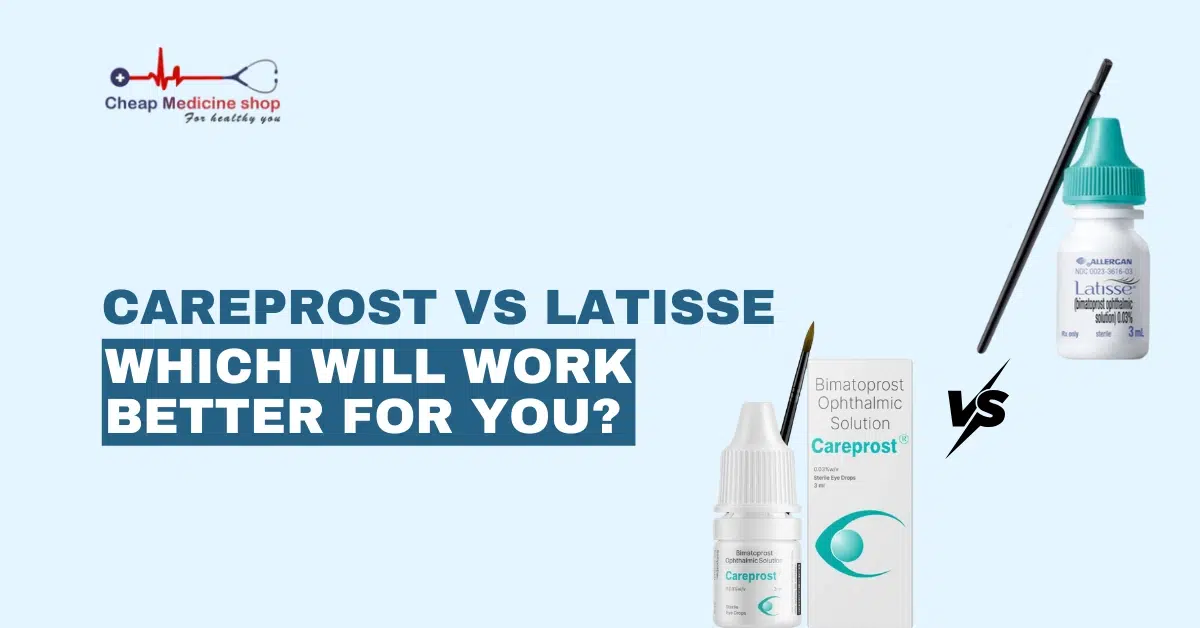
There are several eyelash growth products available online and in pharmacies everywhere, so choosing between them can be confusing. In this scenario, Careprost and Latisse are two of the most compared products that people often look into.
At first glance, they seem nearly identical, as they both contain the same active ingredient, Bimatoprost 0.03%, both enhance lash length and fullness, but subtle differences stand out. One is an FDA-approved original brand, while the other is a widely used generic alternative that looks similar but comes from a different manufacturer.
These small differences often raise important considerations, such as whether a branded product delivers different results, if the generic option offers the same effectiveness at a lower cost, and how both compare in terms of safety and long-term use.
This article breaks down every key Careprost vs Latisse difference, including authenticity, approvals, dosage, and more, so you’ll have a clear and complete understanding before deciding which option suits you best.
Careprost vs Latisse: A brief comparison
Here is a comparison between Careprost and Latisse for a quick overview of the key differences and similarities between the two medications, allowing you to make an informed decision before purchase.
| Features | Careprost | Latisse |
| Brand | Generic product manufactured by various companies | Branded product developed by Allergan |
| Active ingredient | Bimatoprost 0.03% | Bimatoprost 0.03% |
| FDA-approved use | Approved for Glaucoma and Ocular Hypertension, and off-label use for eyelash growth | FDA-approved specifically for eyelash Hypotrichosis (sparse, short, or thin eyelashes) |
| Prescription requirement | Often sold over-the-counter in several countries | Prescription required in most regions due to FDA regulations |
| Efficacy | High for Glaucoma; high off-label for lash growth | High for eyelash growth with proven clinical trials |
| Benefits | Produces longer, darker, thicker lashes similar to Latisse | Clinically proven to lengthen, thicken, and darken lashes |
| Cost | More affordable | More expensive |
| Availability | Widely available online | Available through licensed pharmacies and healthcare providers |
| Authenticity | Varies by manufacturer; packaging differs | Consistent, branded packaging with verified authenticity |
Save up to 90% on your medicine bills

Careprost (With Brush) 3ml 0.03%

Bimat 0.03% w/v

Bimat (With Brush) 3 ml (0.03%)

Travatan 40 mcg/2.5 ml
Branding and authenticity
Careprost and Latisse contain the active salt Bimatoprost 0.03%, but the way each is manufactured, regulated, and delivered to consumers creates essential differences. Here’s a breakdown:
- Regulatory approval and intended use: Latisse is FDA-approved specifically for eyelash growth, whereas Careprost is approved only for Glaucoma and Ocular Hypertension, with lash enhancement being an off-label use.
- Branding and origin: Latisse is the original, FDA-approved brand manufactured by Allergan Aesthetics, and Careprost is the generic version made by different manufacturers.
- GMP compliance and quality control: Both Latisse and Careprost are made in facilities that follow GMP guidelines. However, Latisse is produced under stricter FDA rules, which helps ensure more uniform quality, while Careprost may show small differences in packaging due to the different international manufacturing standards.
- Availability and authenticity risks: Latisse is a prescription-only product, ensuring authenticity through licensed providers. Careprost is widely available online at a lower price, making it more accessible; however, it is also more prone to counterfeit versions.
Dosage and how to use it
Although Latisse and Careprost are both formulated with 0.03% Bimatoprost in a 3 mL bottle, the way each product is supplied and used has noticeable differences.
Latisse comes with sterile, single-use applicators designed for nightly use on the upper eyelid margin. A fresh applicator is needed for each eye to reduce the risk of contamination. Careprost follows the same once-nightly upper lash line routine; however, it does not come with its own applicators, so users must purchase sterile brushes separately.
Effectiveness and Duration
Careprost and Latisse deliver similar results because both rely on the same active ingredient, which directly influences eyelash growth. However, differences in approval status, treatment protocols, and product standardization can affect how consistent and predictable the results are over time.
Careprost
Careprost generally produces noticeable eyelash growth within 8-12 weeks of regular use, with fuller length and thickness developing by 12-16 weeks. Because it is available in a generic format and commonly used off-label for cosmetic enhancement, results may vary depending on the consistency of application and product quality.
Continued use is required to maintain the effects, as stopping treatment gradually causes lashes to return to their natural growth cycle.
Latisse
Latisse follows an FDA-approved treatment regimen for eyelash Hypotrichosis, which contributes to more consistent and predictable outcomes. Most users begin to see visible improvements within 8-12 weeks, with optimal results appearing by 12-16 weeks. Like Careprost, ongoing use is necessary to sustain results. Clinical backing and regulated manufacturing standards further support its reliability.
Overall, both treatments offer similar timelines and effectiveness. The primary difference lies in consistency and regulation, with Latisse providing standardized, clinically validated results and Careprost serving as a more accessible generic alternative.
Risks and side effects
Both Careprost and Latisse share common side effects beyond initial irritation, such as uneven lash growth, temporary shedding upon discontinuation, lashes growing in every direction, dry eyes, and discomfort while wearing contact lenses.
Bimatoprost in both can cause eyelid Hyperpigmentation (darkening from excess melanin), iris darkening, or Poliosis (lash whitening) in 3-4% of users.
Careprost’s generic droppers require user-supplied sterile applicators, which raises contamination risks (e.g., bacterial Keratitis). Since Latisse includes single-use kits, it promotes consistent, lower-infection application for more predictable results and proper eye care.
Careprost vs Latisse cost
The price gap is the most defining point of difference when comparing Careprost and Latisse. Careprost typically costs between $20 and $50 per 3 mL bottle, due to its generic status and minimal packaging. At the same time, Latisse price ranges from $100 to $180, a 3 to 5 times higher difference due to branding, and it includes sterile applicators.
Insurance coverage also varies between the two treatments. Careprost is rarely covered because insurers typically do not reimburse for off-label cosmetic use. Latisse may receive partial or full coverage only when prescribed for a medically documented condition, while purely cosmetic use is generally not covered.
What works best for you
Choosing between Careprost and Latisse depends on your priorities, budget, and comfort level with the regulations, as each option fits a different type of user.
Latisse is the better choice if you want a treatment backed by strict FDA-approved cosmetic testing and predictable results. It is most suitable for individuals who want medical oversight or those with medically documented eyelash loss for insurance coverage. It’s also ideal for anyone who prefers to buy from licensed clinics to ensure authenticity.
Careprost is the more cost-effective choice without changing the expected results. It suits individuals who prefer off-label cosmetic use, online purchasing, or those seeking long-term treatment at a lower price point. Careprost is particularly appealing to those who prefer the flexibility of sourcing their own applicators and supplies.
Latisse requires a prescription in the US as the only FDA-approved Bimatoprost product for eyelash Hypotrichosis, while Careprost is typically prescription-only for Glaucoma. Your ideal choice depends on which advantage matters more to you.
Also Read: To learn more about how you can buy the affordable generic Careprost, you can read Buy Careprost Online: Everything You Need to Know.
Conclusion
When deciding between Careprost vs Latisse, your choice will ultimately depend on what you prefer most: regulation and consistency, or affordability and accessibility. Both medications will deliver similar solutions through the active ingredient Bimatoprost. However, there is a difference in regulation, branding, cost, and availability.
If you prefer an FDA-approved product with standardized packaging, built-in applicators, and consistent authenticity, Latisse will better align with your needs. This option is more ideal if you want a prescription and medical guidance for eyelash growth.
On the other hand, if your priority is achieving similar lash-growth results at a significantly lower price, Careprost will be the more practical choice. It is preferred by users who are comfortable with off-label use, online purchasing, and managing their own application tools.
Ultimately, both options are effective, so base your final decision on your budget, safety preferences, and the level of oversight you prefer in your eye care routine.

Frequently Asked Questions
Can Bimatoprost permanently change my eye color?
Yes, Bimatoprost may cause a gradual but permanent darkening of the iris, particularly in individuals with lighter eye colors, such as blue, green, or hazel. This darkening occurs because the medication stimulates melanin production in the iris. Once the pigmentation changes, they do not reverse even after treatment is stopped.
Does Bimatoprost affect vision?
Yes, Bimatoprost can cause temporary vision-related side effects, like blurred vision, dryness, and light sensitivity. They typically appear immediately after application and fade within a few minutes. However, if these symptoms persist or worsen, users should consult an eye specialist.
Can I use mascara while applying Bimatoprost products, such as Careprost or Latisse?
Yes, you can use mascara, but only after the serum has thoroughly dried. Applying Bimatoprost at night reduces the chance of smudging and helps prevent makeup from contaminating the applicator or interfering with lash absorption.
Do Careprost and Latisse also work on eyebrows?
No, they are not intended for use on eyebrows, but many users report fuller, darker brows when used off-label. Results vary, and the application must be precise to avoid stimulating hair growth in unintended areas around the brows.
How long do results from Bimatoprost last if I stop using it?
If you stop applying Bimatoprost, the length and fullness of your lashes gradually return to normal within 4–8 weeks. The lashes revert to their original state as the growth cycle resets, so consistent maintenance is necessary to maintain fuller, longer results.
Can I apply Bimatoprost twice a day for faster results?
No, applying the solution more than once daily does not improve results and may increase irritation or redness. Bimatoprost is formulated for once-nightly use, providing sufficient absorption to stimulate the lash growth cycle effectively.
Do Careprost and Latisse make lashes darker?
Yes, Bimatoprost can increase lash pigmentation, resulting in darker, more defined lashes. This occurs because the medication prolongs the growth phase of the lashes and stimulates melanin production in the hair follicles.
Cheap Medicine Shop only refers to credible, authoritative sources for our content. If you’re curious about how we ensure the integrity of our content, we encourage you to read our Content Information Policy.
Recent Web Stories