


Doxycycline is an oral antibiotic widely prescribed for the treatment of various bacterial infections and inflammatory conditions in both adults and children. In eye care, doctors often choose Doxycycline not only for its antibacterial action, but also for its anti-inflammatory properties. This makes it especially useful for treating Blepharitis, Ocular Rosacea, recurrent styes, and Chlamydial Conjunctivitis.
If you or your child has been prescribed Doxycycline for eye infection, this is your guide to safe usage and safety tips. You will also learn about the mechanism of Doxycycline, the conditions it treats, typical dosage ranges, and treatment duration. You can also read about its alternatives and scenarios when you should see an eye doctor urgently.
How does Doxycycline work for eye infections?
Belonging to the tetracycline family of broad-spectrum antibiotics, Doxycycline’s mechanism of action is twofold. It slows bacterial growth as well as soothes inflammation. This makes it quite effective for chronic, recurring or inflammatory ocular conditions.
Here’s how Doxycycline works for bacterial eye infections:
- Reduces bacterial growth: Doxycycline is bacteriostatic, meaning it prevents bacteria from multiplying. This stops the infection from worsening and supports faster recovery.
- Controls ocular inflammation: This antibiotic suppresses inflammatory enzymes to reduce redness, irritation and swelling.
- Stabilises eyelid oil glands: It improves the quality of oils released into the tear film, reducing dryness and irritation.
As a doctor-recommended alternative to Amoxicillin for treating eye infections, it is often used in long-standing eyelid diseases to prevent future flare-ups.
Save up to 90% on your medicine bills

Eyemist Forte 10 ml
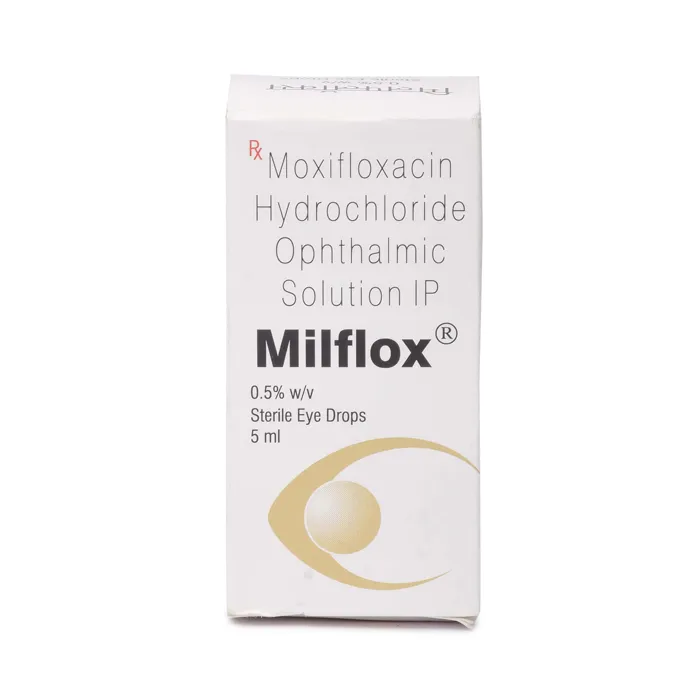
Milflox 0.5% 5 ml

Restasis 0.05% Ophthalmic Emulsion

Pred Forte 10 ml
Benefits and uses of Doxycycline for eye infections
Doxycycline is prescribed only when inflammation, bacterial overgrowth, or chronic eyelid dysfunction is involved, especially when symptoms don’t improve with warm compresses or topical antibiotics. Below are the most common eye conditions for which Doxycycline is proven effective:
- Severe or Chronic Bacterial Conjunctivitis: While mild Conjunctivitis is treated with topical antibiotics, doctors may prescribe Doxycycline when the bacterial Pink Eye is moderate to severe and topical medication alone is insufficient. It is also used when there is suspicion of underlying eyelid or gland dysfunction, or Chlamydia.
- Ocular Rosacea or Meibomian Gland Dysfunction (MGD): These conditions cause redness, burning, dry eyes, and eyelid inflammation. Doxycycline is effective due to its potent anti-inflammatory properties.
- Blepharitis or eyelid inflammation: Blepharitis causes thickened, irritated lids, crusting, and clogged oil glands. Doxycycline significantly improves symptoms in moderate-to-severe Blepharitis, especially when MGD is involved.
- Stye or Chalazion: When Styes or Chalazia fail to respond to home remedies, Doxycycline may be prescribed to reduce inflammation and bacterial load that contribute to blockage and swelling. This is especially helpful in patients with recurring eyelid bumps.
- Post-infection swelling and Orbital Cellulitis: For serious infections around the eye, including preseptal and orbital cellulitis, oral Doxycycline is sometimes used alongside other antibiotics, but only under close medical supervision.
Doxycycline dosage for eye infection
The dosage of Doxycycline depends on the type of eye infection, the severity of the condition, your age, and any existing medical conditions or medications. Dosage for children is typically weight-based and prescribed with extra caution. Below is a typical dosing regimen for eye-related issues in both adults and kids:
| Type of Eye Infection and Severity | Recommended Dose for Adults | Dosage for Children (>45 kg) | Dosage for Children (<45 kg) | Typical Duration |
| Blepharitis (moderate to severe) | Day 1: 100 mg every 12 hrsDay 2 onwards: 100 mg once daily OR 50-100 mg every 12 hrs | Same as the adult schedule | Day 1: 4.4 mg/kg per day split into two doses. Day 2 onwards: 2.2 mg/kg per day (single or divided doses) | 4-6 weeks (sometimes 8-12 weeks) |
| Ocular Rosacea/ MGD | Low-dose slow release: 40-100 mg once daily 0r 20 mg twice daily | Same as the adult schedule | Weight-based dosing per above | 6-12 weeks |
| Recurrent Styes/ Chalazion | Day 1: 100 mg every 12 hrs Day 2 onwards: 50-100 mg daily | Same as the adult schedule | Weight-based dosing per above | 2-4 weeks |
| Bacterial Conjunctivitis (chronic or severe) | Day 1: 100 mg every 12 hrs Day 2 onwards: 100 mg once daily | Same as the adult schedule | Weight-based dosing per above | 1-2 weeks |
| Post-infection swelling/ persistent eyelid inflammation | Day 1: 50-100 mg daily | Same as the adult schedule | Weight-based dosing per above | 1-3 weeks |
| Orbital Cellulitis (mild outpatient cases only) | 100 mg every 12 hours (always combined with other antibiotics) | Same as the adult schedule | Weight-based dosing per above | Case-dependent, often 1-2 weeks |
Once an ophthalmologist or general physician diagnoses and prescribes the proper Doxycycline dose, you can buy it safely from your nearest offline pharmacy or a trusted online pharmacy like Cheap Medicine Shop. You can also purchase reliable and affordable generics (such as Doxylin or Doxywell) from such reputable platforms.
How to use Doxycycline safely
Using Doxycycline correctly ensures faster recovery and lowers the risk of side effects. Doctors strongly advise taking it at the recommended intervals and completing the full prescribed course, even if symptoms begin to improve early. Stopping too soon can prolong inflammation, delay healing and possibly lead to Doxycycline resistance.
How to take oral Doxycycline for eye infection?
For bacterial eye infection treatment, swallow the oral Doxycycline tablet or capsule whole with a glass of water. Remember to stay upright for 30 minutes after taking it and drink plenty of fluids to prevent throat or stomach irritation.
If your doctor advises you to, you can
- Break the tablet at the score line using your fingers. Remember that only scored immediate-release tablets can be split.
- Sprinkle crushed tablets or capsule powder on cold, soft food like applesauce and consume immediately. This is useful if you face difficulty swallowing pills.
What to avoid while taking oral Doxycycline?
Avoid dairy products and food for up to 2 hours after taking the pill, as they may reduce its absorption. Moreover,
- Do not use antacids containing magnesium or aluminum within two hours of intake.
- Do not take iron or calcium supplements within two hours of dosing.
If you miss a dose, take it when you remember. If it is almost time for your next dose, skip it and do not double-dose.
When not to take Doxycycline?
Doxycycline is not recommended for children under 8 years of age due to the potential for permanent discoloration of developing teeth and its impact on bone growth. According to CDC recommendations, it is prescribed to children, but only for life-threatening infections such as Rocky Mountain spotted fever or Pediatric Rickettsial disease.
Similarly, you should avoid it during pregnancy or breastfeeding due to the possible risk to the baby’s bone and teeth development. Moreover, precautions for Doxycycline are recommended if you:
- Are allergic to tetracyclines.
- Have liver or kidney disease.
- Suffer from Lupus or Myasthenia Gravis.
- Are taking anticoagulants, acne medicines, penicillin or isotretinoin.
Doxycycline side effects
Most people tolerate Doxycycline well, but like all antibiotics, it can cause some side effects. These may range from mild digestive discomfort to severe headaches. However, these usually improve as your body adjusts to the medicine.
Common side effects of Doxycycline include:
- Nausea or stomach upset
- Diarrhea
- Loss of appetite
- Mild headache
- Sore throat or nose
- Increased sensitivity to sunlight (Photosensitivity)
Less common side effects could be:
- Vaginal yeast infections
- Heartburn or throat irritation
- Skin rash
- Mild dizziness
If you experience an allergic or skin reaction, stop the medication and seek emergency medical attention. Moreover, chest pain, breathing difficulty or severe diarrhea must be reported immediately.
When to see a doctor for an eye infection?
If you feel no improvement after 72 hours of starting Doxycycline or if side effects worsen, seek immediate medical advice. See a doctor for an eye infection when:
- Your vision becomes blurry, dim, or you notice new floaters.
- Severe swelling, intense stomach pain, or fever develops.
- Eye discharge increases or changes color.
- Yellowing of the skin or eyes occurs, indicating liver problems.
- Infections keep coming back.
- You see blood in your urine or stools.
If you notice symptoms like red or swollen eyelids or persistent yellow or green eye discharge in a newborn under one month old, seek prompt pediatric care to prevent complications.
Conclusion
Doxycycline for eye infection is a trusted prescription-only oral tetracycline antibiotic to treat inflammation, bacterial overgrowth, or chronic eyelid gland dysfunction. It works by reducing bacterial activity, calming inflammation, and regulating oil glands. It thus helps improve conditions such as Styes or Blepharitis and treat Bacterial Pink Eye or Conjunctivitis.
The typical dosing regimen for adults is 100 mg twice daily on the first day, followed by 100 mg once daily thereafter as a maintenance dose. Remember to consult your ophthalmologist for the correct dosage and duration based on the severity of infection. You may experience side effects such as nausea, vomiting, diarrhea, and headache, which typically subside once the treatment is completed.
Avoiding dairy immediately after dosing, staying upright for 30 minutes and protecting your skin from sunlight will help ensure the medicine works as intended while reducing the risk of side effects. However, if your symptoms persist, worsen, or you do not feel better within 72 hours, consult your doctor for alternatives.

Frequently Asked Questions
How long to take Doxycycline for Blepharitis?
Doxycycline is typically prescribed for 4 to 6 weeks for chronic Blepharitis, extending up to 12 weeks in severe cases. Since treatment duration varies, consult your doctor to understand what dose to take and for how long.
How long to take Doxycycline for a Stye?
If used for a stubborn or recurrent stye, Doxycycline may be prescribed for 7-14 days. Ensure that you complete the full course, even if your symptoms begin to improve.
How to minimize the side effects of Doxycycline?
To minimize the side effects of photosensitivity, avoid direct sunlight by wearing long sleeves, UV-protective sunglasses, and sunscreen with an SPF of 15 or higher. Take Doxycycline with plenty of water and food to minimize the gastrointestinal effects, such as nausea and stomach upset.
Can you take vitamin D and Doxycycline together?
Yes, you can take vitamin D and Doxycycline together, as Vitamin D does not interfere with it. However, avoid calcium-rich supplements within 2 hours of your dose, as they may interfere with its absorption. Always inform your doctor about all herbal products or dietary supplements you take to avoid unpleasant drug interactions.
Does Doxycycline affect fertility?
Current evidence suggests Doxycycline does not affect fertility in men or women. Studies involving infertile couples treated with Doxycycline show no significant difference in conception rates, indicating that it neither harms fertility nor improves fertility.
What can I take if I’m allergic to Doxycycline?
If you are allergic to Doxycycline, your doctor may prescribe oral Azithromycin, Clarithromycin, or Erythromycin instead. Tobramycin ointments or drops can be effective, especially in mild to moderate eyelid or conjunctival infections. Meanwhile, artificial tears or lubricating eye drops can ease dryness and irritation associated with eyelid inflammation.
Cheap Medicine Shop only refers to credible, authoritative sources for our content. If you’re curious about how we ensure the integrity of our content, we encourage you to read our Content Information Policy.
Recent Web Stories