

Mismatched libidos, also called Sexual Desire Discrepancy, happen when partners want sex at different times or with varying levels of intensity. This issue affects most couples at some point. Almost 34% of women and 15% of men report little to no interest in sex, especially after the honeymoon phase fades.
But this mismatch doesn’t necessarily mean you are incompatible. Couples differ on all kinds of things, like when to go out or what to order for dinner. Sexual desire is one such thing that you need to learn to keep your sexual life healthy. By redefining the definition, frequency and quality of satisfactory sex together, you can schedule an intimacy routine that aligns with both your needs.
With patience and empathy, most couples can find a mutually comfortable middle ground, and so can you. But first, learn the possible causes of desire discrepancy. Then follow our expert-backed tips to deal with mismatched libidos and rebuild a balanced sexual relationship with your partner.
Method 1: Identify desire mismatch and its causes
Before learning the “how”, you need clarity on the “why”. Understanding what’s behind the mismatch will eliminate the blame game and help you approach it as a team.
Tip 1. Rate your sex drive
To identify how big your desire gap is and what it actually feels like, rate and discuss your libido on a simple scale. Here’s how:
- You and your partner will rate their sex drive from 1-10 individually, where 1=no interest, 10=constant sexual thoughts.
- Then, compare scores to see whether the mismatch is mild, moderate, or wide.
- Describe what your number is in daily life based on frequency, mood and ideal timing.
- Explain how your libido changes during stress, fatigue, or hormonal shifts.
Tip 2. Understand responsive vs spontaneous desire
Many couples think they have incompatible sex drives when, in reality, they have different types of desire. One has a spontaneous desire, meaning arousal appears quickly in response to thoughts, visuals, or even a gentle touch. Whereas the other has a responsive desire and needs emotional or physical warm-up before sexual intent appears.
Learn to recognize these patterns as follows:
- Identify who has which type of desire.
- Celebrate both desire types as normal as neither is right or wrong.
- Allow time for slow buildup, as responsive partners may need extended foreplay or sensual massage before feeling the desire for sex.
Spontaneous desire is often mistaken as high libido, while responsive desire is misread as low libido. In reality, both partners may want intimacy equally, but their bodies respond differently to stimulation and timing.
Tip 3. Identify relationship and emotional factors
Often, mental overload and emotional distance are the reasons for low desire far more than hormones. So, take the time to understand what is killing your sex drive. Then, sit together to:
- Address emotional tension, resentment, unspoken hurt, or feelings of being unappreciated.
- Rebuild emotional closeness through daily affection, words of appreciation, and active listening.
- Rebalance responsibilities, kids’ demands and household chores, so neither partner feels overburdened.
- Discuss mental health issues like Attention-Deficit/Hyperactivity Disorder (ADHD), Anxiety, Depression, burnout, chronic stress or body image issues.
Also discuss with each other whether the mismatch is about how often sex happens (frequency mismatch) or how connected you feel during intimacy (intimacy mismatch). Many couples have sex regularly but still feel emotionally or physically disconnected, while others feel close but differ on how often sex should occur.
Method 2: Initiate regular open communication
In a relationship with mismatched libidos, discussing sexual desire clearly and regularly with your partner is a must. It helps clear up misunderstandings and creates a safe space for both partners.
Tip 1. Listen without judgment
When both partners feel heard rather than blamed, reaching a midway becomes much easier. While talking about your preferences,
- Choose a calm, neutral moment; not right after sex or during conflict.
- Use “I feel…” sentences to express concerns without accusing the other person.
- Stop interpreting “I’m not in the mood” as rejection.
- Create a Yes-No-Maybe list together to clarify comfort zones and desires.
- Schedule weekly or biweekly intimacy check-ins.
During these conversations, clarify whether your concern is about feeling undesired, feeling pressured, or feeling disconnected. Naming the real issue prevents defensive reactions and miscommunication.
Also Read: To learn more tips, read How to Improve Communication in Bed With Your Partner.
Tip 2. Move beyond gatekeeping
Gatekeeping happens when one partner, knowingly or unintentionally, makes it hard to initiate any form of intimacy. It often comes from feelings of fear, guilt, or resentment. To move past it,
- Replace passive avoidance with honest communication, such as saying, “I’m tired today, but I would love to cuddle.”
- Remove all barriers that make intimacy feel stressful or exhausting.
- Do not use sex as leverage, punishment, or reward.
Tip 3. Switch roles with your partner mentally
A mismatch in desire often causes one partner to feel rejected and the other to feel pressured. Here’s what you both should do to make compromise easier:
- Picture how it feels to have a higher sex drive, meaning wanting closeness but fearing rejection (if you have a low libido).
- Picture how it feels to have lower sexual desire, that is, loving your partner but feeling guilt or overwhelm (if you have a high libido).
- Then, use empathy and patience to guide expectations, timing, and intimacy routines.
This mental role switch helps couples move away from “who wants more sex” and toward how we can feel close without hurting each other.
Tip 4. Reflection: Questions to ask yourself or discuss together
Before trying to “fix” the mismatch, pause and reflect together. These questions help uncover what’s really going on beneath the surface:
- When my partner initiates or declines sex, what emotions come up for me;rejection, pressure, guilt, or disconnection?
- Is our struggle more about how often sex happens (frequency mismatch) or how emotionally close we feel during intimacy (intimacy mismatch)?
- What helps me feel safe, relaxed, and open to intimacy? What shuts me down?
- How do stress, fatigue, past experiences, or life changes affect my desire right now?
- What kind of closeness do I need outside of sex to feel connected to my partner?
Use these reflections as conversation starters, not arguments. The goal is understanding, not winning.
Method 3: Redefine satisfactory sex together
Mismatched libidos often seem problematic because most couples see sex as an all-or-nothing act. But a satisfying sexual experience depends on connection, pleasure, comfort, and mutual respect. So, not focusing solely on orgasm or frequency of sex would help.
Tip 1: Choose pleasure over orgasm
Shifting focus to shared enjoyment and pleasure while treating orgasm as optional, not mandatory, will make intimacy feel less demanding. Here’s how you can deal with mismatched libidos with your partner:
- Discuss what pleasure means to each of you, emotionally and physically.
- Explore slow, sensual touch to erogenous zones that isn’t sex-driven.
- Enjoy moments of closeness, not just the finale.
Tip 2: Always quality over quantity
A fulfilling sex life isn’t defined by how often you have sex but by how connected, safe, and satisfied you feel. To fix a mismatched desire, make sure to:
- Do not compare the frequency of sex with that of your friends or peers. Do not fall for the societal expectations either.
- Identify times when both partners feel relaxed and intimate to indulge in sexual activities.
Tip: Try the 7-7-7 rule for intentional quality time with your partner: Date night every 7 daysOvernight getaway every 7 weeksVacation every 7 months
Method 4: Meet in the middle
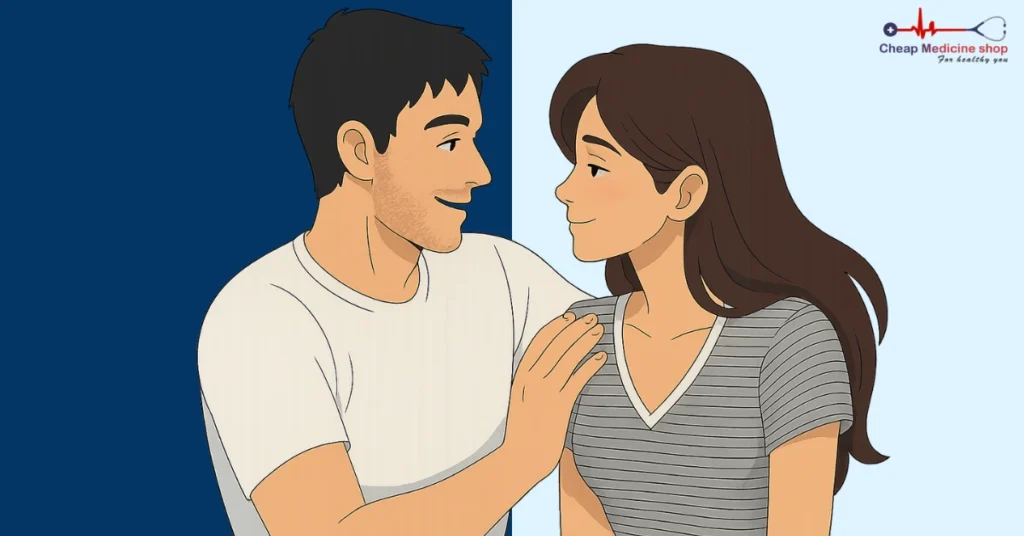
Finding a middle ground means neither forcing sex nor suppressing desire. In fact, it is an opportunity for couples to work together and create a rhythm that is fair and sustainable.
Tip 1: Schedule a flexible intimacy routine
Planned intimacy removes uncertainty and allows both partners to prepare for it both mentally and physically. You and your partner can plan it as follows:
- Mark date nights, not sex nights, in your calendars.
- Flirt throughout the day with texts, genuine compliments, and gentle touches.
- Include cuddling, sensual massages, showering together and slow kissing.
- Keep the schedule flexible and be open to skipping or postponing plans if either partner feels overwhelmed.
Tip 2. Focus on non-penetrative sex
Penetrative sex can feel physically or mentally demanding, especially during stress, postpartum recovery, Menopause, or hormonal shifts. So shifting to non-penetrative alternatives to reignite passion might help. Try to,
- Focus on sensation, without goals of intercourse or orgasm.
- Take turns being the giver and receiver to cater to each other’s needs.
- Explore oral sex or stimulation by hand instead.
- Take turns initiating and setting the pace to avoid imbalance.
- Continue to check in verbally or nonverbally to ensure mutual comfort.
Tip 3. Solo or mutual self-pleasure
Masturbation is a safe, intimate compromise that reduces pressure on both partners while keeping sexual connection alive. Contrary to common myth, it doesn’t cause Sexual Dysfunction. It is a proven way to maintain balance without resentment.
- Try mutual masturbation if both consent to it.
- If your partner is uncomfortable, indulge in solo self-pleasure.
- Allow your partner to watch (if consensual) to help build arousal gradually.
Tip 4. Try new sex positions or toys
Sexual boredom is more common in long-term monogamous relationships and often leads to reduced sexual satisfaction in both men and women. Thus, introducing something new into the dynamic can help you reconnect with each other.
- Experiment with role-play, playful themes, or light fantasy.
- Use scents, music, or mood lighting to create a romantic atmosphere in the bedroom.
- Wear new lingerie and undress slowly to build your partner’s arousal.
- Try one new sex position at a time to avoid overwhelm.
- Add toys such as vibrators, strokers, or remote-controlled devices for variety.
Tip: If you’re considering an open relationship or polyamory to handle mismatched libidos, start with open, honest communication. Clearly define boundaries, agree on mutual expectations, and regularly revisit the arrangement.
Method 5: Seek professional help

When mismatched libidos lead to frustration or emotional distance, it can become difficult to break the pattern without outside guidance. Therefore, seeking help becomes a necessity to rebuild trust and intimacy.
Tip 1: Begin couples counselling or therapy
Sex therapists and couples counsellors are trained to help individuals and couples with mismatched libidos, orgasmic difficulties, past trauma, Performance Anxiety and relationship conflict. They will offer a neutral space to talk about desire mismatch without hurting the other partner.
So, find a certified therapist through local government directories. Then, attend sessions together to learn structured tools for rebuilding communication, connection, and intimacy.
Tip 2: Get medical treatment
Mismatched libidos are often influenced by physical or hormonal changes rather than relationship issues. Thus, getting a proper medical evaluation (for yourself or your partner) will help identify the actual cause and treat the underlying condition.
- Review lifestyle changes that might be affecting libido like Menopause, recovery from pregnancy, nursing, caregiving or stress/fatigue.
- Review medications that commonly reduce libido, such as antidepressants, ADHD medicines, birth control pills, and blood pressure medication.
- Consult a doctor to get hormone levels, such as testosterone, thyroid, estrogen, and prolactin, checked.
- Explore pelvic floor exercises, lubricants and moisturizers if sex is uncomfortable or painful.
- Discuss major reproductive events, including IVF cycles, miscarriage, childbirth or pregnancy, that may have temporarily disrupted sexual desire.
- Treat Erectile Dysfunction, Premature Ejaculation, Hypoactive Sexual Desire Disorder or painful intercourse with medical support and targeted therapy.
Overall, your relationship may require spiritual and emotional healing in addition to physical treatment and couples counseling to fix mismatched libidos.
Frequently Asked Questions
Is it normal to have different libidos?
Yes, it is quite normal to have different libidos in a relationship. It is actually rare for two people to have the same sex drive since desire naturally rises and dips throughout life.
Can a healthy relationship exist with mismatched libidos?
Yes, many couples thrive in healthy relationships despite mismatched libidos. Desire discrepancies can be resolved with empathy, open communication, flexible intimacy routines, and mutually comfortable compromises. You can also seek couples counseling or therapy, if needed.
Is a mismatched libido a reason to break up?
No, ending a relationship solely because of mismatched libidos may not solve the problem since perfectly aligned sexual desires are extremely rare. Most couples successfully work through desire discrepancy with open communication. You should try to improve sex drives with flexibility in intimacy and therapy before considering a breakup.
Do relationships work with high and low libido?
Yes, relationships between partners with differing libido levels can be successful, but they often require to prevent resentment and a decline in intimacy. This situation, commonly referred to as a desire discrepancy, affects a large majority of couples and can be effectively managed through open communication, mutual compromise, emotional connection, and, in some cases, professional counseling.
Cheap Medicine Shop only refers to credible, authoritative sources for our content. If you’re curious about how we ensure the integrity of our content, we encourage you to read our Content Information Policy.