
Getting older naturally brings changes that affect sexual health and overall body functioning. As physical stamina declines and specific bodily processes slow down, many men may notice weaker erections or a slower arousal response. This is a very common occurrence with increasing age and nothing to be concerned about.
Aging does not automatically mean loss of sexual function. Many men in their 70s or even 80s maintain good erectile function, particularly those who follow a healthy lifestyle and manage health issues like Diabetes and cardiovascular conditions that can impact erections.
This article will explore at what age does a man stop getting hard. We will further delve into how age is linked with erections and factors that contribute to Erectile Dysfunction at any age. At last, you’ll find effective treatment options to promote firm erections.
At what age does a man stop getting hard?
There is no universal age when a man stops getting hard. However, most men start seeing mild changes in their erection quality during their 40s. These changes include a need for more stimulation, a longer refractory period (time needed before next erection), a slower arousal response, and weaker erections.
Occasional or mild age-related changes are common. At the same time, when erection difficulty becomes consistent and begins impacting sexual confidence and relationships significantly, it can indicate Erectile Dysfunction (ED). It is a sexual condition that makes it difficult to get or sustain an erection. ED is not limited to elderly men and can occur at any age.
Research shows that about 40% of men in their 40s experience some degree of ED, and the risk increases by 10% with each decade. By the 60s and 70s, ED becomes more common, and most men aged 75 and older report at least mild symptoms.
Save up to 90% on your medicine bills
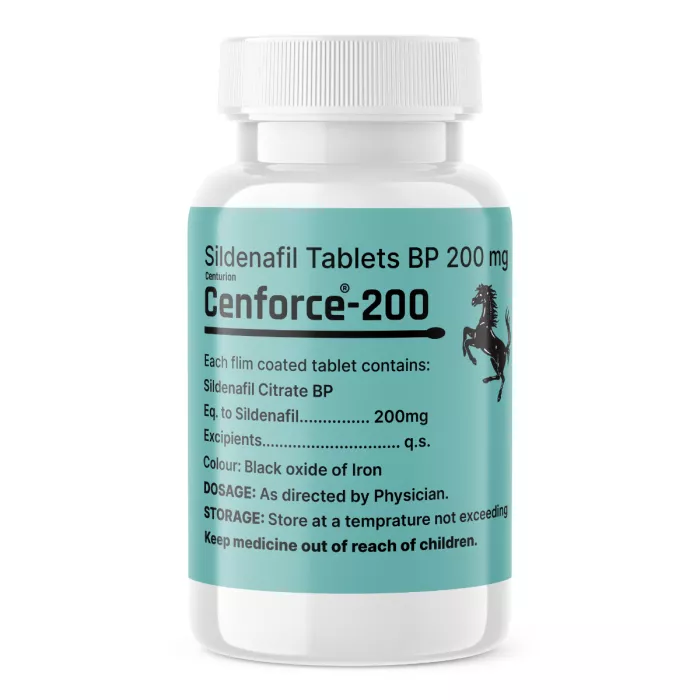
Cenforce 200 mg

Kamagra Oral Jelly Rx 100 mg
Fildena 100 mg

Vidalista 60 mg
Why do erections get weaker with age?
Erectile function depends directly on healthy nerves, balanced hormones, and strong blood flow to the penis. All of these factors naturally decline with age, affecting the body’s ability to maintain firm erections.
With increasing age, the following factors contribute to weak erectile function:
- Nerve and vascular changes: Nerve signaling weakens, impacting brain chemicals and blood vessels. Moreover, blood vessels lose their elasticity, which can impair blood flow to the penis.
- Age-related health conditions: They typically include High Blood Pressure, Obesity, Diabetes, and heart disease. These conditions can damage both blood vessels and nerves, affecting the ability to gain firm erections.
- Low Testosterone: Declining levels of testosterone (Low T) with age can lead to a lower libido. Low libido indirectly influences erectile function.
- Increased use of medications: With growing age, men are more likely to take medicines due to health conditions mentioned above, which can interfere with blood flow and nerve functioning.
- Low Nitric Oxide (NO) production: NO production decreases, which is crucial for blood vessel dilation in the penis to promote increased blood flow during erections.
Other factors contributing to ED at any age
Apart from natural aging and health conditions associated with it, numerous other factors can worsen or trigger erectile difficulties at any age. Such factors are as follows:
- Medications: Medicines like antidepressants, antipsychotics, anti-androgens, and chemotherapy medications can interfere with sexual functioning by disrupting hormonal balance and impairing nerve sensitivity.
- Poor lifestyle choices: Excessive alcohol intake, misuse of recreational drugs, and smoking reduce blood circulation and affect nerve activity.
- An unhealthy diet: Processed and fried foods or foods with added sugar, high trans and saturated fats, can contribute to poor circulation.
- Neurological injuries: Spinal cord or brain injuries can create difficulties in getting an erection.
- Radiation or surgical damage: Any major pelvic surgery or radiation treatment for Bladder or Prostate Cancer can damage blood vessels or nerves, impairing erectile function.
- Psychological issues: Stress, Depression, and anxiety can all contribute to ED by impacting hormonal levels and decreasing sexual desire.
Methods to promote better erections
There are several natural, medicinal, and technical ways to promote erectile health. The best approach to enable better erections will ultimately depend on age, severity, and health conditions. These approaches are explained in detail below:
Make healthy lifestyle changes
If ED is mild and linked to poor lifestyle habits, doctors can recommend improving daily habits to strengthen sexual health. These healthy lifestyle changes that can improve erection naturally include:
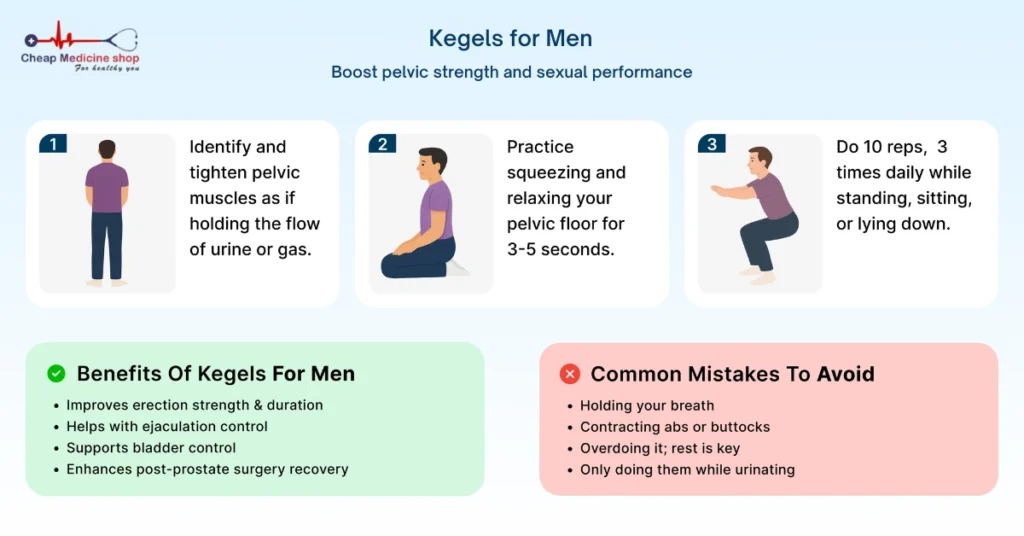
- Regular exercise: Kegels can help strengthen the pelvic floor muscles and promote firmer erections.
- Avoid: Avoid smoking and alcohol, and reduce the intake of high-fat meals.
- Better sleep quality: Aim for at least 7-8 hours of uninterrupted sleep. Maintain a consistent schedule by sleeping and waking up at the same time daily.
- A balanced diet: Having a balanced diet that includes foods known to boost blood circulation, such as berries, leafy greens, and nuts.
ED medications
If lifestyle changes do not lead to enough improvement, doctors will prescribe ED medications, which are the first line of medical treatment. Generally, prescribed medicines are Phosphodiesterase Type-5 (PDE-5) inhibitors that function by boosting the blood flow into the penis. These medicines are:
- Sildenafil: It was the first medication approved for the treatment of ED, with its effects lasting 4-6 hours.
- Vardenafil: Its effects also last for 4-6 hours and can be effective for men with Diabetes-related ED.
- Tadalafil: It is popularly known as the weekend pill due to its effects lasting for 36 hours. It is the only approved ED medicine that can be taken daily.
- Avanafil: It is a comparatively new medicine, which is why it has fewer side effects compared to older PDE-5 inhibitors.
Other treatment options
For men who do not respond to ED tablets, several advanced treatments are available, such as:
- Vacuum Erection Device (VEDs): VEDs or penis pumps draw blood into the penis, enabling an erection quickly.
- Hormonal therapies: Therapies like Testosterone Replacement Therapy (TRT) improve low libido in men and balance testosterone levels, if they are identified as key causes of erectile issues.
- Surgical approaches: Penile implant surgery is a commonly recommended procedure. An inflatable rod is placed inside the penis to enable controlled erections.
It will be the right time to consult a doctor if erection issues persist despite adopting natural remedies, significantly impacting sexual life and health. Weak erectile function is accompanied by pain, or there is a sudden loss of erection. Early evaluation will help you avoid further complications and ensure the right approach to ED management.
Conclusion
Age triggers numerous changes that impact a man’s sexual health, including erections. While many wonder at what age does a man stop getting hard, there is no specific age. However, research has indicated that erection issues usually begin to arise when men reach their 40s. Occasional age-related erection changes, like slower arousal response and longer refractory period, are normal. When they become persistent, it can indicate ED, with about 40% of men in their 40s dealing with this sexual condition.
Age-linked ED is affected by hormonal shifts, weak blood flow and nerve functioning, frequent medication use, low NO production, and health issues like Diabetes that develop over time. Moreover, ED can occur at any age due to medicines like antidepressants, neurological injuries, or surgical damage.
Fortunately, healthy lifestyle habits, like regular exercise, medications like PDE-5 inhibitors, and hormonal therapies like TRT, or devices like VEDs, can effectively treat age-related ED. Seeking help early ensures better results and long-term sexual well-being.

Frequently Asked Questions
Can a man have ED with one woman and not another?
Yes, a man can experience ED with one woman and not another due to certain emotional and psychological factors linked to the relationship. Unresolved conflicts, Sexual Performance Anxiety, absence of emotional connection, and stress can interfere with the brain signals involved in erectile function.
Can a 70-year-old man get a hard-on?
Yes, a 70-year-old man can get a hard-on (erection) even though ED prevalence increases by age 70 due to reduced blood flow, weak nerve signalling, and low testosterone levels. RMP lifestyle supports erectile function, whereas in the case of the absence of erection, treatments like PDE-5 inhibitors, implants, and injections can help.
Do men in their 40s need Viagra?
No, men in their 40s do not necessarily need Viagra (Sildenafil) unless they are dealing with ED. Prevalence of ED in this age group is often mild and linked to factors like lifestyle, Hypertension, and Diabetes. The decision to use Viagra will depend on a doctor’s prescription, individual health, and ED severity.
What can I drink for a full erection?
You can drink watermelon juice, or nature’s Viagra, for a full erection. Other drinks known to support erection and overall sexual function are pomegranate juice and beetroot juice, which dilate blood vessels and boost blood flow. Proper hydration, green tea, and ginseng tea also help in improving blood flow.
Cheap Medicine Shop only refers to credible, authoritative sources for our content. If you’re curious about how we ensure the integrity of our content, we encourage you to read our Content Information Policy.
Recent Web Stories