

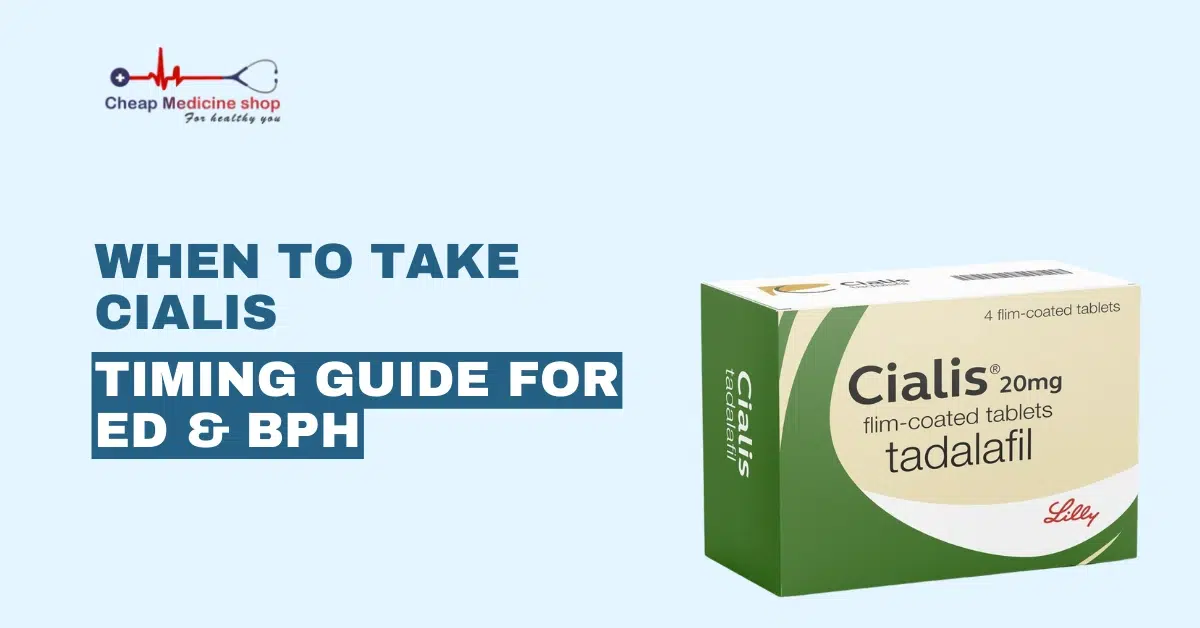
Cialis is a prescription medication used to treat Erectile Dysfunction (ED). It contains Tadalafil, a Phosphodiesterase type 5 (PDE5) inhibitor that improves blood flow to the penis during sexual stimulation. It is also prescribed to manage symptoms of Benign Prostatic Hyperplasia (BPH), a condition that can cause weak urine flow, difficulty starting urination, or frequent urination.
One of the most common questions after starting Cialis is when to take it for the best results because timing can directly affect how well the medication works.
Cialis is generally prescribed in two ways: as a daily low dose or as needed before sexual activity. The correct timing depends on which dosing plan your doctor has recommended.
In this article, you will understand the different dosing options, when to take Cialis based on your prescription, and important safety tips to follow.
When to take Cialis
The right time to take Cialis depends on whether you use it daily or on demand. Daily dosing requires taking the tablet at the same time every day to maintain steady levels in the body. On-demand dosing requires taking it before planned sexual activity. Each method works differently, so timing matters for the best results.
Save up to 90% on your medicine bills

Orgie 20 Mg Oral Strips
Vidalista 60 Mg
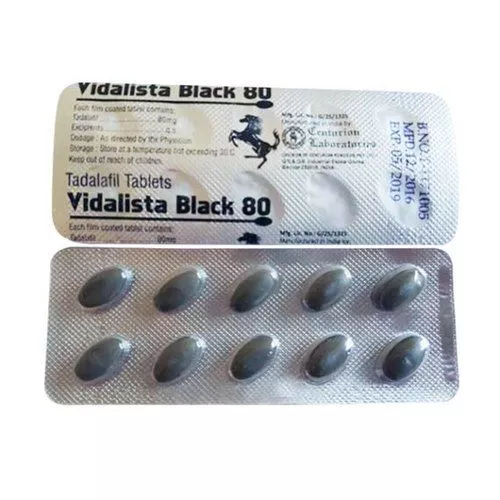
Tadalafil Black 80 Mg

Cenforce 200 Mg
When to take Cialis on a daily basis
If prescribed for daily use, take Cialis once daily at the same time each day. Daily doses are typically 2.5 mg or 5 mg. Taking it consistently helps maintain stable Tadalafil levels in the bloodstream, allowing erections to occur naturally with sexual stimulation.
- For Erectile Dysfunction: Daily dosing allows erections to occur naturally with sexual stimulation without planning the medication around intimacy. Most men notice improved erectile function within 3–5 days of consistent daily use.
- For Benign Prostatic Hyperplasia: Daily Cialis helps relax smooth muscles in the prostate and bladder neck. This leads to noticeable improvement in urinary symptoms, such as urgency, weak flow, or nighttime urination, typically within 1–2 weeks. The maximum benefits are often observed after 4 weeks of continuous use.
Do not take more than one dose within 24 hours, and consistent timing reduces Performance Anxiety and ensures both sexual and urinary benefits develop predictably over time.
When to take Cialis when on demand
If prescribed as needed, take Cialis at least 30 to 60 minutes before sexual activity. The usual starting dose is 10 mg. Depending on how your body responds, your doctor may adjust it to 20 mg or reduce it to 5 mg.
Tadalafil has a long half-life of about 17.5 hours. Because of this, its effects can last up to 36 hours. This does not mean a continuous erection. It means your body can respond to sexual stimulation more easily during that time window. Do not take more than one dose per day.
As-needed dosing is mainly intended for managing Erectile Dysfunction. It is not typically recommended for treating BPH symptoms alone, since improvement in urinary symptoms requires consistent daily use of the medication.
Tips for taking Cialis safely and effectively
Taking Cialis correctly improves both safety and effectiveness. While the timing depends on your prescribed dosing plan, there are important precautions one should follow.
- Follow the prescribed dose: Do not take more than one dose within a 24-hour period unless your doctor specifically advises you to do so. Increasing the dose on your own does not improve results and can raise the risk of side effects.
- Food does not significantly affect absorption: Cialis can be taken with or without food, as meals, including high-fat ones, do not significantly affect its absorption or delay its effectiveness.
- Be mindful of alcohol: Excessive alcohol consumption can increase dizziness, lower blood pressure, and reduce erectile response.
- Discuss other medications with your doctor: Alpha-blockers, certain antifungals, HIV medications, and some blood pressure medications require dose adjustments.
- Avoid nitrate medications: Cialis should never be taken with nitrate drugs used for chest pain, as this combination can cause a dangerous drop in blood pressure.
- Know the warning signs: Seek immediate medical attention if you experience chest pain, sudden vision or hearing changes, or Priapism (an erection lasting longer than four hours).
Conclusion
When to take Cialis for the best results depends on whether it is prescribed as-needed or daily. As-needed dosing, available in 5 mg, 10 mg, or 20 mg, is usually taken 30–60 minutes before sexual activity and can last up to 36 hours, though sexual stimulation is still required.
Daily low-dose therapy, typically 2.5 mg or 5 mg, is taken at the same time each day to maintain steady Tadalafil levels, allowing more spontaneity. It is also commonly used to treat BPH symptoms by continuously relaxing smooth muscles in the prostate and bladder neck.
Having the correct Cialis doses as prescribed by your doctor, following safety precautions, avoiding unsafe drug combinations, and taking the medication under medical supervision are all essential for achieving safe, consistent, and effective results.

Frequently Asked Questions
Can I take Cialis at night?
Yes, you can take Cialis at night. For as-needed use, take it at least 30–60 minutes before sexual activity, regardless of the time of day. For daily dosing, choose a time in the morning or at night and take it consistently at the same time each day.
What happens if I miss a daily dose?
If you miss a daily Cialis dose, take it as soon as you remember. If it is almost time for your next scheduled dose, skip the missed dose and continue as scheduled. Do not take two doses at once to make up for the missed tablet.
What are the side effects of Cialis?
Common side effects of Cialis include headache, indigestion, back pain, muscle aches, flushing, nasal congestion, and dizziness. These are usually mild and temporary. Rare but serious effects include chest pain, sudden vision or hearing loss, or a painful erection lasting longer than four hours, which requires immediate medical attention.
How many times can you come with Cialis?
Cialis does not increase the number of times you ejaculate. It improves blood flow to help achieve and maintain an erection during sexual stimulation. The number of times you can have intercourse depends on individual stamina, recovery time, and overall health, not the medication itself.
Is 20 mg of Cialis too strong?
No, Cialis 20 mg is not too strong if prescribed by a doctor, but it can increase the likelihood of side effects. A 20 mg dose is the highest standard as-needed strength for Erectile Dysfunction. The appropriate dose depends on your response, tolerance, and medical history.
Cheap Medicine Shop only refers to credible, authoritative sources for our content. If you’re curious about how we ensure the integrity of our content, we encourage you to read our Content Information Policy.
Recent Web Stories