

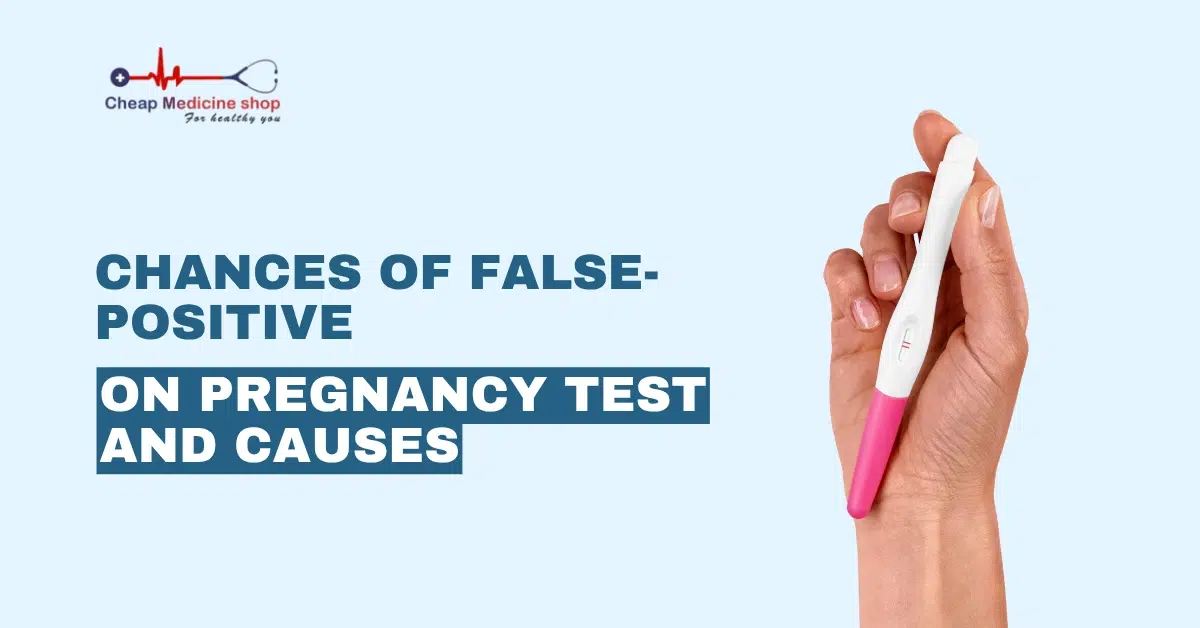
A positive pregnancy test can trigger several emotions at once. It can feel exciting, unexpected, confusing, or stressful. On the other hand, a false positive on a pregnancy test can cause unnecessary emotional distress, especially when someone is not prepared for the pregnancy or is trying to conceive.
A false-positive pregnancy test means the test shows a positive result even when you are not pregnant. This is uncommon, as most new home pregnancy tests are highly accurate when used correctly. Still, in rare cases, pregnancy hormone levels can remain elevated due to certain health conditions or an early pregnancy loss. This, in turn, can lead to an incorrect test result.
This article discusses the chances of a false-positive on pregnancy test and its possible causes. Further, you will learn the next steps and how to prevent false positives.
What are the chances of false-positive on pregnancy test?
The chance of a false-positive pregnancy test is low, usually less than 1% when used as directed. Most home pregnancy test brands report around 99% accuracy in detecting pregnancy after a missed period, making a positive result generally reliable in most situations.
These tests give reliable results by detecting human Chorionic Gonadotropin (hCG) in urine. HCG is primarily produced by the placental cells during pregnancy. The results appear as plus/minus signs, words like pregnant, or lines. Even a faint line is considered positive, as hCG levels are initially low in early pregnancy, then double every 2 days.
Therefore, false positives are rare since pregnancy tests are developed to only react to hCG, but, sometimes, certain factors like reading the test too late or fertility medications can mislead.
Save up to 90% on your medicine bills
Progynova 2 mg

Estrabet 2 Tablet

Carmel Organics Ashwagandha Tablets

Neuherbs Ashwagandha 1000 Plus
What can cause false positives on pregnancy test?
In many cases, the test is not technically wrong. It detects hCG, but it’s not from an ongoing pregnancy. This can happen after a recent pregnancy, with certain fertility medicines, or due to specific medical conditions. In other cases, the result can come from incorrect test use or an evaporation line. The list below discusses the reasons for a false positive on a pregnancy test:
- Miscarriage or childbirth: hCG can stay in your urine or blood for several weeks after a recent miscarriage, abortion, or childbirth. Therefore, taking a test too soon, usually 1-6 weeks after miscarriage or childbirth, can show a positive result even when there is no current pregnancy.
- Chemical pregnancy: A very early pregnancy loss, usually within 1-5 weeks after implantation, is called a chemical pregnancy. The test can detect hCG and yield a positive result, but the pregnancy does not progress long enough to be clearly seen on an ultrasound. This is technically an early pregnancy loss, not a test error.
- Medications: Some fertility injectable medications contain hCG to promote ovulation. Testing too soon after taking these medicines can detect the injected hormone rather than pregnancy-related hCG, leading to a false positive. Besides these, certain antipsychotic medicines, especially Chlorpromazine, can trigger a false positive in rare cases.
- Health conditions: Rarely, a false positive can occur due to conditions that increase hCG levels or interfere with the test. These include Chronic Kidney Disease (CKD), hCG production during menopause or perimenopause, Gestational Trophoblastic Disease (GTD), including Molar pregnancy and Choriocarcinoma, and some ovarian germ cell tumors. Certain Urinary Tract Infections (UTIs) and ovarian cysts, particularly corpus luteum cysts, can also affect test results.
- Evaporation line: Pregnancy tests should be read only within the specified time window, usually 2-5 minutes. If checked too late, the urine dries and leaves a faint grayish or colorless mark called an evaporation line. This line can sometimes resemble a positive result line, even when the test is negative.
- Faulty or incorrect test use: A damaged, expired, or poorly stored test kit can give unreliable results, including false negatives or positives. Similarly, if the test is dipped incorrectly or used without following instructions, it can give false results.
What to do after false-positive pregnancy test?
If a positive result seems doubtful, you can follow some practical tips to confirm the real pregnancy. These tips can help identify whether the test detected remaining hCG, a testing error, or another cause. You can also monitor early symptoms of pregnancy, like breast tenderness or nausea, to assess whether the positive test reflects a true pregnancy.
Given below are the steps you can follow after a false positive:
- Wait for 48-72 hours, as the hCG levels will naturally drop if the false positive was due to early miscarriage or chemical pregnancy.
- Take another test with a different brand or use digital testers.
- Make sure you read the result within the recommended time window.
- If it still shows a positive result and you’re unsure, it’s best to consult your doctor or gynecologist. The doctor will schedule a blood test, which is considered the gold standard for confirming pregnancy.
Tips to avoid false-positive pregnancy test
A false positive can’t always be prevented, particularly when it is associated with a recent pregnancy, miscarriage, fertility treatment, or a health issue. However, proper testing and avoiding the use of expired kits can reduce avoidable errors and make the results easier to trust. You can follow the tips listed below to avoid a false positive test:
- Take the test on the first or second day of your missed period, preferably in the morning when the urine is more concentrated. It makes it easier to detect hCG levels.
- Check the test kit’s expiration date first. Next, follow the test instructions clearly. Use the correct urine amount or dip the test for the directed duration.
- Wait for the exact time, then check the result within the time window specified in the instructions.
- If you are on fertility injections, talk to your doctor first to decide when to test.
- If you find it difficult to interpret the faint lines, use a digital test kit. It offers a clear, worded result (pregnant/not pregnant).
Conclusion
A false positive means a test shows pregnancy when there is none. The chance of false-positive on pregnancy test is rare, usually below 1% when used correctly. Home pregnancy kits detect hCG in urine, and even a faint hCG line is considered positive.
False positives can occur after miscarriage or childbirth because leftover hCG may remain in urine if testing is done too soon. Other causes include chemical pregnancy, hCG-containing fertility injections, CKD, menopause, GTD, evaporation lines that resemble a positive result, incorrect testing, or using a damaged or expired kit.
If a false positive is suspected, retest after 48 to 72 hours and read the result within the recommended time window. Consult a gynecologist if still unsure. To reduce errors, test on the first or second day of a missed period using early-morning urine. If using fertility injections, ask your doctor about test timing. Use a digital kit if faint lines are difficult to interpret.

Frequently Asked Questions
What are the signs your hCG is rising?
Rising hCG usually causes early pregnancy symptoms, including sore breasts, nausea, cramps, frequent urination, and fatigue. These symptoms usually begin around 4 to 6 weeks, when hCG levels increase every 2-3 days. However, symptoms will vary from person to person.
How do you take a pregnancy test correctly?
To take a pregnancy test correctly, use first-morning urine and follow the kit instructions. Depending on the brand, urinate on the stick, dip it in urine, or add drops. Read the result within 2-5 minutes. Two lines usually mean pregnant; one line means not pregnant.
Is 4 am the first morning urine?
Yes, 4 am, after more than 6 hours without peeing, is considered the first morning urine. It’s concentrated enough for precise pregnancy testing if you have slept at least 7 hours. Make sure to wait until after a long sleep stretch for better hCG detection.
Does 1 line or 2 lines mean you’re pregnant?
On most home pregnancy test kits, 2 lines (1 control line, 1 hCG line) indicate pregnancy, even a faint one. On the other hand, 1 line (only control line) means not pregnant. No control line means an invalid test. However, the parameter will vary by brand, so always read the label instructions first.
Cheap Medicine Shop only refers to credible, authoritative sources for our content. If you’re curious about how we ensure the integrity of our content, we encourage you to read our Content Information Policy.
Recent Web Stories