
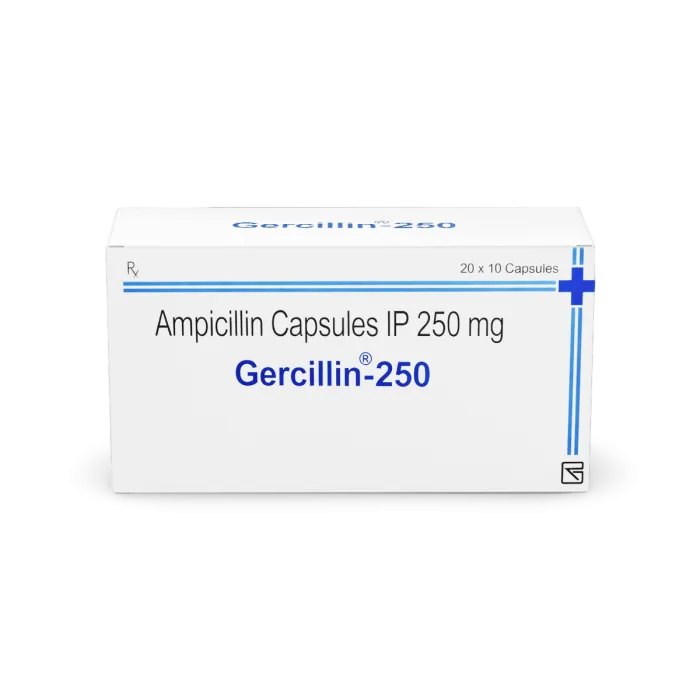
Gercillin 250 Mg Capsule
| Pack Size | Price | Qty | Unit Price |
|---|---|---|---|
| 200 Capsule/s | $16.00 | $0.08 | |
| 400 Capsule/s | $32.00 | $0.08 | |
| 600 Capsule/s | $48.00 | $0.08 |
What is Gercillin 250 mg Capsule
Gercillin 250 mg Capsule is a penicillin-type antibiotic medication designed to treat various bacterial infections affecting multiple body systems. The capsule contains FDA-approved Ampicillin (250 mg) as its active ingredient, which belongs to the aminopenicillin class of antibiotics. Manufactured by Zydus Cadila, India, in a GMP-compliant facility, this antibiotic ensures quality, safety, and therapeutic effectiveness for treating susceptible bacterial infections.
This medication works by preventing bacteria from forming their protective cell walls, which are essential for bacterial survival. Without intact cell walls, bacteria cannot maintain their structure and eventually die.
Gercillin 250 mg Capsule is commonly prescribed for treating respiratory infections like Pneumonia and Bronchitis, Urinary Tract Infections (UTIs), gastrointestinal infections, Meningitis, skin and soft tissue infections, and Gonorrhea caused by non-resistant bacteria.
Take Gercillin 250 mg Capsule on an empty stomach, either 30 minutes before or 2 hours after meals with a full glass of water. The medication is typically taken four times daily (every 6 hours) as prescribed. Complete the full course of treatment even if symptoms improve to prevent antibiotic resistance and recurrence of infection.
Common Gercillin side effects include diarrhea, nausea, vomiting, skin rash, and abdominal discomfort. These effects are generally mild. However, severe diarrhea, allergic reactions (rash, itching, swelling, breathing difficulty), or signs of liver problems require immediate medical attention.
Store Gercillin 250 mg Capsule at room temperature (15°C-30°C) in a cool, dry place away from direct light and moisture. Keep out of reach of children. Avoid alcohol consumption during treatment as interactions are not well-established. Consult a healthcare professional for proper dosage based on infection severity, age, kidney function, and individual response to therapy.
What are the benefits of taking Gercillin 250 mg Capsule
Gercillin 250 mg Capsule offers several therapeutic advantages for individuals dealing with bacterial infections:
- Broad-spectrum antibiotic action: It effectively treats a wide range of bacterial infections, including UTIs, respiratory infections, skin infections, and gastrointestinal infections, providing comprehensive antimicrobial coverage.
- Prevents bacterial cell wall formation: Gercillin works by disrupting the bacterial cell wall synthesis, causing bacterial death and preventing the infection from spreading or worsening throughout the body.
- Well-tolerated with an established safety profile: As a penicillin-type antibiotic, Ampicillin has decades of clinical use with a well-understood safety profile. The medication is generally safe for most patients when used appropriately under medical supervision.
- Rapid action against infections: It begins working within 1 to 2 hours after administration, with noticeable symptom improvement typically occurring within 2 to 3 days of starting treatment, helping patients recover faster from bacterial infections.
How to take Gercillin 250 mg Capsule
Gercillin 250 mg Capsule should be taken exactly as prescribed by a healthcare professional. Follow these guidelines for optimal effectiveness:
- The medication is typically taken four times daily (every 6 hours) to maintain consistent medicine levels in the body.
- Swallow the capsule whole with a full glass of water without crushing, breaking, or chewing it.
- Take the Ampicillin capsule on an empty stomach, half an hour before or 2 hours after eating, for maximum absorption.
- Complete the full prescribed antibiotic course even if symptoms improve to prevent antibiotic resistance.
Strengths and Substitutes
Gercillin is only available in a single strength option at Cheap Medicine Shop. However, you can consider the following substitutes:
| Campicilin 250 mg | $4.60/10 capsules |
| Campicilin 500 mg | $5.90/10 capsules |
What are the side effects of Gercillin 250 mg Capsule
Gercillin 250 mg Capsule may cause some mild and temporary side effects. They subside as the body adjusts to the medication. However, consult a healthcare professional if they persist or worsen:
- Diarrhea
- Nausea
- Vomiting
- Skin rash
- Abdominal discomfort
- Headache
- Mouth or tongue sores
Safety Advice
Gercillin 250 mg Capsule should be used with caution in people with liver disease. Although Ampicillin is generally safe, rare cases of liver problems have been reported. Inform the doctor about any history of liver conditions. Regular liver function monitoring may be necessary during prolonged treatment.
Use with caution in people with kidney disease. Ampicillin is primarily eliminated through the kidneys. So dosage adjustments may be required based on kidney function. Regular monitoring of kidney function is essential. Inform the doctor about any existing kidney problems before starting treatment.
Gercillin 250 mg Capsule is considered safe for use during pregnancy when prescribed by a doctor for the treatment of bacterial infections. Studies show it does not cause birth defects. The medication passes into breast milk in very low amounts and may occasionally cause diarrhea in nursing infants. However, use it only under medical supervision during pregnancy and breastfeeding.
Avoid use if allergic to Ampicillin, penicillin, or any similar antibiotics. Do not use with tetracycline antibiotics as they may reduce effectiveness. Avoid alcohol consumption during treatment, as interactions are not fully understood. Ampicillin may decrease the effectiveness of oral contraceptive pills. So, use additional non-hormonal birth control methods during treatment.
FAQs
Can Gercillin 250 mg Capsule be taken with food?
Gercillin 250 Capsule is best taken on an empty stomach for optimal absorption. Take it half an hour before meals or 2 hours after eating, with a full glass of water. However, if stomach upset occurs, the medication can be taken with food, although this may slightly reduce absorption.
How long should I take Gercillin 250 mg Capsule?
The duration of Ampicillin treatment depends on the type and severity of the infection. Typically, treatment lasts 7 to 14 days. Complete the full prescribed course even if symptoms improve within a few days. Stopping treatment early can cause antibiotic resistance and a recurrence of infection.
Will Gercillin 250 mg Capsule treat viral infections like cold or flu?
No, Gercillin 250 mg Capsule only treats bacterial infections. It does not work against viral infections, including the common cold or flu. Using antibiotics to treat viral infections is ineffective and contributes to antibiotic resistance. Always consult a doctor for proper treatment.
Can Gercillin 250 mg Capsule cause allergic reactions?
Yes, allergic reactions to Ampicillin can occur, ranging from mild skin rashes to severe anaphylaxis. Symptoms include hives, itching, facial swelling, difficulty breathing, and severe dizziness. Stop the medicine immediately and seek medical help if any allergic reaction symptoms develop.
What should I do if I miss a dose of Gercillin 250 mg Capsule?
Take the missed dose of the Gercillin capsule as soon as you remember. However, if it is almost time for the next scheduled dose, leave the missed dose and continue with the regular schedule. Do not take a double Ampicillin dose to make up for the missed one.
Does Gercillin 250 mg Capsule cause diarrhea?
Yes, diarrhea is a common side effect of Gercillin 250 mg Capsules because antibiotics can disrupt the normal balance of gut bacteria. Mild diarrhea usually resolves after completing treatment. However, severe, watery, or bloody diarrhea may indicate a serious intestinal condition requiring immediate medical attention.
Can I stop taking Gercillin 250 mg Capsule once I feel better?
No, you should not stop taking Gercillin 250 mg Capsule even if symptoms improve. Complete the full prescribed course to ensure all bacteria are eliminated. Stopping it early can cause the infection to return and bacteria to develop resistance, making future infections harder to treat.
{{title}}
{{{detail}}}
{{#adminComment}}