
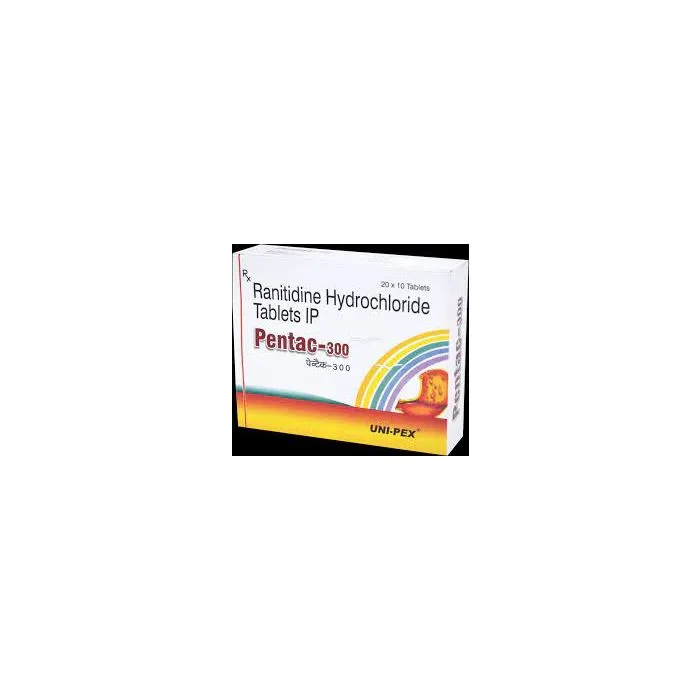
Pentac 300 Mg Tablet
What is Pentac 300
Pentac 300 is a prescription medicine used to treat acid-related disorders such as Gastroesophageal Reflux Disease (GERD, heartburn, and stomach ulcers. It helps reduce excess stomach acid that causes irritation and pain. The active salt in Pentac 300 is Ranitidine 300 mg, which works by controlling the amount of acid produced in the stomach.
Ranitidine belongs to a class of medicines called H2-receptor antagonists. It blocks the effect of histamine on stomach cells, helping to lower acid secretion. Uni-Pex Pharmaceuticals Pvt Ltd manufactures Pentac under GMP guidelines.
Ranitidine reduces acid production in the stomach lining, which helps relieve heartburn, heal peptic ulcers, and prevent acid-related damage caused by painkillers. Doctors commonly prescribe it for GERD, indigestion, acid reflux, heartburn, and to prevent stomach ulcers.
The usual recommended dose is one 300 mg tablet taken once daily, preferably at bedtime, or as prescribed by a doctor. You can take it with or without food. Treatment duration depends on the medical condition being treated. If a dose is missed, take it as soon as you remember. If the dose is close to the next dose, skip it. Do not take two tablets at the same time. In case of overdose, symptoms such as confusion or rapid heartbeat may occur, and immediate medical attention is required.
Common side effects of this medicine are headache, dizziness, and mild stomach discomfort. These are usually temporary. Seek medical care as soon as possible if you experience severe reactions, such as a skin rash, swelling, irregular heartbeat, severe pain, or blood in the urine.
People with kidney or liver problems, pregnant or nursing mothers, and those who consume alcohol should use this medicine with caution. Alcohol can worsen acid problems. Inform your doctor about all the medications you are taking, especially pain relievers or antacids, and allow a 2-hour gap if necessary. Do not use this medicine if you are allergic to Ranitidine.
Store Pentac 300 below 25-30°C in a cool place, away from moisture, heat, and children. Keep it in its original packaging.
What are the benefits of taking Pentac 300
Pentac 300 helps control excess stomach acid, making it effective for treating acid reflux, heartburn, and GERD. By reducing acid production, it relieves burning chest pain, sour taste, and discomfort after meals. It also protects the food pipe from irritation and supports better digestion.
Another key benefit of Pentac 300 is its role in healing and preventing peptic ulcers. It reduces stomach lining damage, especially in people who use painkillers that can irritate it. It helps lower the risk of ulcer recurrence.
Pentac 300 also helps alleviate symptoms of indigestion and nighttime acidity, promoting better sleep and overall daily comfort. Its once-daily dose makes it convenient for long-term acid control.
How to take Pentac 300
This heartburn relief tablet is a prescription-based medication that should be taken as directed by your doctor. However, there are some general guidelines to follow for consistent results. They are:
- Take the dose as prescribed by your doctor. The 300 mg tablet is usually taken once daily.
- You can take it with or without food.
- Consume the whole tablet with water. Do not crush, chew, or break it.
- Take the medication at the same time daily for optimal results.
Strengths and substitutes
At present, Pentac is also available in one other strength at Cheap Medicine Shop. Additionally, several alternative medicines containing the same active ingredient are available, which can be suitable based on your treatment requirements. Always consult your doctor before opting for these medications.
| Pentac 150 mg Tablet | $0.70/10 pills |
| Zinetec 300 mg Tablet | $0.70/10 pills |
What are the side effects of Pentac 300
This gastric ulcer medicine is generally well-tolerated when used as directed. However, you may experience some side effects, especially when first taking the medication. Some common Pentac 300 side effects are:
- Headache
- Nausea
- Dizziness
- Stomach discomfort
- Diarrhea
They are typically temporary and will fade as the body adjusts to the medication. However, if they continue to worsen or persist, consult a doctor immediately.
Safety Advice
Pentac 300 is generally safe for patients with mild to moderate liver disease, with no possible dose adjustments. However, since the liver partly metabolizes Ranitidine, severe dysfunction can slow down this process, leading to the medication staying longer in the body. It can raise the risk of side effects. Consult a doctor before using this medication.
Patients with kidney impairment should take the medication with caution since the kidneys primarily clear Ranitidine. Its dysfunction can slow down the clearing process, which increases the build-up and raises the risk of side effects. Consult a doctor for possible adjustments to your dose.
Pregnant and breastfeeding women can take this medication effectively under the guidance of a healthcare professional.
Do not take this medication if you are allergic to Ranitidine. Limit or avoid consumption of alcohol to prevent side effects. Since dizziness and headache are common side effects, it is advisable to avoid driving until you know how this medication affects you.
FAQs
Is it safe to take 300 mg of Ranitidine?
Yes, taking 300 mg of Ranitidine is considered safe for most adults when used as prescribed. The prescribed adult dose ranges from 150 mg once or twice daily to 300 mg once daily, depending on the condition being treated. For most conditions, the maximum daily dose is 300 mg.
Can Pentac 300 be used for a sour taste in the mouth?
Yes, Pentac 300 can help reduce a sour or bitter taste in the mouth if it is caused by acid reflux. By lowering stomach acid production, it helps prevent acid from flowing back into the food pipe and mouth, which is a common reason for this symptom.
Does Pentac 300 interact with other medicines?
Ranitidine can affect how some medicines work. It can reduce the effect of certain antifungal, HIV, and cancer drugs. It may also interact with antacids, pain relievers, blood thinners, and medications for the heart. Mild interactions can happen with caffeine and some other common drugs, so it’s best to inform your doctor.
Can I stop Pentac 300 suddenly?
No, it is not recommended to stop taking Pentac 300 abruptly without consulting your doctor about your condition. While it doesn’t cause severe withdrawal effects, acid reflux or heartburn may return. Always follow your doctor’s guidance, especially if you have been using it for a long time or for ongoing stomach issues.
Does Pentac 300 cause weight gain?
No, Pentac 300 (Ranitidine) is not known to cause weight gain. Most people do not experience changes in weight while taking it. Any weight changes are usually related to diet, lifestyle, or an underlying digestive condition, rather than the medicine itself.
Can Pentac 300 be used with herbal medicines?
Pentac 300 can usually be used with herbal medicines, but some may reduce its effectiveness. That is, Daijokito and cranberries can lower Ranitidine levels or affect absorption. Always consult a doctor before combining with herbals.
Can I take two tablets at once?
No, you should not take two Pentac 300 tablets at the same time. Taking a double dose can increase the risk of side effects. Always follow your doctor’s prescribed dosage.
{{title}}
{{{detail}}}
{{#adminComment}}