
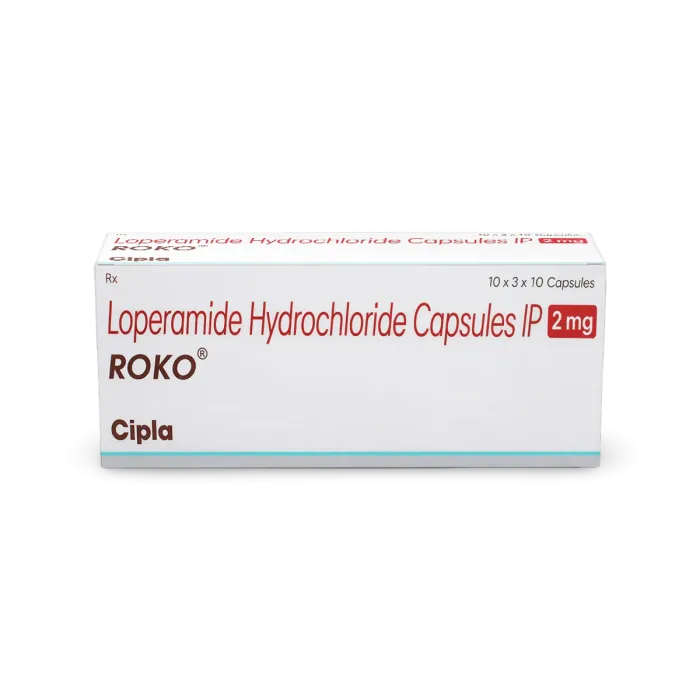
ROKO 2 Mg Capsule
| Pack Size | Price | Qty | Unit Price |
|---|---|---|---|
| 100 Capsule/s | $15.00 | $0.15 | |
| 200 Capsule/s | $20.00 | $0.10 | |
| 300 Capsule/s | $30.00 | $0.10 |
What is Roko 2 mg
Roko 2 mg Capsule is an oral medication used to treat diarrhea. Its active ingredient is Loperamide, which helps control frequent bowel movements by slowing gut motility. The capsule belongs to the antidiarrheal drug class and is manufactured by Cipla Ltd, a GMP-certified company.
Loperamide works on opioid receptors in the intestines to reduce peristalsis, decrease fluid secretion, and promote greater water absorption. It is commonly used for acute nonspecific diarrhea, traveler's diarrhea, diarrhea associated with IBS or inflammatory bowel disease, and to reduce ileostomy output.
For adults, the usual dose is 2 mg after the first loose stool, then another 2 mg after each subsequent stool, up to a maximum of 16 mg daily. Use should generally not exceed 2 days. Children 12 years and older can follow the adult dosing schedule. If a dose is missed, take it when symptoms occur; do not double doses. For an overdose, seek medical help immediately, as it can cause severe constipation or central nervous system effects.
Common side effects include constipation, dizziness, nausea, headache, and dry mouth. Contact a doctor if you experience abdominal pain, bloating, bloody stools, fever, or persistent diarrhea beyond 48 hours.
Avoid Roko in bloody diarrhea, dysentery, or liver impairment, and use caution in pregnancy or breastfeeding. It may interact with medications like ritonavir, quinidine, or other drugs that slow gut movement. Always inform your doctor of all medicines you take.
Store these capsules in its orginal packaging, below 30°C, away from children and moisture. Loperamide is FDA-approved, and Roko is manufactured under GMP standards.
What are the benefits of taking Roko 2 mg
Roko 2 mg is a diarrhea-control medicine containing Loperamide. It provides essential benefits to individuals experiencing watery stools due to causes such as food poisoning. They are:
- Reduces diarrhea: Roko capsules slow bowel movements, helping reduce the number of loose stools.
- Improves stool form: By increasing water and electrolyte absorption in the intestines, it helps make stools firmer.
- Relieves discomfort: It can ease common diarrhea symptoms such as stomach cramps and sudden urgency.
- Manages various causes: It is effective for acute diarrhea caused by infections or food poisoning, as well as diarrhea linked to Inflammatory Bowel Syndrome (IBS).
- Helpful for travelers: It is often used to control traveler's diarrhea when away from home.
How to take Roko 2 mg
Roko 2 mg capsule is a prescription-only medication that should be taken as per the doctor’s instructions. However, to achieve consistent results, there are some general guidelines you can follow. They are:
- You should take the dose and duration as directed by the doctor.
- Take the capsule with or without food.
- Swallow the capsule with water without crushing, chewing, or breaking it.
- Take it at the same time daily for optimal results.
Strengths and Substitutes
Currently, only the 2 mg strength of the ROKO capsule is available at Cheap Medicine Shop. However, there are substitutes available with the same active ingredient that you can choose from. Always consult a doctor before opting for any of them.
| Lopide Capsule | $2.70/10 capsules |
| Lopamide 2 mg | $1.90/10 capsules |
Safety Advice
People with liver problems should use Roko 2 mg with caution, as the liver processes the medicine. A doctor may need to adjust the dose or monitor for side effects such as unusual tiredness or abdominal discomfort.
Roko 2 mg is generally safe for patients with mild kidney issues, but medical advice is recommended for those with severe kidney conditions to avoid potential complications.
Pregnant women should only use Roko 2 mg if prescribed by a doctor as there are limited studies on human available. Breastfeeding mothers should also consult a healthcare professional, as small amounts of Loperamide may pass into breast milk.
Avoid using Roko 2 mg if you have bloody diarrhea, high fever, dysentery, or a known allergy to Loperamide. Do not exceed the prescribed dose, as misuse can lead to serious side effects. Patients with dysentery should not use this medication.
FAQs
How many Roko capsules can I take in a day?
You can start with 2-4 mg after the first loose stool, then another 2 mg after each episode. Do not exceed 8 mg in 24 hours. Stop once diarrhea improves or after five days, and consult a doctor if symptoms persist. Keep in mind that these are just some general guidelines. A doctor will decide how many capsules to take based on your condition.
How long does it take for Roko to work?
Roko (Loperamide) usually starts working within 1 hour of taking a dose. Most people notice fewer bowel movements and better stool consistency within a few hours. If diarrhea persists for 48 hours, consult a doctor.
Is Roko good for Inflammatory Bowel Syndrome?
Yes, Roko can help manage diarrhea-predominant symptoms in Irritable Bowel Syndrome (IBS) by slowing gut movement and reducing stool frequency. However, it doesn't treat the underlying cause, so talk to your doctor about comprehensive IBS management.
Does Roko 2 mg cause gas?
Yes, Roko 2 mg can cause gas in some people. Although it is an uncommon side effect, a few users can experience symptoms such as bloating, indigestion, belching, or increased flatulence along with mild stomach discomfort.
What to eat during loose motion?
During loose motion, choose light, easy-to-digest foods like bananas, plain rice, applesauce, toast, boiled potatoes, yogurt, and clear soups. Drink plenty of fluids, like water, electrolyte drinks, or coconut water. Avoid spicy, oily foods, dairy (except yogurt), caffeine, and alcohol.
Is Roko suitable for loose motion?
Yes, Roko (Loperamide) is effective for controlling loose motions. It slows bowel movements, reduces stool frequency, and improves stool consistency. However, it should be used for short-term relief and not for diarrhea with fever or blood in the stools.
When should you not use Loperamide?
Do not use Loperamide if you have a fever, blood or mucus in the stool, black stools, or stomach pain without diarrhea. It should also be avoided in dysentery, bacterial infections, severe abdominal pain, in children under 6, or if you are allergic to it. You should consult a doctor for severe or persistent symptoms.
{{title}}
{{{detail}}}
{{#adminComment}}