
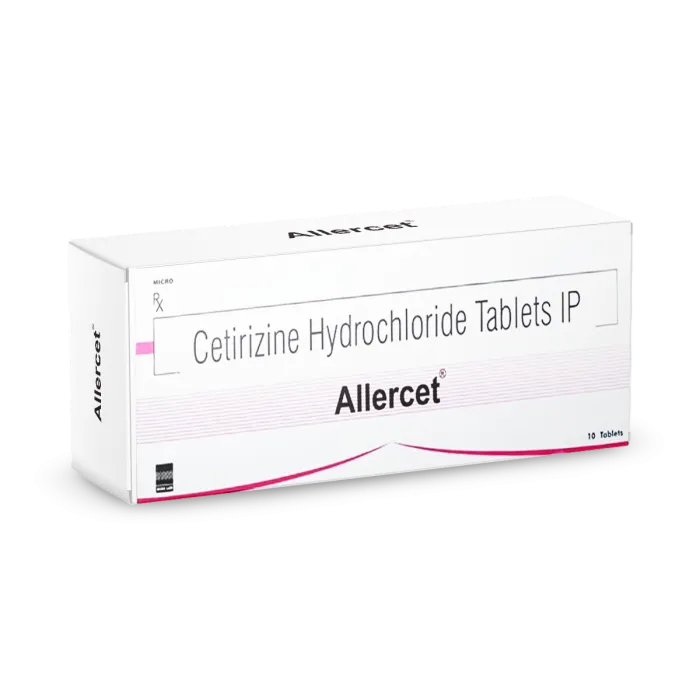
Allercet Tablet
| Pack Size | Price | Qty | Unit Price |
|---|---|---|---|
| 100 Tablet/s | $12.33 | $0.12 | |
| 200 Tablet/s | $23.43 | $0.12 | |
| 300 Tablet/s | $32.92 | $0.11 |
What is Allercet Tablet
Allercet Tablet is a prescription-based antiallergic medicine containing Cetirizine, an FDA-approved active salt widely used for allergy relief. It helps manage symptoms like sneezing, a runny or blocked nose, watery or itchy eyes, and hives-like skin rashes.
Cetirizine belongs to the second-generation H1 antihistamines, known for effective allergy control with minimal drowsiness compared to older antihistamines. Micro Labs Ltd, a well-known GMP-certified pharmaceutical company, manufactures this allergy relief tablet.
The medicine works by blocking peripheral histamine receptors, reducing the impact of histamine on the nasal passages, eyes, and skin. This helps alleviate itching, nasal irritation, redness, swelling, and wheal-and-flare reactions commonly associated with allergies and Urticaria (hives).
Adults and children above 6 years are usually prescribed 10 mg once daily, taken with or without food. If you miss a dose, take it as soon as you remember, unless it’s close to the next scheduled dose. An overdose may cause severe drowsiness, dizziness, or rapid heartbeat and requires immediate medical attention.
Also, store Allercet tablets at room temperature below 30°C (86°F), away from heat, moisture, and direct sunlight. Put them in their original packaging and out of reach of children to maintain safety and effectiveness.
Common side effects include mild drowsiness, headache, dry mouth, and stomach discomfort. Use caution if you suffer from kidney or liver disease, urinary retention, or seizure disorders. Avoid alcohol and other sedating antihistamines, such as Benadryl, as they may increase drowsiness. Always inform your doctor about any medicines you are taking to prevent potential interactions and ensure safe use.
What are the benefits of taking Allercet Tablet
Cetirizine, its active ingredient, helps you manage allergy symptoms by blocking histamine, the chemical responsible for reactions triggered by allergens like dust, pollen, pet dander, and mold. It provides steady, day-long relief, making it easier for you to stay comfortable through daily activities. Key benefits include:
- Its primary benefit is to relieve common allergy symptoms, such as sneezing, a runny or blocked nose, an itchy throat, and itchy or watery eyes, caused by seasonal or year-round allergens.
- It controls hives and allergic skin reactions by reducing itching, redness, swelling, and rash from acute or chronic urticaria.
- It provides once-daily, 24-hour relief, giving you long-lasting control over symptoms without the need for frequent dosing.
- It enhances your daily comfort and sleep quality by alleviating persistent itching, nasal irritation, and eye discomfort that may otherwise disrupt your routine and rest.
How to take Allercet Tablet
Patients should always take the Allercet Tablet per the doctor’s instructions. Here are some general guidelines on how to take it:
- Take the Alercet Tablet dosage as prescribed by your doctor. The usual dose is once daily.
- You can take the medicine with or without food.
- Swallow the whole tablet with water. Do not crush, chew or split it.
- Take it at the same time daily for optimal results.
- Do not exceed one dose in 24 hours without medical guidance.
Strengths and Substitutes
Allercet Tablet is currently available at a strength of 10 mg at Cheap Medicine Shop. However, you can find other substitutes with the same active ingredient, including:
| Ceticip 10 mg Tablet | $1.00/10 pills |
| Zycnet Tablet | $0.60/10 pills |
| Cetzine Tablet | $0.60/10 pills |
What are the side effects of Allercet Tablet
Like any medicine, Allercet may cause specific side effects, which are usually mild and tend to disappear as your body adjusts. However, if they persist or worsen, consult your healthcare provider. Common Allercet tablet side effects may include:
- Mild drowsiness
- Headache
- Dry mouth
- Fatigue
- Stomach discomfort
- Feeling warm or flushed
Safety Advice
Cetirizine is generally considered safe for patients with mild to moderate liver conditions, as it undergoes minimal liver metabolism and is primarily excreted by the kidneys. In severe liver impairment, drug clearance may be reduced, increasing the risk of side effects. Consult your doctor for appropriate dosing and safety guidance.
Patients with kidney issues should take Allercet Tablet with caution. Because the medicine is primarily excreted through the kidneys, reduced kidney function can increase its levels in the body, thereby raising the likelihood of side effects, such as drowsiness. Consult your doctor for possible adjustments to your dose.
There is limited information available on the use of Cetirizine during pregnancy, so caution is advised. When it comes to breastfeeding, small amounts may pass into breast milk, but studies suggest it is unlikely to harm infants. Always consult your doctor before use.
Avoid drinking alcohol while taking Allercet Tablet, as it may increase drowsiness. Do not take this medication if you are allergic to Cetirizine. Refrain from driving, operating machinery, or performing anything that requires full attention if you feel drowsy.
FAQs
Can I take Allercet Tablet twice a day?
No, you should not take Allercet Tablet twice a day unless your doctor specifically advises you to do so. The usual dose is once daily, and taking more can increase the risk of side effects, such as drowsiness or dizziness.
Can I take Levocetirizine and Cetirizine together?
No, you should not take Levocetirizine and Cetirizine together. Both are antihistamines with similar effects, and taking them at the same time can increase the risk of effects such as drowsiness, dizziness, or dry mouth.
What is the safest antihistamine for long-term use?
For long-term use, second-generation antihistamines like Cetirizine, Loratadine, and Fexofenadine are generally considered the safest. They provide effective allergy relief with minimal sedation and lower risk of cognitive side effects compared to first-generation antihistamines.
Can allergies cause knee pain?
Allergies themselves typically do not directly cause knee pain. However, severe allergic reactions or inflammation can sometimes worsen joint discomfort in people with existing conditions like Arthritis or trigger body-wide inflammation that may contribute to joint aches.
Can Cetirizine affect blood pressure?
No, Cetirizine usually doesn’t affect your blood pressure. However, if you have heart disease, hypertension, or take other medications, you should monitor your symptoms. Consult your doctor if you experience dizziness, a rapid heartbeat, or unusual changes in blood pressure.
Should I take Cetirizine in the morning or at night?
You can take Cetirizine at any time of day. Most people don’t feel sleepy, so morning dosing works well. If it makes you drowsy, it’s better to take it in the evening to avoid daytime sedation.
How should I store Allercet Tablet?
You should store Allercet tablets at room temperature below 30°C (86°F), away from heat, moisture, and direct sunlight. Put them in their original packaging and out of reach of children to maintain safety and effectiveness.
{{title}}
{{{detail}}}
{{#adminComment}}