

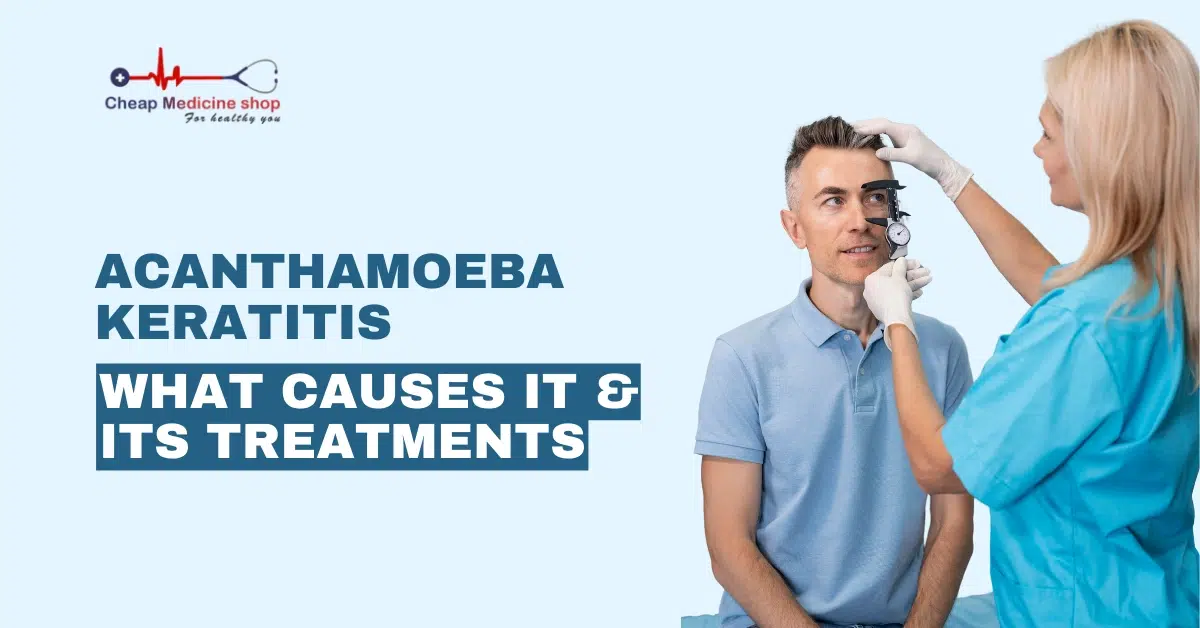
Acanthamoeba Keratitis (AK) is a serious eye infection that many people are unaware of until they are directly affected. Keratitis refers to inflammation of the cornea, the clear front surface of the eye that plays a key role in focusing vision. AK is a rare but severe form of Keratitis caused by microscopic organisms known as Acanthamoeba.
This condition is more common for those who use contact lenses due to misuse or improper lens care. AK doesn’t appear prominently at first, as it often starts with mild irritation that many mistake for allergies or dryness. But as the infection progresses, it becomes far more aggressive, making early recognition absolutely crucial.
This article will help you explore what Acanthamoeba Keratitis really is, how it develops, and the warning signs you should never ignore. You’ll also learn about diagnosis, treatment options, and the preventive steps that can protect your eyesight.
What is Acanthamoeba Keratitis
Acanthamoeba Keratitis (AK) is a rare and serious eye infection caused by a parasitic microscopic organism called an amoeba. It is important to understand that AK is not a viral or bacterial eye infection. In this condition, the amoeba attacks the cornea, which is the clear front surface of the eye responsible for focusing vision. This infection begins on the outer layer of the cornea, and over time, it can move deeper into the eye, making treatment more difficult.
Acanthamoeba organisms exist all around us, including freshwater, seawater, soil, and even the air. They can survive in two forms: an active form that moves and feeds, and a cyst form that is inactive and has a protective shell.
In cyst form, they tolerate extreme temperatures, chemicals, and even many medications. If left untreated, it can lead to severe pain, scarring, and even vision loss.
Save up to 90% on your medicine bills
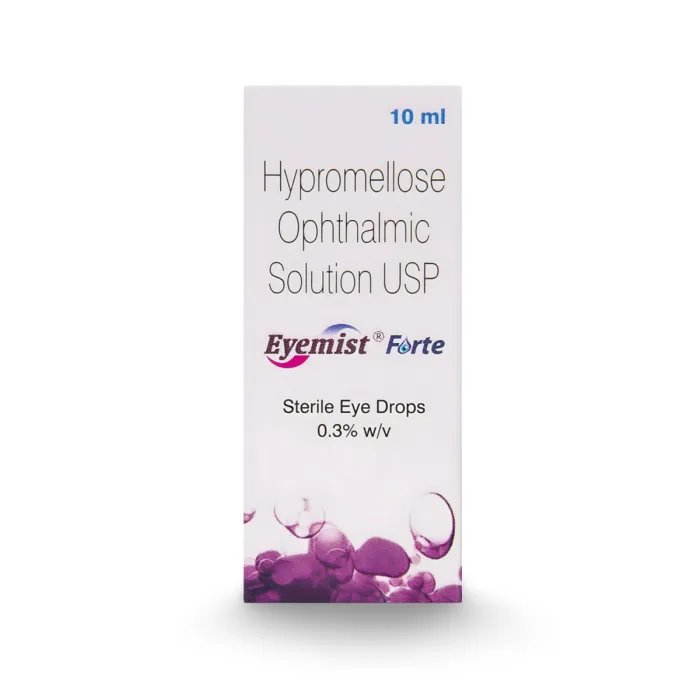
Eyemist Forte 10 ml
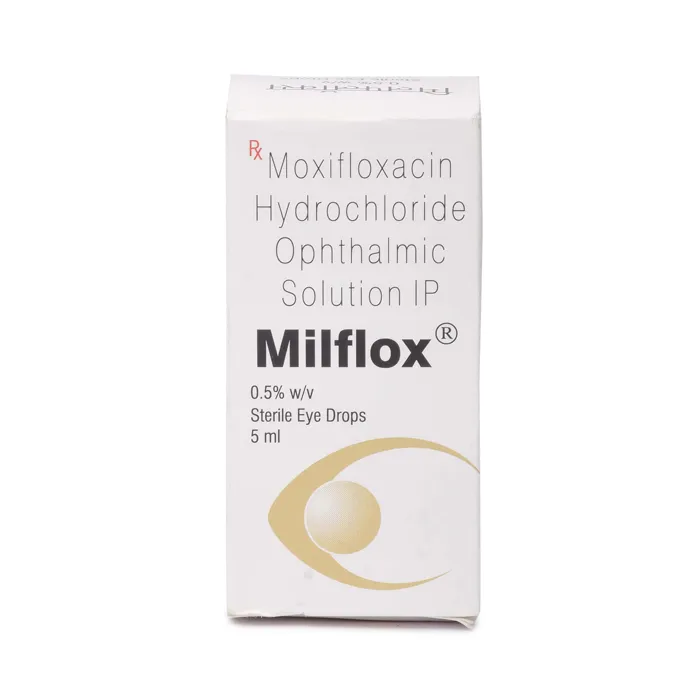
Milflox 0.5% 5 ml

Restasis 0.05% Ophthalmic Emulsion

Pred Forte 10 ml
What causes Acanthamoeba Keratitis
Acanthamoeba Keratitis develops when tiny microorganisms enter the eye under the right conditions. These organisms are common in the environment, but they only become a threat when something creates an opening or weakens eye health.
Here are the key causes of AK that you should be aware of:
- Contact lens misuse: Wearing lenses longer than recommended and using unclean cases or expired cleaning solutions creates an environment where Acanthamoeba can survive and multiply.
- Water exposure while wearing lenses: Cleaning lenses with tap water, swimming or showering while wearing them can introduce the parasite and increase the risk of infection.
- Pre-existing eye surface damage: Existing scratches, irritation, or ongoing eye infections weaken the cornea’s natural protective barrier.
- Weakened immune defenses: People with reduced immunity are more vulnerable because their eyes are less able to fight off invading organisms.
- Corneal injuries: Scratches caused by contact lenses, fingernails, plant debris, or dust create entry points that allow the organism to penetrate the cornea.
It is important to understand that AK is only one form of corneal infection, as many other types of Keratitis can also affect eye health under similar circumstances.
Signs and symptoms of Acanthamoeba Keratitis
The symptoms of AK develop gradually and worsen as the infection progresses through different stages. Recognizing the stages of Acanthamoeba Keratitis and the early changes can help prevent serious complications and preserve your vision.
Early-stage symptoms
Initially, the signs can be subtle and easily mistaken for routine eye irritation or minor infections. However, they don’t improve; instead, they gradually grow more intense and persistent, which is a signal of the infection affecting the surface of the cornea. These symptoms are:
- Persistent mild to moderate eye pain that becomes sharper every day.
- A feeling of something stuck in the eye that doesn’t go away even after rinsing.
- Redness focused around the cornea rather than the entire eye.
- Experiencing the start of slight blurring of vision and sensitivity to light.
- Occasional tearing and irritation that fluctuate throughout the day.
Intermediate stage symptoms
As the amoeba penetrates deeper into the cornea, symptoms become more severe. The inflammation spreads, causing more discomfort and changes in vision. During this middle stage, you will experience:
- Increased, often severe eye pain, sometimes radiating to the face.
- Redness spreads and intensifies.
- Worsening of the vision.
- The cornea may appear greyish or cloudy-looking.
- Light sensitivity worsens.
At this stage, inflammation affects deeper corneal tissue, resulting in swollen eyes or more severe damage.
Advanced stage symptoms
If left untreated, AK can progress to an advanced stage marked by serious eye complications that threaten permanent damage. At this point, the damage extends beyond the cornea and involves multiple parts of the eye. Severe symptoms at this stage include:
- Development of a ring-shaped spot on the cornea.
- Deep corneal inflammation and scarring.
- The inflammation spreads to other parts of the eye, including the white of the eye.
- Damage to the iris, cataract formation, and retinal inflammation.
- Risk of corneal thinning or perforation, which can cause permanent vision loss.
- Raised eye pressure leading to secondary Glaucoma.
The progress of symptoms through these stages emphasizes the importance of early detection and immediate medical care at the first sign of the infection.
How is Acanthamoeba Keratitis diagnosed?
Acanthamoeba Keratitis infection is misdiagnosed in up to 75–90% of cases, so doctors employ a combination of tests and clinical clues to confirm the infection. These include:
- Medical history and symptom review: Doctors begin by asking detailed questions about your symptoms, recent activities, and contact lens habits. They look for symptom patterns, such as worsening pain or changes in vision, that are more typical of AK than of common viral or bacterial infections.
- Slit-lamp eye examination: A slit-lamp exam allows the eye doctor to magnify and closely inspect the cornea. This helps them spot subtle clues like surface irregularities, nerve inflammation, or early ring-shaped patterns.
- Corneal scraping for laboratory testing: If Keratitis Acanthamoeba is suspected, the doctor may gently extract a small sample of cells from the cornea’s surface. It is examined in a laboratory using the Polymerase Chain Reaction (PCR) technique, which detects genetic material from the organism.
- Corneal biopsy for deeper infection: This involves collecting a slightly larger tissue sample to detect organisms hidden in deeper layers of the eye.
Treatment options
Many people recover when the infection is diagnosed early and managed correctly. Acanthamoeba Keratitis can be treated with two goals that include eliminating the organism and protecting the cornea from long-term damage.
- Topical antiseptic medications: These medicated eye drops and creams form the foundation of Acanthamoeba Keratitis treatment. They work by killing the active organisms and gradually weakening the cysts.
- Debridement (superficial tissue removal): When an infection is close to the corneal surface, gently removing the topmost layer of the cornea helps reduce the number of organisms.
- Tissue grafts and protective bandages: If the cornea is damaged, doctors may use amniotic membrane grafts or a bandage contact lens to protect the eye.
- Corneal transplant (Keratoplasty): In severe or non-responsive cases, a corneal transplant may be advised by the doctor. Here, the damaged cornea is replaced with a healthy one.
Preventative measures
Preventing AK largely depends on protecting the eyes from contaminated water and maintaining ideal contact lens hygiene. It is important to know about certain daily habits that significantly reduce the risk of infection.
Key steps include:
- Remove your lenses before swimming, showering, or using hot tubs.
- Always use goggles or a snug snorkel mask while swimming.
- Wash and dry your hands properly before touching your lenses.
- Don’t let water get directly into your eyes.
- Never use tap or sterile water to clean or store lenses, as water can carry organisms.
- Use a fresh disinfecting solution every time; avoid topping off old solutions to ensure lenses remain properly sanitized.
- Clean and air-dry your storage case with a fresh solution and replace it every three months to minimize contamination.
- Store cases outside the bathroom, as humidity increases microbial growth.
When to see a doctor
Certain eye symptoms require immediate medical evaluation, especially when they persist despite initial treatment or worsen rapidly. Corneal infections, like Herpes-related Keratitis, often appear similar in the early stages, but misdiagnosis can delay treatment and increase the risk of corneal damage.
Consult an ophthalmologist immediately if you experience any of these symptoms:
- Severe eye pain accompanied by visible redness or irritation.
- If symptoms persist or worsen despite standard antibiotic or antiviral eye drops.
- Eye discomfort that develops after water exposure while wearing contact lenses
- Ongoing symptoms following contact lens–related issues.
- Fluctuating vision-related issues.
Timely consultation with a specialist can improve the accuracy of diagnosis and significantly reduce the risk of permanent corneal damage.
Conclusion
Acanthamoeba Keratitis is a rare and serious eye infection where an amoeba, a microscopic organism, enters the cornea, often through everyday items like contact lenses or tap water. The infection grows at a slow pace, starting with mild irritation and moving deeper into the eye, intensifying the symptoms, making early awareness necessary.
Since AK closely resembles other common infections and is frequently missed in its early stages, accurate diagnosis relies on a medical history and symptom review. It is also supported by corneal testing, like a Slit-lamp eye examination, for a more in-depth diagnosis.
After you are diagnosed, treatment focuses on removing the organism and preventing structural damage to the eye, starting with antiseptic eye drops. In resistant or advanced cases, treatment may progress to procedures such as Debridement, tissue grafts, or corneal transplantation.
Preventing Acanthamoeba Keratitis depends largely on strict lens hygiene and limiting tap water exposure, especially for contact lens users. If you follow the proper care routines, the risk of infection is low. However, if symptoms persist or worsen despite everything, a timely medical evaluation is essential to prevent the infection from becoming too serious.

Frequently Asked Questions
What questions can I ask the eye doctor about AK?
The important questions that you can ask the doctor include the severity of corneal damage, expected treatment duration, medication options, follow-up frequency, preventive steps for the healthy eye, and whether surgical procedures are needed in advanced cases.
What is the new treatment for Acanthamoeba keratitis?
Polihexanide (Akantior) is the newest approved treatment for Acanthamoeba Keratitis.It has been approved by the Medicines and Healthcare products Regulatory Agency (MHRA) specifically for this condition. Since AK is a painful corneal infection affecting the clear front surface of the eye, this targeted treatment helps prevent vision loss.
How does Acanthamoeba Keratitis affect mental health?
Acanthamoeba Keratitis can cause prolonged pain, disrupted sleep, and uncertainty about recovery that contributes to anxiety, stress, and reduced quality of life. Long treatment periods and fear of vision loss may also worsen emotional distress, requiring counseling.
Can Acanthamoeba Keratitis be cured?
Yes, Acanthamoeba Keratitis is treatable and often curable, but it requires a long and challenging course of treatment. Specific antiseptic eye drops, such as Polyhexamethylene Biguanide (PHMB) and Chlorhexidine, are used to kill the resilient amoeba, including its tough cyst form, over several months.
What is the success rate of Acanthamoeba keratitis treatment?
Among patients with documented treatment outcomes, 94.27% achieved clinical resolution. The average time to cure was five months, with treatment duration ranging from one month to over 26 months. However, you should interpret these findings with caution due to potential study bias.
Cheap Medicine Shop only refers to credible, authoritative sources for our content. If you’re curious about how we ensure the integrity of our content, we encourage you to read our Content Information Policy.
Recent Web Stories