
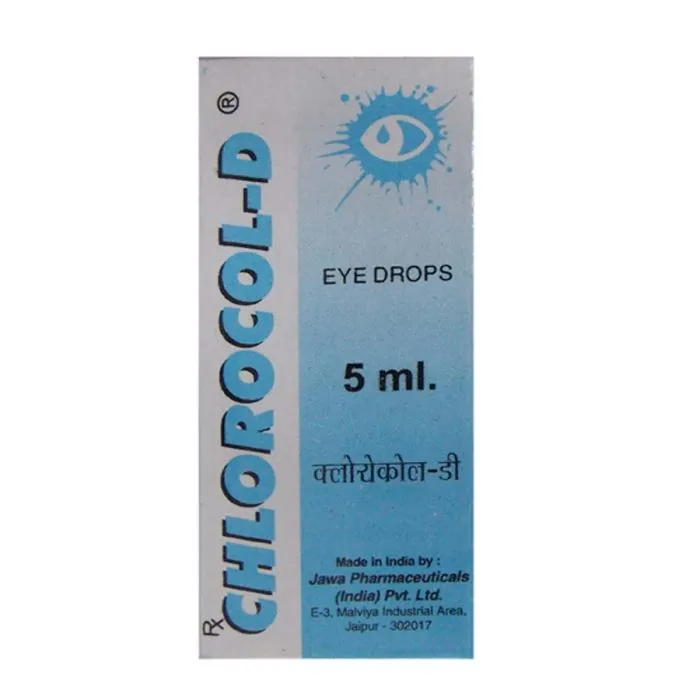
Chlorocol D 10 ml
What is Chlorocol D eye drop
Chlorocol D eye drops are a prescription medicine used to treat bacterial eye infections and reduce associated inflammation. It contains FDA-approved Chloramphenicol (0.5 w/v), an antibiotic, and Dexamethasone (0.1 w/v), a corticosteroid. This combination is manufactured by
Jawa Pharmaceuticals Pvt. Ltd. in a GMP-compliant facility.
Chloramphenicol works by stopping bacterial protein synthesis, thereby killing infection-causing bacteria. Dexamethasone reduces redness, swelling, and irritation by suppressing the formation of prostaglandins, inflammation-causing compounds. It is commonly used for Conjunctivitis (Pink Eye), Blepharitis, and other bacterial eye infections with inflammation.
The usual dose is 1-2 drops 2-4 times a day or as prescribed. If you miss a dose, apply it as soon as you remember, but skip if it’s close to the next dose. In case of overdose, rinse the eye with clean water and obtain medical advice if irritation persists.
Potential side effects include mild burning, stinging, blurred vision, or eye irritation. Get medical help if you notice severe pain, vision changes, or allergic reactions. Avoid prolonged use without medical supervision, especially in viral or fungal infections. Keep the medication in original packing closed in a cool, dry place at a distance from sunlight.
What are the benefits of using Chlorocol D eye drop
Chlorocol D 10 ml eye drops include Chloramphenicol, a broad-spectrum antibiotic, and Dexamethasone, a powerful corticosteroid. The antibiotic inhibits bacterial protein synthesis, thus preventing the development of infection-causing bacteria. Simultaneously, the corticosteroid inhibits prostaglandin synthesis, reducing redness, swelling, and ocular irritation.
The main advantages of this combination include:
- It has a dual-action approach to treat Bacterial Pink Eye and other inflammatory eye diseases.
- The medication quickly relieves pain and irritation while eradicating the underlying infection, avoiding corneal scarring and irreversible eyesight impairment.
- Its precise local administration guarantees maximum therapeutic concentration in the eye while minimizing systemic adverse effects, resulting in speedier recovery.
How to use Chlorocol D eye drop
Adhere to your eye specialist’s directions for the proper use of these antibacterial corticosteroid eye drops. A few general usage guidelines are:
- Apply the medication at regular intervals.
- To use the drops effectively, lean your head back, pull down the lower eyelid, and administer the prescribed drops to the affected eye as directed.
- To prevent infection, avoid touching the dropper tip.
- Instill 1-2 drops 2-4 times a day, or as suggested by your eye doctor.
Strengths and Substitutes
For the time being, Cheap Medicine Shop supplies only a 10 ml dosage strength of this antibiotic and steroid ophthalmic solution. If any other dosage is prescribed, try considering the following alternatives after consulting your medical provider:
| Pyrimon 5 ml | $4.80/eye drop |
| Ocupol D 5 ml | $3.70/eye drop |
What are the side effects of Chlorocol D eye drop
Some individuals using Chlorocol D for Pink Eye could experience mild side effects like:
- Mild stinging or burning sensation
- Itching
- Irritation
- Temporary blurred vision
- Mild discomfort
These side effects generally improve as treatment continues. However, if they persist or turn bothersome, reach out to your eye care specialist for further assistance.
Safety Advice
Generally, patients with liver disease can use Chlorocol D for eye infection if prescribed, as absorption into the bloodstream is minimal. However, prolonged use requires medical supervision.
Patients with kidney impairment can generally use Chloramphenicol eye drops safely, as absorption into the circulation is minimal. However, use only as prescribed, avoid prolonged use, and contact a doctor if any unusual side effects or irritation occur.
Pregnant or breastfeeding women should use these Chloramphenicol and Dexamethasone eye drops only if prescribed. Limited safety data exists, and steroids in these drops could pose health risks to both mother and child. Always contact a certified healthcare expert before use to assess benefits versus potential health issues.
Avoid using these eye drops for Conjunctivitis and redness if you are hypersensitive to any ingredients. Also, remove contact lenses before use.
FAQs
What is Chlorocol D eye drop used for?
Chlorocol D eye drops are an antibiotic eye drops used to treat bacterial eye infections. These eye drops help relieve redness, irritation, and discharge caused by bacteria by stopping their growth.
How does Chlorocol D work?
Chloramphenicol in Chlorocol D drops works by inhibiting bacterial protein formation, preventing bacteria from growing and multiplying. This action helps eliminate infection and relieve symptoms such as redness, swelling, and discharge.
How should I use Chlorocol D drops?
Use Chlorocol D drops as prescribed by your doctor. Wash your hands, tilt your head, and instill the recommended number of drops. Avoid touching the dropper tip. Use regularly, at the same time each day, for best results.
Can Chlorocol D treat ear infections?
Yes, Chlorocol D can also be used for certain bacterial ear infections if prescribed. It helps control bacterial growth and reduces symptoms like pain, swelling, and discharge from the affected ear.
How often should I use Chlorocol D?
Typically, Chlorocol D is used 2–4 times daily, or as suggested by an eye care specialist. However, the dosage and exact frequency could vary depending on the severity of your condition. Always follow your doctor’s precise instructions to ensure safe and effective treatment.
What are the common side effects of Chlorocol D?
Common side effects of Chlorocol D include mild burning, itching, redness, or irritation at the site of application. These are usually temporary. If symptoms worsen or persist, contact your doctor.
Can children use Chlorocol D?
Yes, Chlorocol D eye drop can be used in children if prescribed by a doctor. However, proper dosage and duration must be followed carefully to avoid side effects or improper treatment.
{{title}}
{{{detail}}}
{{#adminComment}}