

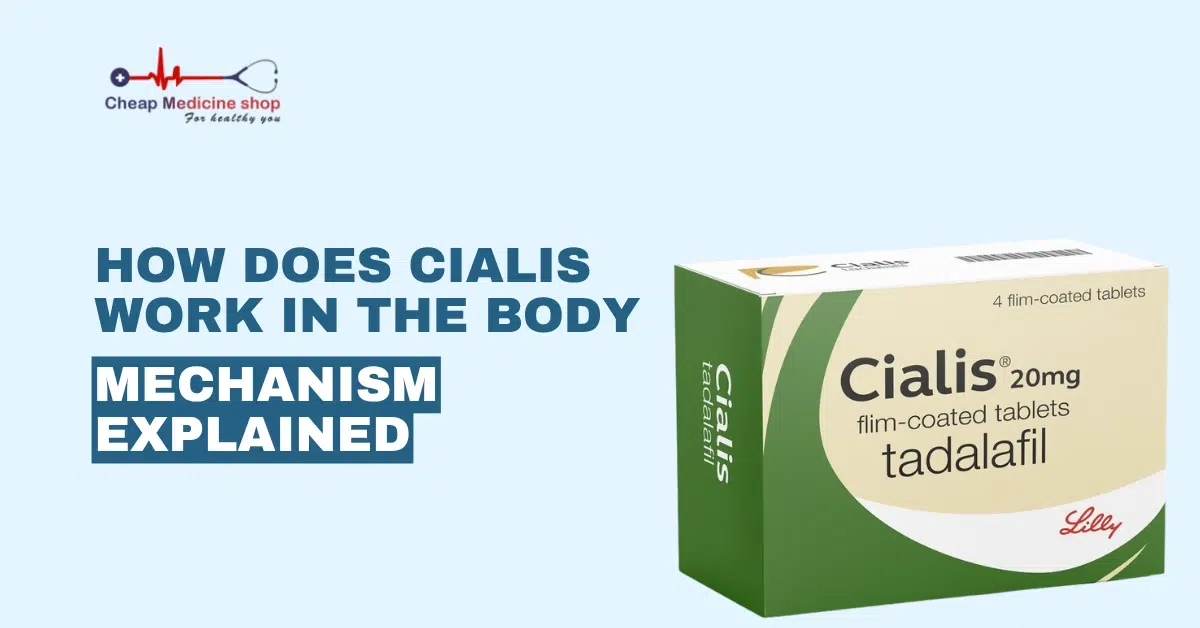
Cialis, which contains the active ingredient Tadalafil, is a widely prescribed medicine for Erectile Dysfunction (ED) and Benign Prostatic Hyperplasia (BPH), also called enlarged prostate. It works by inhibiting the Phosphodiesterase Type 5 (PDE5) enzyme, helping relax smooth muscles, and boosting blood flow to the penile and prostate regions.
Unlike other PDE5 inhibitors, such as Sildenafil, which lasts only 4-6 hours, Cialis stands out for its prolonged duration, lasting up to 36 hours, offering flexibility. This property makes it effective for nearly 6 times as long as other options.
To understand the mechanism of action in detail, this article explains how Cialis works for ED and BPH and why its effects last longer than other PDE5 inhibitors. It also covers the factors that influence its effectiveness and what to do when Cialis does not work.
Working of Cialis
Cialis contains the active ingredient Tadalafil, a PDE5 inhibitor. It works by inhibiting PDE5, an enzyme that normally breaks down cyclic Guanosine Monophosphate (cGMP), a molecule responsible for relaxing smooth muscle.
By inhibiting PDE5, Tadalafil maintains elevated cGMP levels, resulting in sustained smooth muscle relaxation that widens blood vessels and improves blood circulation. This mechanism of action makes Cialis effective for the following conditions:
- Erectile Dysfunction (ED): Increased cGMP levels relax smooth muscle in penile blood vessels. This improves blood inflow, supporting the ability to achieve and maintain an erection with sexual stimulation.
- Benign Prostatic Hyperplasia (BPH): Relaxation of smooth muscle in the prostate and bladder neck reduces urinary resistance and increases urine flow. This can improve symptoms such as a weak urine stream and difficulty initiating urination.
Like other PDE5 inhibitors, Cialis also starts working within 30-60 minutes. However, its effects last up to 36 hours because Tadalafil has a long half-life (the time taken to eliminate half the medicine from the body) of about 17.5 hours.
This extended duration is due to its slower molecular breakdown and clearance by the liver and kidneys. Due to its long-lasting effects, it is often called the weekend pill.
Save up to 90% on your medicine bills

Orgie 20 Mg Oral Strips
Vidalista 60 Mg
Tadalafil Black 80 Mg
Cenforce 200 Mg
Factors influencing how effectively Cialis works
Several factors can influence the effectiveness of Cialis by interfering with absorption, circulation, nerve signaling, or vascular responsiveness. Some of them include:
Timing of administration
Taking Cialis at the right time is crucial to maintain effectiveness, as it may not work otherwise. For on-demand use in case of Erectile Dysfunction, Cialis should be taken 30-60 minutes before sexual activity for best results. For BPH or when prescribed as daily therapy for ED, it should be taken at the same time each day to maintain consistent levels in the blood.
Age
Age can affect the effectiveness of Cialis primarily due to slower medication clearance. In older men, especially over 65, Tadalafil is broken down and eliminated more slowly, leading to higher medicine levels that last longer in the body.
At the same time, age-related declines in blood vessel function and nitric oxide production can reduce overall blood flow, including to the genitals, which are vital for erections. This can reduce Cialis’s effectiveness despite higher levels of the medication in the blood that occur due to slow breakdown.
Sexual stimulation
When prescribed for ED, sexual stimulation is required to activate the natural process that allows the medication to work. Cialis can improve blood flow, but it will not automatically cause an erection. So, in the absence of arousal, the medicine will not work.
Food and alcohol
Consuming heavy, fatty meals before taking Cialis can delay its onset of action, reducing its effectiveness. Excessive alcohol intake can impair nerve signaling and blood vessel response. It can also cause side effects such as dizziness and low blood pressure, which can further weaken its effect.
Underlying health conditions
Conditions such as Diabetes, Obesity, High Blood Pressure, and heart disease can reduce the effectiveness of Cialis. These conditions damage blood vessels and impair circulation, limiting blood flow and hindering the medicine’s effectiveness.
Liver and kidney disorders can increase or prolong the effects of Cialis by slowing its breakdown and elimination. This leads to higher medicine levels in the body for a longer duration, making the response less predictable rather than improving effectiveness.
Medicines
Certain medicines can affect how well Cialis works by altering blood pressure or Tadalafil levels in the body. Some of them include:
- Antibiotics and antifungals: Certain antibiotics, such as Azithromycin and Clarithromycin, and antifungals, such as Ketoconazole, can increase Tadalafil levels by slowing its breakdown in the liver. This can enhance its effects but also increase the risk of side effects such as dizziness.
- Enzyme-inducing medicines: Medicines such as Rifampicin can speed up the breakdown of Tadalafil, lowering its levels in the body and reducing its effectiveness.
- Blood pressure-lowering medications: Medicines that lower blood pressure, including nitrates such as Nitroglycerin and alpha-blockers such as Tamsulosin, can reduce the effectiveness of Tadalafil by causing an excessive drop in blood pressure. This can interfere with the ability to achieve or maintain an erection. The effect can be severe, so combining these medicines with Cialis is contraindicated.
- Antidepressants: Certain antidepressants, including Selective Serotonin Reuptake Inhibitors (SSRIs) such as Fluoxetine, can indirectly reduce the effectiveness of Cialis. They increase serotonin levels, which can suppress sexual drive and delay arousal. This can weaken the response to sexual stimulation and prevent Cialis from causing a firm erection.
What to do if Cialis does not work?
If Cialis does not work, the first step is to evaluate factors such as timing of administration, avoiding heavy fatty meals, and ensuring enough sexual stimulation for erections. If it is still ineffective despite proper administration or arousal, it is vital to consult a doctor. Based on individual response and underlying factors, they can suggest the following:
Lifestyle optimization
Improving cardiovascular health can support healthy blood flow, improve erectile response and help manage prostate-related issues. All of these can help enhance the effectiveness of Cialis.
Regular aerobic exercise aids in weight management, blood pressure control, and circulation. Avoiding smoking and alcohol can also protect vascular function, which can lead to better results after using Tadalafil.
Dose re-evaluation
Doctors can reassess the prescribed dose of Cialis if results are inadequate. They often increase the dose within approved limits, such as from 5 mg to 10 or 20 mg for ED and from 2.5 mg to 5 mg for BPH.
Evaluation of underlying conditions or medicines
If Cialis remains ineffective, doctors can evaluate contributing factors such as uncontrolled Diabetes, cardiovascular disease, hormonal imbalance, or psychological stress. They can also check for medicines like SSRIs affecting the working of Cialis. Identifying and addressing these underlying conditions and adjusting medicines can help improve treatment response.
Alternative oral medications
Individual response can vary between medications within the same class. So, if the response to Tadalafil remains insufficient despite addressing underlying conditions, dosage adjustments, and lifestyle changes, doctors can prescribe another PDE5 inhibitor for ED. Some of the options include Sildenafil, Vardenafil, or Avanafil.
For persistent BPH symptoms, physicians can prescribe alpha-blockers such as Tamsulosin to relax prostate muscles or 5-alpha reductase inhibitors such as Finasteride to shrink prostate size.
Non-oral treatment options
When oral therapy does not provide adequate results, doctors can consider other evidence-based treatments, depending on the condition being treated. For ED, options include vacuum pumps, penile injections containing medications such as Alprostadil, intraurethral suppositories, or surgical placement of penile implants in severe cases.
For BPH, minimally invasive procedures, such as Prostatic Urethral Lift, or surgical interventions, such as laser therapies, can be helpful.
Conclusion
Cialis works by inhibiting the PDE5 enzyme, which allows cGMP levels to remain elevated and smooth muscles to relax. This improves blood flow to the penile region to treat ED for better erections and reduces symptoms of BPH.
Its effects can last up to 36 hours due to slower clearance from the body, offering greater flexibility than shorter-acting options. However, proper timing, sexual stimulation, moderation with alcohol, and good cardiovascular health all influence how well it works.
If results are inadequate, reviewing the timing of administration and ensuring enough sexual stimulation for an erection are the first steps. When needed, doctors can adjust the dose or prescribe alternative oral medications such as Sildenafil for ED or Tamsulosin for BPH. In persistent cases, a doctor can recommend further evaluation or non-oral treatments, such as surgery, to achieve better outcomes.

Frequently Asked Questions
Does Cialis work for women?
No, Cialis is not approved for treating sexual dysfunction in women. Clinical evidence supporting its effectiveness for female sexual disorders remains limited and inconsistent. It should only be used if prescribed off-label by a doctor.
Does grapefruit make Cialis work better?
No, grapefruit does not enhance the effectiveness of Cialis. It usually interacts with Tadalafil by inhibiting the enzymes responsible for its breakdown. This can lead to higher, unpredictable levels of medication in the blood.
Does Cialis work with Low Testosterone?
Yes, Cialis can improve erectile function even in men with Low Testosterone. However, reduced hormone levels can limit overall response and lower its effectiveness. It is crucial to consult a doctor for hormonal evaluation before using this medicine and seek treatment to restore hormone balance as needed.
Does Cialis increase sexual desire or arousal?
No, Cialis does not increase sexual desire or arousal. It enhances blood flow in response to sexual stimulation for improving erections, but does not directly affect hormones or sexual motivation.
Cheap Medicine Shop only refers to credible, authoritative sources for our content. If you’re curious about how we ensure the integrity of our content, we encourage you to read our Content Information Policy.
Recent Web Stories