


Sildenafil is a medication used to treat Erectile Dysfunction (ED) in men and Assigned Males at Birth (AMAB).
It belongs to a class of drugs known as Phosphodiesterase type 5 (PDE5) inhibitors.
It increases blood flow to the penis. It helps a man or AMAB to get and maintain an erection.
Sildenafil, the active ingredient in the popular Erectile Dysfunction medication Viagra, has been on the market for over two decades.
But is Sildenafil safe? It is a question that many individuals who struggle with ED may have, and it’s a valid one.
While Sildenafil has helped millions of men get erections, it’s important to understand this medication’s potential risks and side effects.
Here we’ll explore the safety of Sildenafil (Viagra) and provide you with the information you need to make an informed decision about whether or not it’s right for you.
Let’s see if Sildenafil is safe and its side effects and some frequently asked questions.
Table of Contents
Is Sildenafil safe: research findings
 Source: Getty_images
It has been observed that Sildenafil is generally safe and effective for treating Erectile Dysfunction. But, like any medication, there are potential risks and side effects.
According to studies, the side effects of Sildenafil (Viagra) are headache, flushing, and nasal congestion.
The side effects are usually mild and go away on their own.
But, more serious side effects are rare. They can include sudden vision loss, hearing loss, chest pain, and Priapism.
It’s important to seek medical help immediately if you experience these ED symptoms.
Another important consideration is the potential for drug interactions. Sildenafil can interact with certain medications.
It can interact with Nitrates (used to treat chest pain). It may also interact with alpha-blockers (used to treat high blood pressure).
Talk to your doctor beforehand to avoid interactions if you’re on medications.
To understand the interaction between Sildenafil (Viagra) and Nitrates in detail, refer to this article– Can You Take Viagra and Nitroglycerin Together?
Save up to 90% on your medicine bills

Cenforce 200 mg

Kamagra Oral Jelly Rx 100 mg
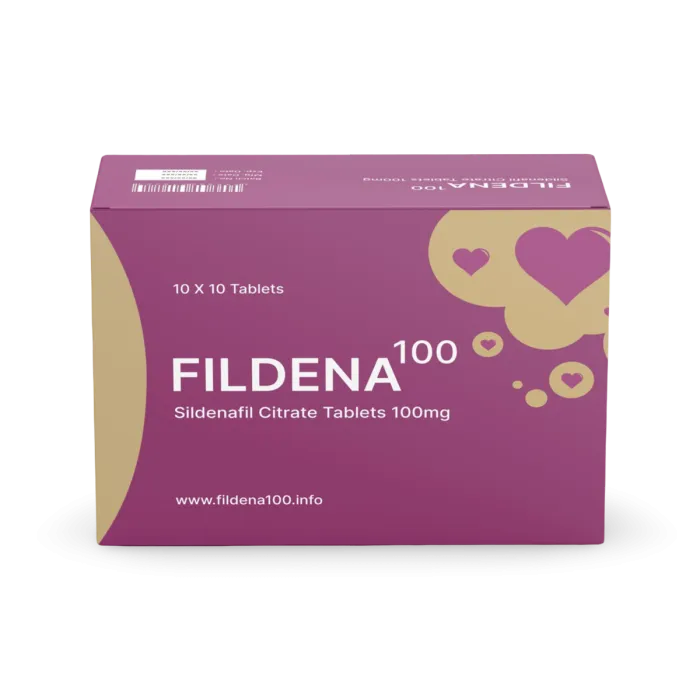
Fildena 100 mg

Vidalista 60 mg
Risks of using Sildenafil daily
 Source: thecorgi
There are several risks associated with the daily intake of Sildenafil citrate and some of them are as follows:
Side effects
Daily Sildenafil use may increase the risk of experiencing side effects, both common and rare ones. Some of the side effects are as follows:
More common side effects
- Headache, a common side effect of Sildenafil that usually resolves
- Flushing or warm, red skin discoloration
- Stuffy or runny nose, also known as nasal congestion
- A feeling of discomfort or pain in the stomach or chest, also known as indigestion
- Lower back pain
- Muscle pain or muscle discomfort
Less common side effects
- Blurred vision or a temporary loss of vision after taking Sildenafil
- Changes in color vision
- Increased sensitivity to light
- A decrease or loss in hearing ability.
- A buzzing or ringing sound in the ears
- A feeling of lightheadedness or unsteadiness
- Heart problems
Side effects are usually mild and go away, but they can be more severe in some individuals.
Have you ever wondered if the use of Sildenafil (Viagra) can cause heart attack? Get an in-depth answer by reading this article– Can Viagra Cause a Heart Attack? Know the Truth
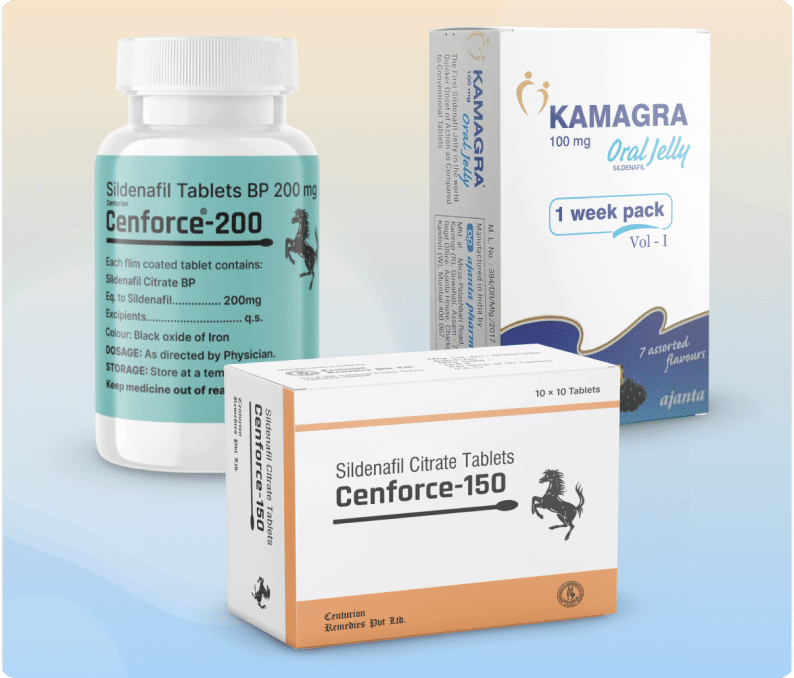
Discover Sildenafil Dosages – Shop Now!
Benefits
- Quick and convenient solution for ED.
- Natural, fast-acting ED support
- Trusted and affordable ED treatment
 Lowest Prices
 1M+ Customers
 Discreet Shipping
Tolerance
Over time, the body may develop a tolerance to Sildenafil. It can lead to decreased medication effectiveness. You might need higher doses of Sildenafil to achieve the same results, which can increase the risk of side effects.
Interactions
The interactions of Sildenafil with food, drugs, and medical conditions can affect the absorption and effectiveness of the medication.
Nitrates, alpha-blockers, antifungal, and antibiotic drugs can interact with Sildenafil causing a drop in blood pressure or other side effects.
Patients with heart disease, liver or kidney problems, and low blood pressure may require dosage adjustments or closer monitoring. Hence, it is important to have complete knowledge of it before starting the dose.
Sildenafil’s interaction with food
Sildenafil can interact with certain foods, especially grapefruit juice. Grapefruit juice can increase the amount of Sildenafil in the bloodstream, leading to a higher risk of side effects such as headaches, flushing, and dizziness.
Therefore, it is advisable to avoid grapefruit juice while taking Sildenafil.
In general, it is also recommended to take Sildenafil on an empty stomach, as high-fat meals can delay the absorption of the medication and reduce its effectiveness.
Discover all the foods that have the potential to interact with Sildenafil (Viagra) in this article– Know All About Beverages and Foods to Avoid When Taking Viagra
Sildenafil’s interaction with drugs
Sildenafil can interact with other drugs that affect how it is metabolized.
For example, certain antibiotics such as erythromycin and clarithromycin, antifungal medications such as Ketoconazole and Itraconazole.
HIV medications such as Ritonavir and Saquinavir can increase the amount of Sildenafil in the bloodstream, leading to a higher risk of side effects.
On the other hand, certain drugs such as Rifampin and St. John’s wort can decrease the amount of Sildenafil in the bloodstream, reducing its effectiveness.
Therefore, you must inform your healthcare provider of all your medications and supplements before starting Sildenafil.
Sildenafil’s interaction with medical conditions
Sildenafil can interact with certain medical conditions, especially those that affect the cardiovascular system.
For example, people with severe liver or kidney disease may need to take lower doses of Sildenafil, as their bodies may not be able to metabolize the medication effectively.
People with certain heart conditions, such as unstable Angina or a recent heart attack, may need to avoid Sildenafil altogether due to the risk of a potentially fatal drop in blood pressure.
Additionally, people with certain eye conditions, such as Retinitis Pigmentosa, should also avoid Sildenafil, as it can cause vision problems.
You must inform your doctor of any medical conditions you have before starting Sildenafil.
Wrapping It Up
Sildenafil is generally considered a safe and effective medication for treating Erectile Dysfunction. However, like any medication, it has potential risks and side effects, especially with daily use.
It’s important to discuss any medical conditions or medications with your healthcare provider before starting Sildenafil to avoid potential interactions or complications.
Additionally, it’s essential to seek medical help immediately if you experience any serious side effects such as sudden vision or hearing loss, chest pain, or Priapism.
Overall, Sildenafil can improve erections and increase sexual satisfaction, but it should be used under the guidance of a healthcare professional

Frequently Asked Questions
Is Sildenafil safe for daily use?
Daily use of Sildenafil is generally safe and effective when prescribed by a doctor. But, discussing potential risks with your doctor before daily use is important.
Buy Now
Is Sildenafil hard on the heart?
Sildenafil may impact cardiovascular health. But studies have not shown that it harms the heart when used as directed. But, discussing the potential risks with your doctor is important.
Buy Now
What are the common side effects of Sildenafil?
The most common side effects of Sildenafil are headache, indigestion, and back pain. If you have more severe side effects, such as vision or hearing loss, consult your doctor immediately.
Buy Now
Is Sildenafil safe for daily use if you have Diabetes?
Sildenafil can be safe for individuals with Diabetes. Still, you must discuss potential risks with your doctor and monitor blood sugar.
Buy Now
Can women take Sildenafil?
Sildenafil treats Erectile Dysfunction in men. It is not yet approved by the FDA for women to use.
Buy Now
Cheap Medicine Shop only refers to credible, authoritative sources for our content. If you’re curious about how we ensure the integrity of our content, we encourage you to read our Content Information Policy.
Recent Web Stories