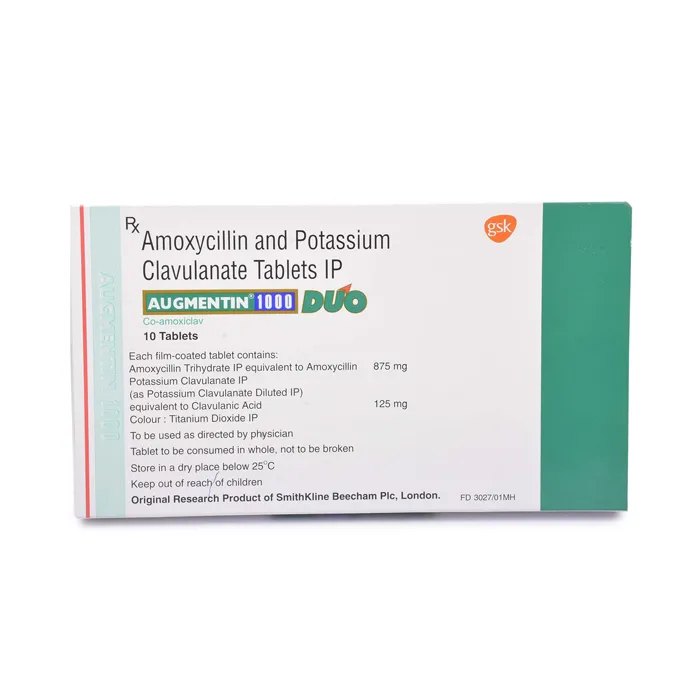
Augmentin 1000 Mg
Starting at just
$59.15
In stock
Only %1 left
SKU
CMS667
Augmentin 1000 mg tablet is a prescription-only broad-spectrum antibiotic that treats bacterial infections. It contains FDA-approved active ingredients Amoxicillin (875 mg) and Clavulanic Acid (125 mg).
Amoxicillin is a broad-spectrum beta-lactam antibiotic, and Clavulanic Acid is a beta-lactamase inhibitor. It is manufactured by GlaxoSmithKline (GSK) in a GMP-compliant facility. Amoxicillin kills bacteria by interrupting cell wall formation, whereas Clavulanic Acid shields it from bacterial enzymes, enabling its effectiveness against resistant strains.
Its main applications include treating respiratory tract infections, including Sinusitis and Pneumonia, Urinary Tract Infections (UTIs), skin infections, ear infections, and cavities in the mouth.
The usual prescribed dose is one tablet every 8-12 hours for 5-14 days. If you skipped a dosage, take it immediately. However, if it is time for your next dose, ignore the missed dose and continue with your regular schedule. Overdose causes nausea, vomiting, or diarrhea, requiring emergency medical help.
Possible adverse effects include diarrhea, nausea, vomiting, rash, and yeast infections. Obtain emergency medical treatment for severe allergic reactions, such as hives, swelling, breathing difficulties, or bloody stools. Avoid the medication if you have a penicillin allergy, Jaundice, or are taking blood thinners.
Store this antibiotic below 25°C in a dry place, away from moisture and heat.
Augmentin has a dual-action mechanism due to its active ingredients, Amoxicillin and Clavulanic Acid. Amoxicillin, a broad-spectrum beta-lactam antibiotic, inhibits bacterial cell wall formation, leading to bacterial cell death. Clavulanic Acid works as a beta-lactamase inhibitor, preventing Amoxicillin from being degraded by beta-lactamase enzymes in resistant bacteria and thereby restoring its antibacterial properties.
This effective combination broadens antibacterial coverage while improving treatment efficacy in mixed or resistant infections. Augmentin is commonly used to treat infections in the ear, lower respiratory tract, soft tissue, skin, urinary tract, and dental areas. When administered correctly, it:
Take Augmentin after consulting your doctor to ensure the safety and effectiveness of the pill. Some common general usage instructions are:
Right now, this antibiotic is available in 375 mg, 625 mg, and 1000 mg dosage strengths at Cheap Medicine Shop. If you’re looking for a different dose, try exploring the following available alternatives after consulting your healthcare provider.
| Augmentin 625 Duo Tablet | $11.10/ 10 pills |
| Augmentin 375 mg | $7.90/ 10 pills |
Common adverse effects of Augmentin include:
These side effects are usually mild and temporary. They often fade away as your body starts adjusting to the medicine. In case they persist or worsen, reach out to your healthcare provider for medical help.
 Liver Disease
Individuals with liver disease should exercise caution when taking Augmentin, since it can produce liver-related adverse effects such as Jaundice. Reduced liver function can restrict medication clearance, raising the risk of toxicity and requiring dosage adjustments or alternate treatments.
 Kidney Impairment
Kidney patients should use Augmentin with extreme caution, as the medication cannot be effectively removed from the circulation in individuals with kidney problems. This could result in increased medication levels, necessitating dose adjustments to prevent side effects and ensure a safe and effective treatment.
 Pregnant and Breastfeeding women
There is minimal evidence on the safety of Augmentin during pregnancy; thus, it is only administered if the benefits outweigh the risks. It is recommended to stop breastfeeding temporarily until the medicine has been completely eliminated from the mother's body.
 Avoid
Avoid
Drinking alcohol with Augmentin is not suggested, as it can increase side effects like stomach upset, dizziness, or nausea.
Yes, 1000 mg Augmentin is often prescribed twice daily for certain infections, usually every 12 hours. However, the exact dose depends on the severity of the infection and your overall health, so follow your doctor’s prescription strictly.
Augmentin 1000 usually starts working within 24 to 48 hours, with symptoms such as fever or pain beginning to improve. However, it’s essential to complete the full prescribed course to fully clear the infection and prevent the development of resistance.
You can tell Augmentin is working if symptoms such as fever, pain, or swelling start to improve within 48 to 72 hours. Energy levels can increase, and symptoms of infection can decrease. If symptoms worsen or remain longer, contact your doctor.
Yes, Augmentin can make some people feel tired. This is because of the body’s response to an infection or mild side effects, such as stomach upset or headache. Rest well and consult a doctor if you experience severe or persistent tiredness.
When you take Augmentin, Amoxicillin kills infection-causing bacteria while Clavulanic Acid blocks bacterial resistance. This helps clear infections effectively, though mild effects like nausea or diarrhea could occur as your body adjusts to the antibiotic.
For a sinus infection, Augmentin is typically prescribed for 5-10 days, based on the severity of symptoms and the response to treatment. Mild cases often require shorter courses, while more severe or persistent infections could need more prolonged use, as advised by a doctor.
The best foods to eat with Augmentin are light meals, such as rice, toast, bananas, yogurt, and soups. Having it with food helps prevent stomach upset, while probiotic-rich foods support gut health during antibiotic treatment.