
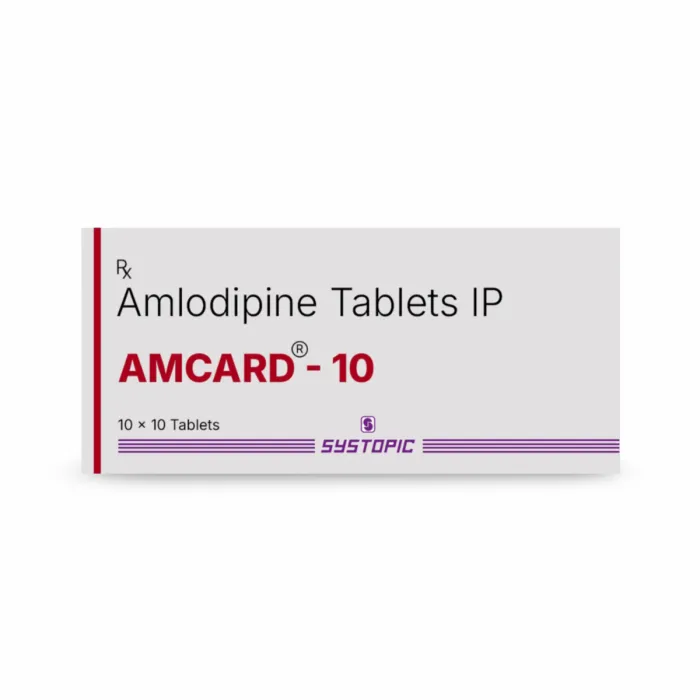
Amcard 10 Tablet
Starting at just
$21.14
In stock
Only %1 left
SKU
CMS7211
Amcard 10 Tablet contains Amlodipine and treats Hypertension (high blood pressure) and Angina (chest pain). It can also help prevent heart attacks and strokes. Amcard 10 mg Tablet belongs to a class of medicines known as calcium channel blockers. It is often prescribed to improve cardiovascular health and prevent heart-related complications. Systopic Laboratories Pvt Ltd manufactures it.
Amcard 10 relaxes blood vessels, allowing blood to flow more easily. It also blocks calcium channels in the vascular smooth muscle, reducing vascular resistance and strain on the heart, thus lowering blood pressure and chest pain.
Amcard can be taken with or without food, but it is best to take it at the same time each day. If a dose is missed, it should be taken as soon as remembered unless it is almost time for the next dose. Dizziness is a common side effect; staying hydrated while avoiding sudden movements can help minimize this effect.
Amcard 10 Tablet, specifically Amcard 10, primarily contains Amlodipine and is used for managing Hypertension (high blood pressure) and Angina (chest pain). Here are the key benefits of the Amcard Tablet:
Below are the general instructions for taking Amcard 10mg Tablet effectively:
Visit your doctor for personalized advice and recommendations
Cheap Medicine Shop offers a lower strength of the Amcard Tablet:
| $0.50/10 Tablets |
Amcard 10 Tablet Tablet is a safe medicine for lowering blood pressure; however, some common side effects may occur:
These side effects will subside as your body adapts to the medication. If they persist for a long time, consult your doctor for recommendations.
 Liver disease
It is unsafe to take Amcard Tablets for patients with severe liver disease. You may require dose adjustments, so consult your doctor for safety guidelines.
 Kidney impairment
If you have an underlying kidney impairment, a lower-strength Amcard tablet may be more appropriate. Patients with severe kidney issues should consult their doctor for the best advice.
 Pregnant and breastfeeding women
Amcard Tablets are not safe to use for pregnant or breastfeeding mothers as it can harm the developing baby. In rare cases, a doctor might prescribe it if the situation is life-threatening and the benefits outweigh the risks.
 Avoid
Avoid
Avoid alcohol with Amcard 10, as it can reduce its effectiveness and may incur side effects.
Yes, the use of Amcard 10 Tablet can cause dizziness. It is a common side effect, along with lightheadedness, fatigue, and swelling in the ankles. If you experience severe dizziness or fainting, immediately seek medical attention.
Yes. Amcard 10 Tablet can cause ankle swelling (Edema) as a common side effect. If you experience persistent swelling, it's advisable to consult your doctor for further treatment.
No, you should not stop taking Amcard 10 mg Tablet suddenly, even if you feel better. Discontinuing the medication midway without consulting your doctor can lead to an increase in blood pressure and other serious health risks.
Although not listed as a common side effect, Amcard 10 mg Tablet may cause itching in some individuals. If you experience itching or any unusual skin reactions, it's important to consult your doctor for further evaluation and guidance.
Amcard 10 mg Tablet is generally considered safe for the kidneys. It does not harm kidney function, although it may cause urinary issues like urine retention in some people with pre-existing kidney issues. If you experience any adverse side effects, consult your doctor.
You can take Amcard 10 mg Tablet at any time of the day, with or without food. However, for consistent results, it is best to take it at the same time each day.
No, the Amcard 10 Tablet is not recommended for use in children. The safety and effectiveness of Amacrd have not been established for this age group. If a doctor considers it necessary for a child, they will determine the appropriate dosage based on age, weight, and medical condition.
If you accidentally overdose on an Amcard Tablet, seek immediate medical attention. Symptoms of overdose may include severe dizziness, rapid heartbeat, or fainting. Contact your doctor or emergency services for guidance on how to proceed.