
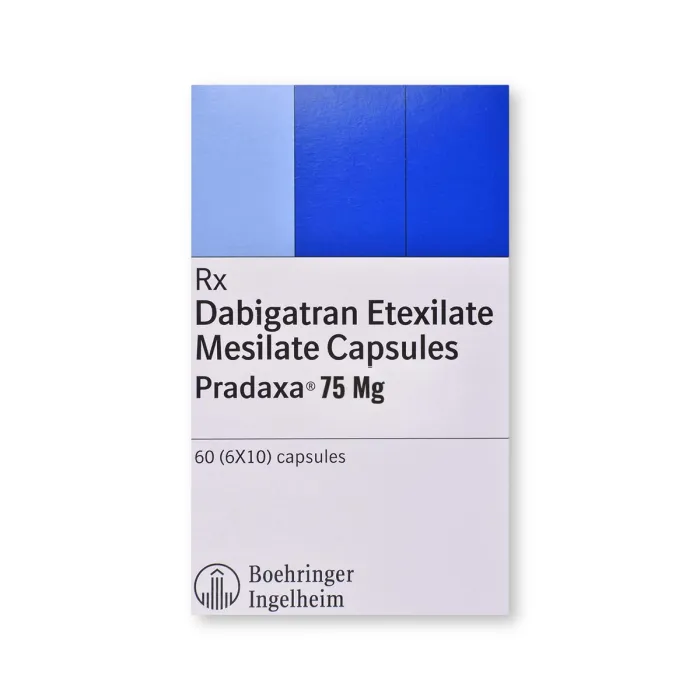
Pradaxa 75 Mg Capsule
As low as
$168.28
In stock
Only %1 left
SKU
CMS4447
Pradaxa 75 mg is an anticoagulant medication used to prevent blood clots and reduce the risk of stroke in people with Non-Valvular Atrial Fibrillation (NVAF). It also treats other medical conditions, Pulmonary Embolism (PE) and Deep Vein Thrombosis (DVT).
Its active ingredient, Dabigatran Etexilate (75mg), belongs to the direct thrombin inhibitor class of drugs. It works by blocking the activity of thrombin, a key enzyme in blood clot formation.
Boehringer Ingelheim is the leading manufacturer of Pradaxa 75. This oral anticoagulant may cause side effects such as bleeding, gastrointestinal discomfort, and allergic reactions. It should be stored at room temperature in its original packaging to protect it from moisture.
Patients should not discontinue Pradaxa without consulting their doctor, as this can increase stroke risk. Regular kidney function monitoring is essential as the medicine is primarily eliminated through the kidneys. Also, discuss medicine and medical history with a doctor for safety.
Pradaxa 75 mg is a direct thrombin inhibitor, binding specifically to thrombin molecules that play a vital role in the blood coagulation cascade. Unlike traditional anticoagulants like Warfarin, which affect multiple coagulation factors, Dabigatran targets only thrombin, potentially offering more predictable anticoagulation effects.
Pradaxa provides several therapeutic benefits:
It is crucial to note that while Pradaxa effectively prevents clots, it increases bleeding risk and should be temporarily discontinued before surgical procedures or dental work.
Pradaxa is a prescription medication that should be taken as per your doctor's instructions. Here are the general guidelines:
Do not discontinue Pradaxa without consulting your doctor, as this may increase stroke risk.
The strength and substitutes available for Pradaxa are:
| $44.10 / 10 capsule | |
| $44.10 / 10 capsule |
Pradaxa is generally effective when used as prescribed. However, it may cause side effects, including:
These adverse effects should be monitored closely; any signs of unusual or severe bleeding require immediate medical attention.
 Liver disease
Pradaxa should be used with caution in patients with liver disease. Regular liver function tests are needed before and during treatment. No dosage adjustment is typically required for mild to moderate hepatic impairment.
 Kidney impairment
Pradaxa is primarily eliminated through the kidneys. For patients with moderate renal impairment, the 75 mg dose is often appropriate. Pradaxa is not recommended for patients with severe kidney disease (CrCl <30 mL/min). Regular kidney function monitoring is essential during treatment.
 Pregnant and breastfeeding women
Pradaxa is not recommended during pregnancy as it may harm the developing fetus, particularly in the second and third trimesters. It is classified as FDA Category C (for the first trimester) and D (for the second and third trimesters). Pradaxa should not be used while breastfeeding as it may pass into breast milk.
 Avoid
Avoid
Grapefruit juice may increase Dabigatran levels and should be avoided. Concurrent use with other anticoagulants, antiplatelet drugs, or NSAIDs significantly increases bleeding risk. Certain P-glycoprotein inhibitors like Ketoconazole and Dronedarone can increase Dabigatran levels and should be used cautiously or avoided altogether.
The duration of treatment for Pradaxa depends on your specific condition and risk factors. For atrial fibrillation, Pradaxa is typically taken long-term. For DVT/PE prevention after surgery, treatment usually lasts 10-35 days. Always follow your doctor's specific recommendations.
Yes, Pradaxa can be used for DVT treatment, typically after initial therapy with a parenteral anticoagulant. The lower 75 mg dose may be prescribed for patients with moderate kidney impairment or those with increased bleeding risk.
Take the missed dose as soon as you remember on the same day. If it is time for your next dose, leave the missed dose. Never double dose to make up for the missed one, as this increases bleeding risk.
Unlike Warfarin, Pradaxa doesn't require regular INR monitoring, has fewer food interactions, and provides more predictable anticoagulation. However, Pradaxa has a shorter half-life, making medication adherence crucial, and lacks a specific reversal agent for emergencies.
Seek emergency care for unusual bleeding: blood in urine/stool, coughing blood, severe nosebleeds, unusually heavy menstrual bleeding, vomiting blood, headaches with dizziness, or unexplained bruising that enlarges. These may indicate serious bleeding complications.