
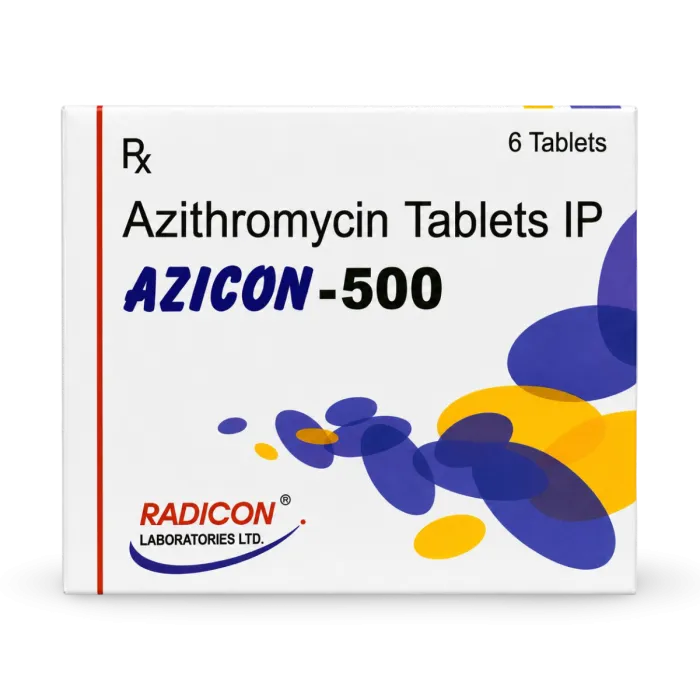
Azicon 500
Starting at just
$22.80
In stock
Only %1 left
SKU
CMS9020
Azicon 500 is an oral antibiotic used to treat numerous bacterial infections, including skin and soft tissue infections, Community-acquired Pneumonia, Acute Bacterial Sinusitis, Pharyngitis, Bronchitis, Sexually Transmitted Infections such as Gonorrhea, and Typhoid fever caused by susceptible bacteria. It is manufactured by Radicon Laboratories Ltd. in GMP-compliant facilities.
It contains the FDA-approved active ingredient Azithromycin (500 mg), a macrolide antibiotic. It works by binding to the 50S subunit of the bacterial ribosome (the cellular machinery bacteria use to build proteins), blocking the process of bacterial protein synthesis (the production of proteins essential for bacterial growth and replication).
Azicon is taken orally once daily, with or without food, as prescribed by a doctor. Common Azithromycin side effects include nausea, diarrhea, stomach discomfort, and headache. Before starting Azicon 500, inform a doctor of any history of liver disease, heart rhythm disorders (particularly QT prolongation), Myasthenia Gravis (a condition affecting muscle control), or known hypersensitivity to Azithromycin or other macrolide antibiotics, as these may require dose adjustment or an alternative antibiotic.
Store Azicon 500 below 25°C in a cool, dry place, away from sunlight. Keep out of reach of children and do not use after the expiry date.
Azicon 500 mg contains Azithromycin, a macrolide antibiotic that works by inhibiting bacterial protein synthesis. It binds to the 50S ribosomal subunit inside bacterial cells, preventing the bacteria from producing proteins required for growth and replication.
This slows bacterial multiplication and allows the body’s immune system to eliminate the infection. Azithromycin also concentrates effectively in infected tissues and remains active for an extended period, which supports sustained antibacterial action.
It is commonly used to treat:
Azicon is a prescription medication that should be used as directed by a healthcare professional. Here are the general guidelines:
Currently, Azicon is available in a single strength at Cheap Medicine Shop. However, you can consider the following alternatives:
| Azeetop 1000 mg | $9.00/10 tablets |
| Azax 250 mg | $7.20/10 tablets |
Azicon can cause side effects that are generally mild and resolve after completing the course. However, consult a healthcare professional if they persist or worsen:
 Liver Disease
Azicon should be used with caution in patients with liver disease. Azithromycin is primarily metabolized and eliminated through the liver and bile, and impaired liver function can reduce its clearance, increasing medicine exposure and the risk of hepatotoxicity (liver damage). It should be avoided in case of severe impairment. Inform a doctor of any liver conditions before starting treatment.
 Kidney Impairment
Azithromycin 500 mg tablet can generally be used in those with mild to moderate kidney impairment, as kidney elimination of Azithromycin is minimal. Caution is advised in severe impairment. Inform a doctor of any kidney conditions before use to ensure the overall treatment plan remains safe.
 Pregnant and Breastfeeding women
Azicon 500 mg can be used during pregnancy when a doctor determines the benefits outweigh any potential risks. Azithromycin is generally considered one of the safer antibiotics in pregnancy or during breastfeeding. However, it is vital to consult a doctor before use to ensure safety.
 Avoid
Avoid
Do not use Azicon 500 in patients with known hypersensitivity to Azithromycin or any macrolide antibiotic. Avoid use in patients with a history of QT interval prolongation (a heart rhythm abnormality), as Azithromycin can further prolong the QT interval and increase the risk of a serious Arrhythmia. Do not use alongside other QT-prolonging medications without medical supervision. Avoid use in patients with Myasthenia Gravis (chronic neuromuscular disease), as macrolides may worsen muscle weakness. Complete the full antibiotic course to reduce the risk of resistance development.
Yes, Azicon 500 can be taken on an empty stomach or with food. Unlike some antibiotics, Azithromycin absorption is not significantly reduced by food. However, taking it with a light meal can help people who experience nausea. However, antacids containing aluminum or magnesium should not be taken at the same time.
Azithromycin reaches effective concentrations in infected tissues within a few hours of the first dose. Most patients notice improvement in symptoms such as fever and discomfort within 2-3 days. The full prescribed course must always be completed, even if symptoms resolve earlier, to ensure the infection is fully cleared.
No, stopping antibiotic treatment early because symptoms have improved is a common cause of treatment failure and antibiotic resistance. Bacteria that have not been fully eliminated can survive and become harder to treat. Always complete the full prescribed course of Azicon 500 as directed by a doctor.
Yes, nausea, diarrhea, and stomach discomfort are among the most common side effects of Azithromycin. These are generally mild and temporary. Taking the Azicon tablet with food can help reduce gastric symptoms. If diarrhea is severe, persistent, or contains blood, consult a doctor promptly.
Azicon 500 can interact with certain medications, including antacids, anticoagulants such as Warfarin, and QT-prolonging drugs. Antacids should not be taken simultaneously, as they reduce Azithromycin absorption. Always inform a doctor of all current medications, supplements, and vitamins before starting Azicon 500 to avoid potential interactions.
Yes, Azithromycin is a first-line treatment for bacterial STIs like Chlamydia and is used alongside other antibiotics for uncomplicated Gonorrhea. For Chlamydia, a single 1 g dose is commonly prescribed. A doctor will determine the appropriate dose and regimen based on the specific infection confirmed by testing.
Yes, Azithromycin is used in children for respiratory and ear infections, but the appropriate formulation and dose are based on the child's body weight. A doctor will advise on the correct pediatric formulation, typically an oral suspension, for younger children who cannot swallow tablets.