
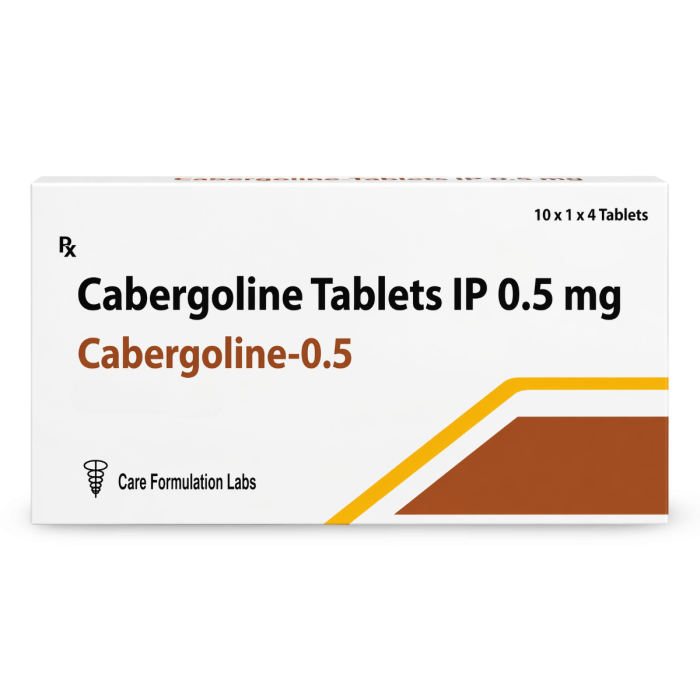
Cabergoline 0.5 mg
Starting at just
$108.70
In stock
Only %1 left
SKU
CMS9023
Cabergoline 0.5 mg is an oral medication used to treat Hyperprolactinemia (abnormally high levels of prolactin). Elevated prolactin can cause irregular periods or Amenorrhea (absent menstrual periods), infertility, Galactorrhea (unwanted milk production in women who are not breastfeeding), and reduced testosterone and sexual dysfunction in men.
It is also used to treat Prolactinomas (prolactin-secreting pituitary tumors) that cause prolactin overproduction. It is manufactured by Care Formulation Labs Pvt Ltd in GMP-compliant facilities under strict quality standards.
Cabergoline 0.5 mg contains the FDA-approved active ingredient Cabergoline. It is a dopamine agonist (a medicine that mimics the action of dopamine). It binds to Dopamine D2 receptors on the lactotroph cells (prolactin-producing cells) of the pituitary gland, directly suppressing prolactin synthesis and secretion. This reduces elevated prolactin levels back toward the normal range, relieving the symptoms caused by excess prolactin.
It is typically taken twice weekly, on two separate days of the week, as prescribed by a doctor. It may be taken with or without food, though taking it with food can reduce nausea. The dose can be gradually increased based on the prolactin level response as monitored by blood tests.
Common Cabergoline side effects include nausea, headache, dizziness, and fatigue, which are usually most pronounced at the start of treatment and tend to improve over time. Before starting Cabergoline 0.5, inform a doctor of any history of cardiac valve disorders, liver disease, psychiatric disorders, or current use of medications that raise prolactin levels, such as antipsychotics.
Store the tablets below 25°C in a cool, dry place, away from sunlight. Keep out of reach of children and do not use after the expiry date.
Cabergoline 0.5 mg oral tablet works by activating dopamine D2 receptors on prolactin-producing cells in the pituitary gland, directly suppressing excess prolactin secretion and normalizing elevated hormone levels. This targeted action makes it effective in managing:
Cabergoline is a prescription medication that should be used as directed by a healthcare professional. Here are the general guidelines:
Currently, Cabergoline 0.5 is available in a single strength option. However, you can consider the following effective alternatives:
| Caberlact 0.5 mg Tablet | $19.50/10 tablets |
| Cabgolin 0.25 mg | $18.80/10 tablets |
Like any medication, Cabergoline 0.5 tablet can cause some side effects. Most of them are generally mild and tend to improve as the body adjusts to the treatment. However, consult a healthcare professional if they persist or worsen:
 Liver Disease
Cabergoline 0.5 mg should be used with caution in patients with liver disease. Cabergoline is extensively metabolized in the liver, and severe impairment significantly reduces its clearance, leading to increased medicine exposure and a higher risk of adverse effects. Inform a doctor of any liver conditions before starting treatment, as dose adjustment or an alternative therapy may be required.
 Kidney Impairment
Cabergoline 0.5 mg can generally be used in people with mild to moderate kidney disease, as kidney elimination is not the primary route of Cabergoline clearance. However, inform a doctor of any kidney conditions before initiating treatment to ensure the overall treatment plan is appropriate for the patient's health status.
 Pregnant and Breastfeeding women
Cabergoline should be discontinued immediately if pregnancy is confirmed, as its safety during pregnancy has not been fully established. Women planning to become pregnant while on Cabergoline therapy should discuss the timing of discontinuation with a doctor. As Cabergoline suppresses prolactin and therefore milk production, it should not be used by women who wish to breastfeed. It is sometimes prescribed specifically to suppress unwanted lactation under medical supervision.
 Avoid
Avoid
Do not use this medicine in patients with known hypersensitivity to Cabergoline. Avoid concurrent use with medications that raise prolactin levels, such as antipsychotics, Metoclopramide and Domperidone, as these directly oppose the therapeutic action of Cabergoline and reduce its effectiveness. Long-term use at high doses has been associated with Cardiac Valve Fibrosis (thickening of heart valves); regular cardiac monitoring with echocardiograms is recommended for patients on prolonged high-dose therapy. Avoid abrupt discontinuation without consulting a doctor.
Treatment duration varies by indication. For Hyperprolactinemia, treatment typically continues until prolactin levels have normalized and remain stable, often for at least 6 months to 2 years. For Prolactinomas, longer courses may be required. A doctor will monitor prolactin levels through blood tests and determine when discontinuation is appropriate.
Yes, by reducing elevated prolactin levels, Cabergoline restores normal hormonal balance, which can restart ovulation in women with prolactin-induced infertility and Amenorrhea, improving the chances of conception. Women who wish to become pregnant while on Cabergoline should inform their doctor so that treatment can be managed appropriately around conception.
The most commonly reported side effects of Cabergoline are nausea, headache, dizziness, fatigue, and constipation. These are usually mild and most pronounced at the start of treatment. Taking the tablet with food significantly reduces nausea. Side effects usually diminish as the body adjusts to the medication.
No, Cabergoline is generally discontinued once pregnancy is confirmed, as its safety in human pregnancy has not been fully established. In women with large prolactinomas, a doctor can assess whether treatment should continue on a case-by-case basis. Women planning pregnancy on Cabergoline should always consult their doctor.
Cabergoline is typically taken twice weekly on two separate days, with an evenly spaced interval between doses. It can be taken at any time of day, though taking it with food in the evening is often recommended to minimize dizziness and nausea. A doctor will advise on the optimal treatment schedule.
Cabergoline 0.5 mg should not be taken with medications that raise prolactin levels, including antipsychotics, Metoclopramide, and Domperidone, as these counteract its effect. It may also interact with antihypertensive medications, increasing the risk of low blood pressure. Always inform a doctor of all current medications before starting treatment.
Yes, elevated prolactin in men can cause reduced testosterone levels, decreased libido, Erectile Dysfunction, infertility, and, in some cases, breast tissue enlargement (Gynecomastia). Cabergoline is prescribed for men with Hyperprolactinemia or Prolactinomas to normalize prolactin levels, restore testosterone production, and alleviate the associated symptoms under medical supervision.