
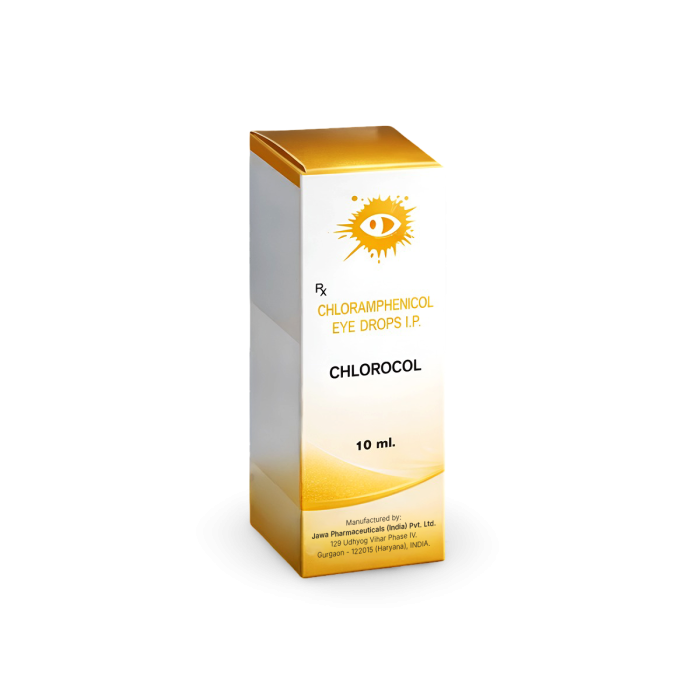
Chlorocol 10 ml
Starting at just
$15.60
In stock
Only %1 left
SKU
CMS1898
Chlorocol Eye Drops (10 ml) is a broad-spectrum antibiotic eye drop that treats bacterial eye infections, containing the FDA-approved active ingredient Chloramphenicol 0.5% w/v. Chloramphenicol is a broad-spectrum bacteriostatic antibiotic that inhibits bacterial protein synthesis. Jawa Pharmaceuticals manufactures Chlorocol under GMP standards.
In bacteria, the medicine binds to the 50S ribosomal subunit (the large subunit of the bacterial ribosome), preventing protein synthesis, which is essential for bacterial growth and replication. It is mainly used for Bacterial Conjunctivitis, Corneal Ulcers, Blepharitis, and other eye infections that cause redness, swelling, or discharge.
To use Chlorocol, wash your hands and tilt your head back. Pull down the lower eyelid and instill 1-2 drops every 3-4 hours, or as directed by a doctor, usually for 5 to 7 days. Avoid touching the eye with the dropper, then close the eye and press the nasolacrimal sac for one minute. Wait at least fifteen minutes before inserting contact lenses.
In case of overdose, rinse the eye with lukewarm water and seek medical advice if irritation continues. If a dose is missed, apply it as soon as it is remembered, unless it is near the next scheduled dose, and do not double the dose.
Common side effects include temporary stinging, burning, redness, or blurred vision. Seek immediate medical help for severe reactions such as allergic rash, swelling, persistent pain, or vision changes, as rare bone marrow suppression can occur with prolonged use.
Avoid Chlorocol if allergic to Chloramphenicol, have blood disorders, or have recently had eye surgery. Use caution in pregnancy, breastfeeding, children under two, or patients with liver or kidney issues. Inform your doctor about other antibiotics or medications that affect bone marrow, and avoid contact lenses during treatment.
Store the drops below 25°C, away from light, heat, and moisture. Keep the bottle tightly closed and discard it within 4 weeks of opening or by the expiry date.
Chlorocol Eye Drops can bring adequate relief with its primary function of bacterial elimination with the help of its active ingredient, Chloramphenicol. Some key benefits of Chlorocol are:
Since it is a prescription-only topical medication, one should always use it as directed by the doctor. However, some general instructions on its proper use are:
At present, you will find Chlorocol 10 ml as the only strength at Cheap Medicine Shop. However, several substitutes with other formulations are available that can suit your medical needs. Always consult a doctor before opting for these medicines.
| Ocupol 5 ml | $3.70/eye drop |
| Chlorocol 3 gm | $3.70/tube |
Like other topical eye drops, Chlorocol can also cause mild side effects, particularly at the beginning of treatment. They do tend to go away once your body adjusts to the medication. Some common Chlorocol Eye Drops side effects are:
However, if they persist for a longer period, consult a doctor as soon as possible.
 Liver Disease
Chlorocol Eye Drops are usually safe to use for patients with liver disease due to their minimal systemic absorption. However, since limited human data are available on the interaction, you must consult a doctor for any specific concerns.
 Kidney Impairment
Similarly, for those with kidney impairment, Chlorocol is generally safe in mild cases since very little of the medication enters the bloodstream. However, because data on severe kidney disease in humans are limited, consulting a doctor before use is recommended.
 Pregnant and Breastfeeding women
Chloramphenicol ophthalmic solution should be used with caution in pregnant and breastfeeding women because Chloramphenicol has limited data on fetal and infant safety. Although systemic absorption from eye drops is minimal and the risk is low, treatment should be used only if the benefits outweigh potential risks and after consulting a doctor.
 Avoid
Avoid
Avoid Chlorocol altogether if you are allergic to Chloramphenicol, have a personal or family history of aplastic anemia or bone marrow suppression, have active viral or fungal eye infections, or have recently undergone eye surgery without medical clearance. Do not use it while wearing contact lenses, and do not give it to children under two years of age unless prescribed by a doctor.
Yes, adults can use Chloramphenicol eye drops to treat bacterial eye infections when prescribed or recommended by a doctor. They are generally safe when used as directed, but adults should follow the advised dosage and complete the full course to ensure effective treatment and prevent antibiotic resistance.
Yes, children aged 2 years and over can use Chlorocol Eye Drops. For children under 2 years of age, Chloramphenicol should only be used with a doctor’s prescription, as medical supervision is required for safe and appropriate use.
Yes, Chlorocol eye drops can cause temporary blurred vision, especially just after application. This usually clears within a few minutes. If blurred vision persists, worsens, or affects daily activities, you should stop using the drops and consult a doctor.
Yes, Chlorocol can cause allergic reactions in some people. Symptoms may include eye redness, itching, swelling, rash around the eyes, or increased irritation. If you notice any signs of an allergy or your symptoms worsen after use, stop using the drops immediately and consult a doctor.
Yes, Chlorocol Eye Drops can help relieve eye discharge when a bacterial infection is the cause. It reduces pus-like discharge, stickiness, and crusting around the eyes by eliminating the bacteria causing the infection.
Yes, Chlorocol Ete Drops can cause mild eye dryness in some people. This usually occurs temporarily due to slight irritation after application and typically improves as treatment continues or once the drops are stopped. If dryness persists or becomes uncomfortable, consult a doctor.
Yes, Chlorocol can very rarely affect blood cells, especially with prolonged or repeated use. Chloramphenicol has been associated with bone marrow suppression in rare cases. When used as short-term eye drops, the risk is extremely low, but seek medical advice if unusual symptoms occur.