
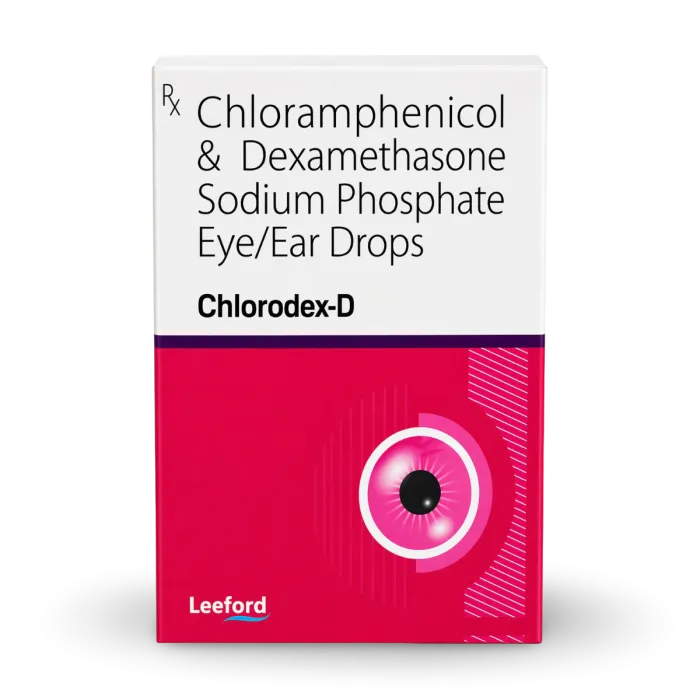
Chlorodex D eye Drop
Starting at just
$4.40
In stock
Only %1 left
SKU
CMS9026
Chlorodex D Eye Drop 10 ml is a prescription antibiotic-steroid drop used to treat bacterial infections of the eye when inflammation, redness, swelling, or irritation is also present. It contains 2 FDA-approved active ingredients: Chloramphenicol 1% w/v and Dexamethasone 0.1% w/v. Chloramphenicol is a broad-spectrum, bacteriostatic Amphenicol Antibiotic, while Dexamethasone is a Corticosteroid. This antibiotic steroid eye drop combination is manufactured by Leeford Healthcare in GMP-certified facilities.
Chloramphenicol inhibits bacterial growth by blocking the synthesis of essential bacterial proteins. Dexamethasone reduces inflammation by controlling chemical signals that cause redness, swelling, itching, and discomfort. Together, Chloramphenicol Dexamethasone eye drops help control infection while easing inflammation-related symptoms.
Use this medicine as prescribed by the doctor. Wash your hands before and after use. For eye use, tilt your head back, pull down the lower eyelid, apply the prescribed number of drops, and keep the eye closed briefly.
If you miss a dose, apply it as soon as you remember. Skip it if the next dose is almost due. Do not use extra drops. If too much is used and irritation occurs, rinse the eye with sterile water and consult a doctor if symptoms continue.
Common side effects include temporary burning, stinging, irritation, itching, watery eyes, blurred vision, or mild discomfort after application. Consult your doctor if symptoms worsen, vision changes occur, pain increases, or the infection does not improve.
Avoid Chlorodex if you are allergic to Chloramphenicol, Dexamethasone, or similar medicines. Inform your doctor if you have Glaucoma, Cataract, viral or fungal eye infection, eye injury, recent eye surgery, ear drum damage, or long-term steroid use. Avoid wearing contact lenses during treatment unless the doctor allows it. Store it in a cool, dry place, away from sunlight, children, and pets.
Chlorodex benefits patients by treating both bacterial eye infection and inflammation. The antibiotic helps control bacterial growth, while the steroid helps reduce swelling, redness, and irritation. This makes it useful when infection and inflammation coexist. Key benefits are:
Use Chlorodex D Eye Drop only as prescribed by your doctor. General instructions for proper use and better treatment outcomes are:
Chlorodex D Eye Drop is available at Cheap Medicine Shop only as a 10 ml bottle containing Chloramphenicol 1% w/v and Dexamethasone 0.1% w/v. Effective substitutes with the same active ingredients are also available, but they should be used only after consulting a doctor.
| Ocupol D 5 ml | $3.70/eye drop |
| Pyricot 5 ml | $3.70/eye drop |
This eye care treatment is generally well-tolerated when used as prescribed, but some people may experience mild local side effects. These usually improve as the eye or ear adjusts to the medicine.
Common Chlorodex D Eye Drop side effects are:
Consult a doctor if they persist, worsen, or feel severe.
 Liver Disease
Chlorodex D Eye Drop is applied locally and usually has minimal systemic absorption. However, people with severe liver disease should use it only after medical advice, especially if prolonged treatment is needed.
 Kidney Impairment
This medicine is generally not expected to affect kidney function when used as eye or ear drops. Still, inform your doctor about kidney disease before use, especially if you are taking multiple medicines.
 Pregnant and Breastfeeding women
Pregnant or breastfeeding women should use Chlorodex D Eye Drop only if prescribed by a doctor. The doctor will decide if the benefits outweigh any possible risks, especially because it contains both an antibiotic and a steroid.
 Avoid
Avoid
Avoid using Chlorodex D Eye Drop without a diagnosis, especially for viral or fungal eye infections. Do not use it if you have Glaucoma, eye injury, recent eye surgery, or a damaged eardrum unless your doctor approves. Avoid contact lenses during treatment unless advised otherwise.
Wash your hands, avoid touching the dropper tip, and apply the prescribed number of drops into the affected eye or ear. For eye use, close the eye gently for 1-2 minutes. Keep a gap of 5-10 minutes before using another eye medicine.
Yes, Chlorodex D Eye drops may be used for bacterial eye and ear infections if prescribed by a doctor. Do not use the same drops in the ear unless your doctor clearly advises it, especially if there is eardrum damage, pain, or discharge.
Common side effects include temporary burning, stinging, irritation, itching, watery eyes, or blurred vision after application. These effects are usually mild. Consult your doctor if you experience pain, swelling, vision changes, or worsening redness.
Use Chlorodex D Eye Drop for the full duration prescribed by your doctor. Do not stop early, even if symptoms improve, unless advised. Stopping too soon can allow infection or inflammation to return.
No, avoid wearing contact lenses during treatment unless your doctor says it is safe. Eye infections and medicated drops can irritate the eyes, and lenses may worsen discomfort or delay healing.
If you miss a dose, apply it as soon as remembered. Skip it if the next dose is almost due. Do not apply extra drops to make up for a missed dose, as this can increase irritation or side effects.
No, Chlorodex D Eye Drop should not be used for viral or fungal eye infections unless specifically prescribed. Steroid-containing drops can worsen some infections if used incorrectly, so proper diagnosis is important before use.