
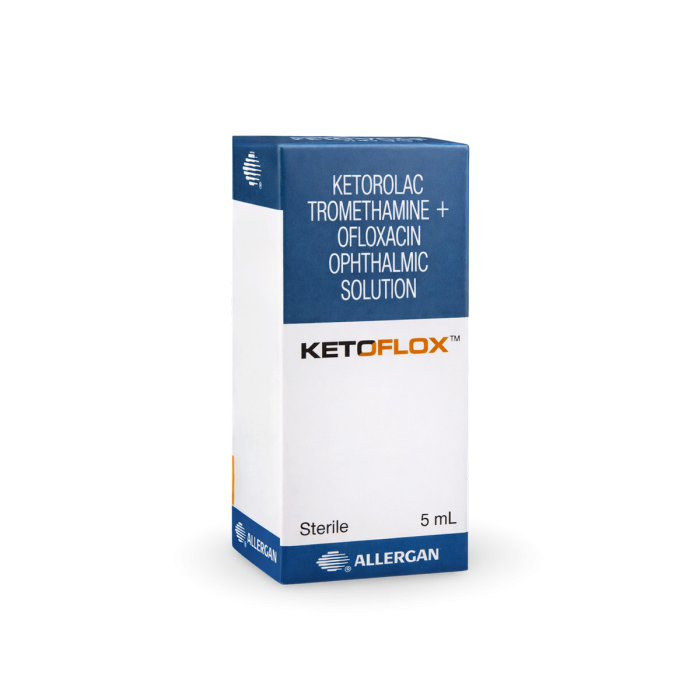
Ketoflox 5 ml
Starting at just
$15.60
In stock
Only %1 left
SKU
CMS1963
Ketoflox Eye Drop is a prescription ophthalmic solution used to treat bacterial eye infections, inflammation, and post-surgery discomfort. It contains two FDA-approved active ingredients, Ofloxacin and Ketorolac. Ofloxacin belongs to the antibiotic class called Fluoroquinolone, whereas Ketorolac Tromethamine is a Nonsteroidal Anti-inflammatory Drug (NSAID). Sunways India, a GMP-compliant manufacturer, manufactures Ketoflox 5 ml.
Ofloxacin blocks bacterial enzymes required for DNA replication. This activity leads to bacterial cell death. In contrast, Ketorolac blocks chemical messengers (prostaglandins) that enable inflammation, redness, pain, and swelling. In combination, they treat infection and reduce inflammatory symptoms.
Therefore, Ketoflox is primarily used to treat bacterial Conjunctivitis, Keratitis, and corneal ulcers, reducing inflammation and controlling swelling, pain, and redness after an eye operation or infection.
Always follow the doctor’s instructions for safe use. General guidelines suggest instilling 1 to 2 drops into the affected eye(s) 2 to 4 times a day. Do not touch the dropper tip to the eye or any surface, as it can cause contamination. For an overdose case, rinse eyes gently with clean water and seek medical care if irritation persists. When a dose is missed, use it as soon as you remember, but skip it if it’s nearly time for the next dose.
Ketoflox Eye Drop can cause some common side effects, including watery eyes, temporary blurred vision, and irritation. These are usually mild, but consult a doctor if they worsen or persist.
Moreover, inform the doctor of any allergies to NSAIDs or Fluoroquinolones. Avoid use without medical advice in case of Glaucoma, fungal or viral eye infections, and dry eye syndrome. Also, remove contact lenses during application and wait around 15 minutes before reinsertion. When using multiple eye drops, wait 5 to 10 minutes between them. If vision gets blurry after using drops, avoid operating machinery or driving.
Ideally, Ketoflox Eye Drop should be stored below 25–30°C. Keep it in a dry and cool place, away from moisture and direct sunlight. Keep the bottle tightly closed and out of reach of pets and children. Follow the doctor’s guidance for how long to use it after opening. Discard after the expiry date.
These anti-inflammatory ophthalmic drops function as a targeted therapy with minimal systemic absorption. Key benefits of Irimist Eye Drop are listed below:
Use Ketoflox Eye Drop exactly as prescribed by your doctor to achieve symptom relief and effective infection control. General usage directions are as follows:
Currently, only substitutes for Ketoflox Eye Drop are available at Cheap Medicine Shop. Consult a doctor before using substitutes for safe treatment:
| Ketlur Plus 5 ml | $3.70/bottle |
Ketoflox Eye Drop is usually well-tolerated, but like any other medication, it can cause mild side effects. These typically subside on their own. Consult a doctor if side effects persist, worsen, or significant vision changes are observed. Common side effects are:
 Liver Disease
Ketoflox Eye Drops have minimal systemic absorption, so liver impairment is unlikely to alter their effects significantly. Still, consult your doctor if you have severe liver disease before beginning the treatment. Kidney Impairment
There are no reports of Ketoflox Eye Drop adversely affecting the kidneys. However, for precautionary purposes, consult a doctor if you have severe kidney dysfunction.
 Pregnant and Breastfeeding women
Safety data for use during pregnancy or breastfeeding is limited. Use only when prescribed by a doctor, who will generally recommend the medication after weighing risks and benefits.
 Avoid
Avoid
Do not use if allergic to Fluoroquinolones or NSAIDs. Avoid wearing contact lenses during treatment to prevent irritation. Avoid operating machinery and driving immediately after using the drops, until vision is clear. Inform your doctor of all current medications to avoid possible interactions.
Yes, you can safely take Ketorolac and Ofloxacin together in combination eye drops, including Ketoflox Eye Drop. They are combined for dual action: treating bacterial eye infections and reducing inflammation. No significant adverse interactions are reported when used in combination.
Yes, Ketorolac is generally considered safe for the eyes when used as prescribed. It is FDA-approved for the relief of eye inflammation, whether infection-related or post-operative, such as after cataract surgery. Avoid in case of allergy to NSAIDs.
Ketorolac and Ofloxacin eye drops are used as targeted treatment for Pink Eye and inflammation. It is also used to support recovery after an eye surgery by preventing the spread of infection and relieving discomfort.
No, you can’t use Ofloxacin for eye pain, since it is an antibiotic primarily used to treat Conjunctivitis and corneal ulcers. For eye pain, usually steroid or NSAID eye drops are recommended to treat inflammation and pain associated with it.
When using Ofloxacin eye drops, avoid wearing contact lenses as they can worsen the treatment. Also, avoid touching the dropper tip to your eye as it can cause contamination. Do not combine it with other eye drops unless your doctor prescribes. Moreover, don’t drive a vehicle immediately after use.
Ketorolac eye drops generally cause mild side effects that subside as the eyes adjust to the dose. These common, unwanted effects include watering, stinging, burning, and blurry vision. Immediately consult a doctor if they worsen or persist for an extended period.
The best antibiotic eye drops will depend on the individual's eye health and the doctor’s prescription. Widely recommended antibiotics belong to the Fluoroquinolone class, such as Moxifloxacin or Gatifloxacin, because they can target a broad range of bacteria to treat infections.