
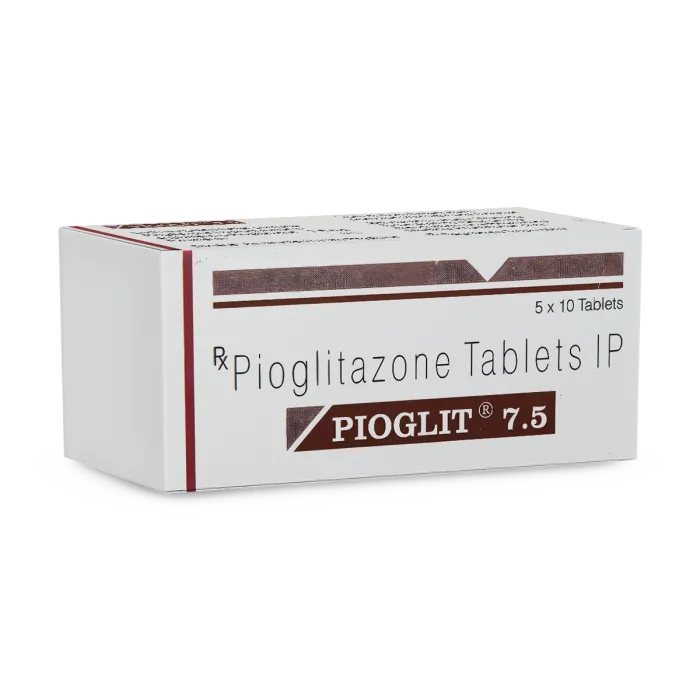
Pioglit 7.5 Tablet
Starting at just
$20.25
In stock
Only %1 left
SKU
CMS8457
Pioglit 7.5 is an oral antidiabetic medication primarily used to treat Type 2 Diabetes Mellitus. It contains an FDA-approved active ingredient, Pioglitazone (7.5 mg), an effective antidiabetic agent that helps lower blood sugar spikes in these patients, particularly adults. This agent belongs to the Thiazolidinedione (TZD) drug class. Sun Pharmaceuticals Ltd manufactures the product.
Pioglitazone helps lower blood sugar levels by making the body effectively use the insulin it produces. Pioglit is either prescribed alone or with other diabetic medications, depending on individualized needs. And it is not meant for Type 1 Diabetes.
The medication's most common side effects are swelling, fatigue, trouble breathing, and weight gain. One can also suffer from Hypoglycemia (low blood sugar levels) if it is taken with other antidiabetic medications like Insulin or Sulfonylureas. Consuming alcohol can also negatively impact blood sugar levels. Other significant interactions include liver and kidney disease.
Always follow the doctor's orders when taking medication. Do not stop taking the medicine unless the healthcare provider says so, even if you feel better. Pioglit is only part of the treatment for Type 2 Diabetes Mellitus. For better Diabetes management, following a healthy, balanced diet and regular exercise is essential per the doctor's instructions.
Consistent use of Pioglit offers crucial benefits to patients with Type 2 Diabetes Mellitus.
The medicine is prescription-based, which patients should take according to their doctor's recommendations. Here are some general guidelines for this medication.
The strengths and substitutes of Pioglit 7.5 available at Cheap Medicine Shop are:
| Pioglit 15 Tablet | $5.40/10 tablets |
| Pioglit 30 Tablet | $5.70/10 tablets |
The side effects of Pioglit 7.5 are:
They are mild and will subside as the body adjusts to the medication. However, if they continue or worsen, consult a doctor immediately.
 Liver disease
Patients with liver issues should use the medication with caution. Mild to moderate liver dysfunction would require dose adjustment. Consult a doctor for any requirements before taking the drug. However, it is not generally advised for patients with severe liver dysfunction to use Pioglit as it may worsen liver function.
 Kidney impairment
It is generally safe for patients with Kidney impairment to use the medication without any possible dose adjustments. However, consult a doctor as a precautionary measure.
 Pregnancy and breastfeeding
This medication is usually not advised during pregnancy because there is not enough information about its safety for both the mother and the baby. It is also not known how much of the drug is excreted into breast milk and whether it could harm the child. Consult a doctor for appropriate treatment.
 Avoid
Avoid
Avoid using Pioglit 15 if you are allergic to Pioglitazone. Alcohol consumption can bring unwanted changes in blood sugar levels, which patients should avoid.
Gemfibrozil can significantly increase the blood levels of Pioglitazone by inhibiting its metabolism. This raises the risk of side effects like Hypoglycemia, weight gain, and other adverse reactions. Your doctor may need to reduce your Pioglit dose if you take Gemfibrozil.
Pioglit is not suitable for children. The safety and efficacy of Pioglit in children and adolescents under 18 years of age have not been established, so it should not be given to them.
You should store Pioglit 7.5 Tablet at a temperature below 30°C, away from direct sunlight, moisture, and heat. Keep in original packaging until use. Do not store in damp places like bathrooms. Always keep it out of reach of children and pets.
No, it is not generally recommended to take Pioglit if you have heart disease, as it can cause fluid retention and potentially worsen your condition. Inform your doctor beforehand so they can assess your condition and decide if it is safe for you to use.
Overdosing on Pioglit can cause severe Hypoglycemia, especially if you are taking other antidiabetic medications together. Symptoms of low blood sugar levels include tremors, sweating, stomach pain, extreme weakness, blurred vision, trouble speaking, and confusion. If you experience any of these symptoms, consult a doctor immediately.