
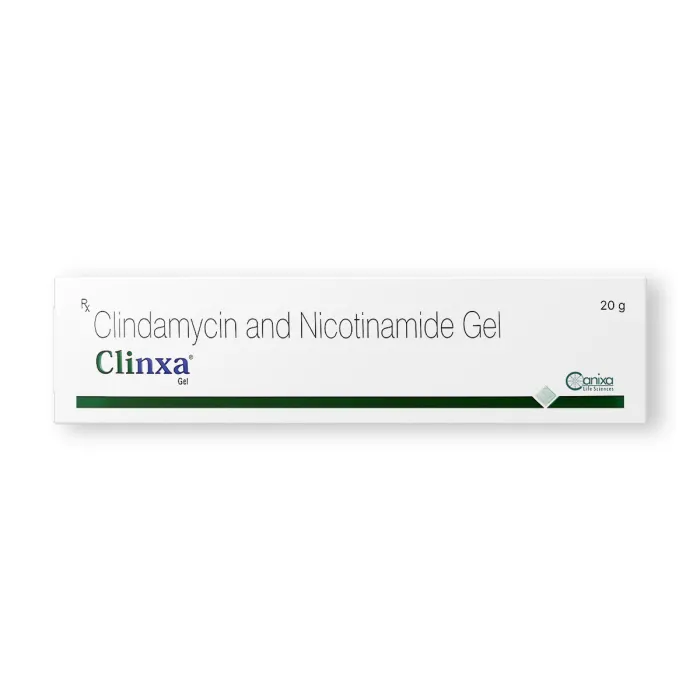
Clinxa Gel
As low as
$8.72
In stock
Only %1 left
SKU
CMS6727
Clinxa gel is a topical antibiotic used to treat acne. It contains Clindamycin, which reduces pimples by killing the bacteria that causes acne. This gel belongs to the Lincosamide class of antibiotics and is commonly prescribed for mild to moderate acne. Manufactured by Canixa Life Sciences, it is a solution for those struggling with continuous acne and skin inflammation.
Acne is caused by bacterial growth, excess oil production, and clogged pores. When used on the affected areas, Clinxa works by stopping bacteria from growing. This will reduce redness, swelling, and the formation of new pimples. Over time, it clears up the skin and prevents acne in the future. Clinxa also improves skin texture with regular use.
While Clinxa is highly effective, certain precautions should be taken to avoid irritation or unwanted side effects. It should be used to clean, dry skin and should not be used on cuts, burns, or broken skin.
Any contact with the eyes, mouth or nose should be avoided, as it may cause irritation. Wash your hands before and after applying the gel to maintain hygiene. In some cases, skin may become more sensitive to sunlight, so use sunscreen during the day.
It is important to follow your the instructions of your doctor to get the best results. Using more than the prescribed amount may cause skin irritation or dryness. If any severe reactions occur, such as redness, peeling, or itching, medical help should be taken immediately.
Clinxa is an acne treatment gel to fight bacterial infections and reduce inflammation. Its active ingredient, Clindamycin, stops the growth of acne-causing bacteria, preventing acne from getting worse.
For best results, use Clinxa exactly as prescribed by your doctor and follow a proper skincare routine.
It is a prescription medication, so it should only be used as advised by your doctor. Overuse or incorrect application causes skin irritation, dryness, or reduced effectiveness.
Some general instructions for use are:
This gel is not available in any other strength on Cheap Medicine Shop but you can consider buying other Clindamycin-based gels:
| $5.75 per tube | |
| $4.94 per tube | |
| $4.30 per tube |
Clinxa is generally safe, but some people may experience mild side effects. These Clinxa gel side effects include:
These go away as your skin adjusts to the gel. If any side effects become severe or do not improve, consult your doctor.
 Liver disease
There is no evidence of Clinxa affecting liver function. It is a topical treatment, meaning very little of the gel is absorbed into the body.
 Kidney impairment
No known effects on kidney function have been reported. Clinxa is applied to the skin and does not enter the blood to affect the kidneys.
 Pregnant and breastfeeding women
Clinxa gel is generally safe to use during pregnancy if prescribed by a doctor. If you are breastfeeding, consult your doctor.
 Avoid
Avoid
There is no known interaction between Clinxa and alcohol. But drinking alcohol is harmful for the body.
Clinxa can be used for both facial and body acne, including on the back, chest, and shoulders. However, since the skin on different body parts varies in sensitivity, it is best to apply as directed by a doctor. Avoid sensitive areas and use sunscreen to prevent irritation or dryness.
No, avoid using Clinxa on open wounds or freshly popped pimples, as this may cause irritation, burning, or further infection. Let the area heal first, and use a soothing cream or antiseptic to prevent bacterial growth,
Yes, Clinxa may cause purging, where acne increases for some time as the skin adjusts to treatment. This happens because the gel speeds up skin turnover, bringing clogged pores to the surface. Purging usually lasts two to four weeks before improvement is seen.
No, Clinxa is an antibacterial treatment that targets acne caused by bacteria. Fungal acne (Malassezia folliculitis) is caused by yeast and requires antifungal treatments like ketoconazole or selenium sulfide. Using Clinxa gel on fungal acne may not be effective.
Yes, Clinxa may help with mild to moderate cystic acne by reducing bacterial growth and inflammation. However, severe cystic acne often requires oral antibiotics, hormonal therapy, or isotretinoin for effective treatment. Consult a dermatologist for a personalized approach.
No, using Clinxa and retinol together can increase skin dryness, peeling, or irritation. If needed, apply them on alternate nights or use retinol in a lower strength. A doctor can advise you the best routine based on your skin.