
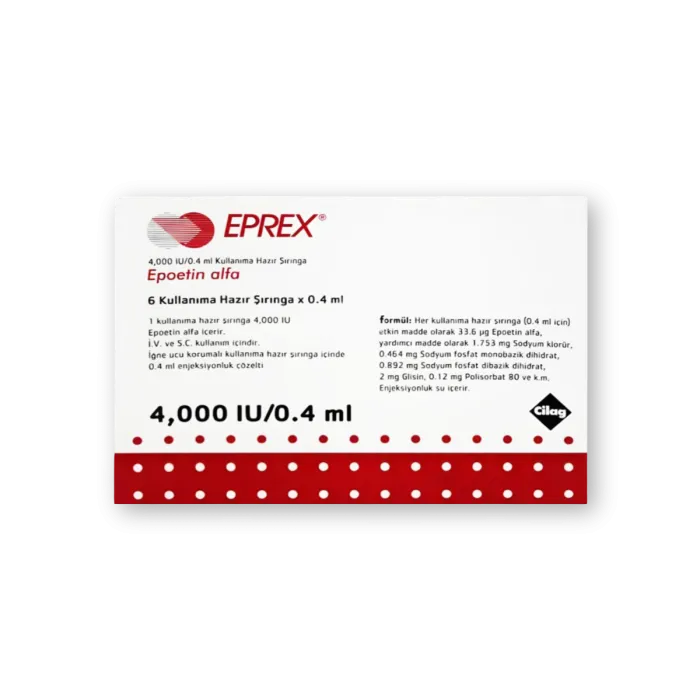
Eprex 4000IU 0.4 ml Injection
As low as
$68.25
In stock
Only %1 left
SKU
CMS4093
Eprex 4000 IU injection is a prescription injection used to treat anemia in people with Chronic Kidney Disease (CKD) and those undergoing dialysis. Its primary ingredient is Epoetin Alfa, a Recombinant Human Erythropoietin. Janssen Pharmaceuticals manufactures Eprex 4000.
This medication stimulates erythropoiesis (red blood cell production) in bone marrow by replacing deficient Erythropoietin hormone. It contains 4000 International Units (IU) per milliliter. The injection helps restore normal hemoglobin levels and reduces transfusion requirements.
Common Eprex side effects include headache, high blood pressure, nausea, and injection site reactions. Serious side effects may include thrombotic events or seizures. Store Eprex injection in the refrigerator at 2-8°C and protect from light. Do not freeze or shake before administration.
Pregnant or nursing women should discuss with their doctor before using this injection. Always inform your doctor about liver problems and other medical conditions before treatment.
Eprex 4000 works by binding to Erythropoietin receptors on erythroid progenitor cells in bone marrow. This activates cellular pathways that promote red blood cell differentiation and maturation. The medication replaces naturally occurring Erythropoietin that the kidneys normally produce.
Key benefits include:
It is crucial to note that iron stores must be adequate for optimal red blood cell production.
Eprex is a prescription medication that should be administered per your doctor's instructions. Here are the general guidelines:
The strengths and substitutes available at Cheap Medicine Shop are:
| $13.24/injection | |
| $17.00/injection | |
| $82.44/injection |
Eprex is generally safe when used appropriately. However, it may cause side effects, including:
These effects usually do not require medical consultation and disappear as your body adjusts.
 Liver disease
Patients with liver disease should use Eprex cautiously, as hepatic function may affect drug clearance. During treatment, liver enzymes should be regularly monitored. Dose modifications may be necessary based on individual patient tolerance and response.
 Kidney impairment
Eprex is specifically indicated for Chronic Kidney Disease patients with anemia. Those with severe kidney dysfunction require careful hemoglobin monitoring and dose adjustments. Regular assessment of kidney function parameters is essential throughout therapy.
 Pregnant and breastfeeding women
Eprex should be used during pregnancy only when needed and the benefits outweigh the risks. Limited data exists on excretion in breast milk. Discuss risks and benefits with your medical provider before use during pregnancy or breastfeeding.
 Avoid
Avoid
Avoid alcohol as it may interfere with red blood cell production. Do not take iron supplements without medical guidance. Avoid strenuous activities if experiencing dizziness or weakness. Do not use expired or discolored injection solutions.
Eprex injection is typically administered three times weekly for dialysis patients or as prescribed by your doctor. Subcutaneous injection is preferred over the intravenous route for non-dialysis patients. Follow your healthcare provider's specific dosing schedule exactly.
Clean the injection site with alcohol, and pinch the skin gently. Insert the needle at a 45-degree angle, inject slowly, and remove the needle quickly. Rotate injection sites between the thigh, abdomen, and upper arm areas. Never reuse needles or syringes.
Initial hemoglobin response typically occurs within 2-4 weeks of starting therapy. Maximum effect is usually achieved within 12 weeks of treatment. Your doctor will monitor blood tests regularly to track progress and adjust dosage.
Do not discontinue Eprex abruptly without consulting your healthcare provider. Sudden cessation may cause hemoglobin levels to drop rapidly, leading to the return of anemia symptoms. In some cases, a gradual dose reduction may be necessary.
Do not use Eprex if the solution appears cloudy, discolored, or contains particles. The solution should be clear and colorless. Contact your pharmacist for a replacement vial and dispose of the compromised medication properly.