
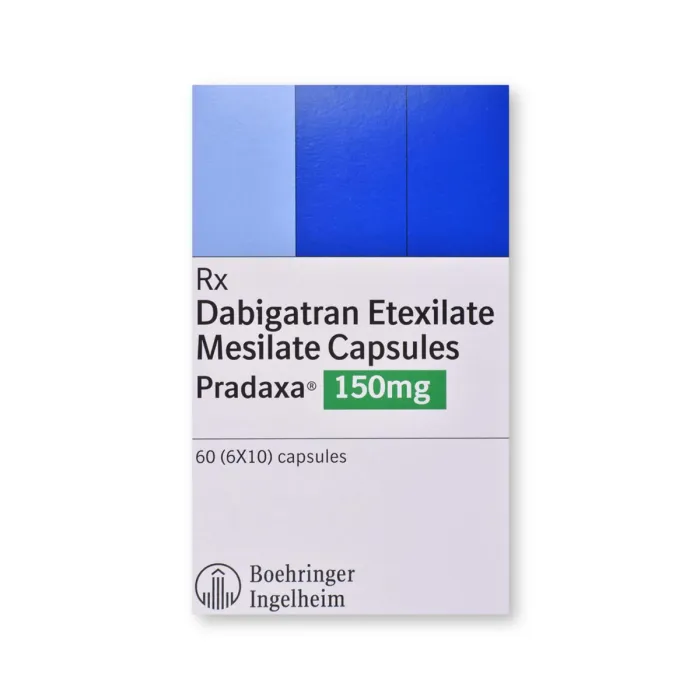
Pradaxa 150 Mg Capsule
As low as
$168.28
In stock
Only %1 left
SKU
CMS4441
Pradaxa 150 mg is a potent oral anticoagulant medication prescribed for stroke prevention in patients with Non-valvular Atrial Fibrillation (NVAF). It also treats and prevents Deep Vein Thrombosis (DVT) and Pulmonary Embolism (PE).
Its active ingredient, Dabigatran Etexilate (150mg), is classified as a direct thrombin inhibitor that effectively prevents the formation of harmful blood clots. Boehringer Ingelheim, a global leader in cardiovascular medications, manufactures Pradaxa 150.
While generally safe, this higher-strength formulation may cause bleeding-related side effects, including gastrointestinal bleeding, unusual bruising, or blood in the urine. These should be reported to a doctor.
The capsules must be kept in original packaging to protect them from moisture and stored at room temperature.
Patients should never abruptly discontinue Pradaxa without medical consultation, as this significantly increases stroke risk. Regular assessment of kidney function is mandatory as the medication is primarily eliminated through renal pathways.
Pradaxa 150 mg delivers potent anticoagulation by directly inhibiting thrombin (Factor IIa), a critical enzyme in the blood coagulation cascade. Unlike vitamin K antagonists, Dabigatran binds directly to thrombin's active site, preventing the conversion of fibrinogen to fibrin and subsequent clot formation.
This higher dosage provides stronger anticoagulation for patients requiring enhanced protection.
Key therapeutic benefits of Pradaxa include:
It is crucial to note that while the 150 mg dosage offers enhanced efficacy, it must be appropriately prescribed based on the patient's age, weight, kidney function, and bleeding risk profile.
Pradaxa is a prescription-only medication that should be taken strictly according to your doctor's instructions. Here are the general guidelines:
The strength and substitutes available for Pradaxa are:
| $44.10 / 10 capsule | |
| $44.10 / 10 capsule |
Pradaxa is generally well-tolerated but may cause side effects, including:
These adverse effects should be carefully monitored, with any signs of excessive bleeding requiring immediate medical attention due to the higher dosage strength.
 Liver disease
Patients with liver disease should use Pradaxa with caution. While no dosage adjustment is typically required for mild to moderate hepatic impairment, the medication has not been adequately studied in severe liver disease. Baseline and periodic liver function tests are recommended during treatment, particularly in patients with pre-existing liver conditions.
 Kidney impairment
Kidney function significantly impacts Pradaxa clearance and bleeding risk. The 150 mg dose is appropriate for patients with normal or mildly impaired renal function. Patients with moderate kidney impairment (CrCl 30-50 mL/min) may require a dose reduction to 75 mg. Pradaxa 150 is contraindicated in severe renal impairment (CrCl <30 mL/min).
 Pregnant and breastfeeding women
Pradaxa should be avoided during pregnancy, particularly in the second and third trimesters, when it may increase the risk of maternal and fetal bleeding. It carries an FDA pregnancy category D classification for these trimesters. Breastfeeding is not recommended during Pradaxa treatment as the drug may be excreted in breast milk and potentially affect the nursing infant.
 Avoid
Avoid
Concurrent use with P-glycoprotein inducers like Rifampin significantly reduces Dabigatran efficacy and should be avoided. Concomitant therapy with other anticoagulants, antiplatelets, or NSAIDs substantially increases bleeding risk. St. John's wort may decrease Dabigatran levels and reduce effectiveness. Grapefruit products may increase drug levels and bleeding risk.
For atrial fibrillation patients, Pradaxa therapy is typically long-term or lifelong unless contraindications develop. For DVT/PE treatment, the standard duration is 3-6 months, though some patients may require extended therapy based on individual risk factors and recurrence potential.
Yes, the 150 mg strength is FDA-approved for treating Deep Vein Thrombosis (DVT) and Pulmonary Embolism (PE). It's typically used after 5-10 days of initial therapy with a parenteral anticoagulant for acute DVT/PE, providing adequate ongoing protection against recurrent events.
The 150 mg formulation provides more potent anticoagulation for patients with normal kidney function and standard bleeding risk. It's the preferred dose for most indications, including stroke prevention in atrial fibrillation and DVT/PE treatment, whereas 75 mg is typically reserved for patients with moderate renal impairment.
Minor bleeding, like occasional nosebleeds or small bruises, may not require intervention. However, seek immediate medical attention for severe or unusual bleeding, such as blood in urine/stool, vomiting blood, severe headache, or large bruises, as an emergency reversal of anticoagulation may be necessary.
Yes, Praxbind (Idarucizumab) is a specific reversal agent for Pradaxa that can rapidly neutralize its anticoagulant effect in emergencies like uncontrolled bleeding or urgent surgery. This gives Pradaxa an advantage over other direct oral anticoagulants lacking specific antidotes.