
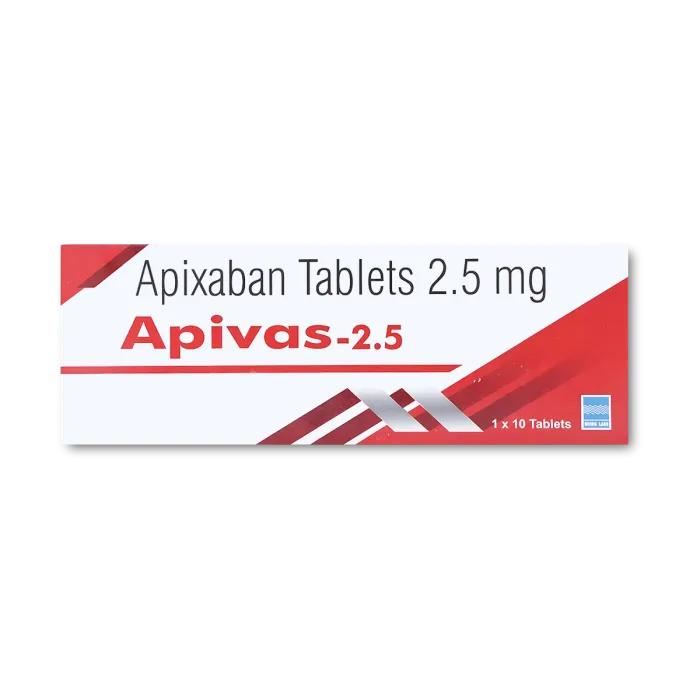
Apivas 2.5 Tablet
Starting at just
$24.75
In stock
Only %1 left
SKU
CMS8565
Apivas 2.5 is primarily prescribed to prevent the formation of harmful blood clots. It contains an FDA-approved anticoagulant agent, Apixaban (2.5 mg). Micro Labs Ltd manufactures this medication, which belongs to the drug class known as direct Factor Xa inhibitors.
Apixaban specifically blocks Factor Xa, an essential enzyme involved in blood clotting. It stops Fibrinogen from turning into Fibrin, which helps reduce the risk of clots forming. Apivas is commonly prescribed to prevent strokes and blood clots in people with Atrial Fibrillation (an irregular heartbeat) and to prevent or treat Deep Vein Thrombosis (DVT) and Pulmonary Embolism (PE) after hip or knee replacement surgery.
Common side effects of Apivas include unusual bleeding, headache, and dizziness. The risk of unusual bleeding increases if taken alongside other anticoagulant medications like Warfarin, Heparin, and Enoxaparin. Alcohol consumption can also lead to unusual bleeding, which patients should avoid. Other significant interactions include kidney and liver disease.
The medicine must be taken exactly as prescribed by the doctor. The doctor will determine the correct dosage and length of treatment. To prevent serious side effects, patients should avoid missing doses or taking an extra dose to compensate for a missed one.
Apivas 2.5 offers key benefits to individuals prone to blood clots. Its active ingredient, Apixaban, an anticoagulant, is highly effective in preventing blood clots. Apivas's advantages include:
Apivas is a prescription-based medication that patients should take according to their doctor's recommendations. Here are some general guidelines.
No strengths of Apivas 2.5 are available at Cheap Medicine Shop. However, substitutes with the same salt are available.
| Apigat 5 Tablet | $9.60/10 tablets |
| Apigat 2.5 Tablet | $8.10/10 tablets |
Like any other medication, Apivas 2.5 mg Injection can also cause side effects. These are mild and will subside in time. However, if they persist, consult a doctor immediately.
 Liver disease
Apixaban, the main component of Apivas 2.5 mg, is not recommended for individuals with moderate to severe liver problems, as they may have underlying blood clotting issues and a higher risk of bleeding. In mild cases, patients should use it with caution under medical supervision.
 Kidney impairment
The medication is typically safe for patients with Kidney impairment. Depending on the severity of the condition, a dose adjustment might be necessary. Consult a doctor before taking it.
Pregnancy and Breastfeeding
The medication is not recommended for pregnant women or nursing mothers due to its adverse effects on the mother and the child. Consult a doctor for the best course of treatment.
 Avoid
Avoid
Avoid taking the medication if you are allergic to Apixaban. Alcohol intake can raise the risk of bleeding, so patients are advised to avoid it.
Apivas 2.5 mg should be used carefully in elderly patients (over 75 years), as they may be more prone to side effects and have a higher risk of bleeding. The doctor might adjust the dosage or provide closer monitoring.
Apivas 2.5 mg (Apixaban) doesn't directly affect blood pressure or heart rate, so routine monitoring isn't required for the drug itself. However, since it's used for conditions like Atrial Fibrillation, regular checks may be needed to manage overall heart health.
While using Apivas 2.5, it is essential to watch for signs of bleeding, which can vary in severity. Common signs include easy bruising, nosebleeds, bleeding gums while brushing, cuts that take longer to stop bleeding, and heavier or longer menstrual periods in women.
Yes, you can switch to an alternative if Apivas 2.5 Tablet is unavailable, but it's essential to consult your doctor before making any changes. Other brands with the same active ingredient, Apixaban, and strength include Eliquis, Apiquis, Apigat, and Elixaban. Your doctor will decide which is best for your condition and whether any adjustments are needed.
Overdosing on Apivas 2.5 mg can cause serious and potentially life-threatening bleeding. Symptoms of overdose include unusual or severe bleeding or bruising, red, brown, or pink urine, red or black tarry stools, and coughing up or vomiting blood or material that looks like coffee grounds.