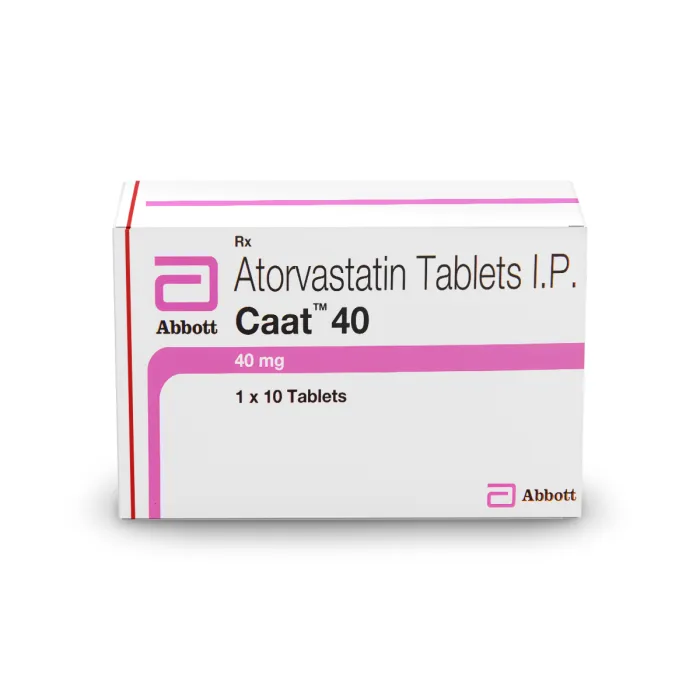
What is CAAT 40 mg tablet
CAAT 40 mg tablet is used to manage high cholesterol levels (Hyperlipidemia) in the blood and reduce the risk of cardiovascular conditions. It contains Atorvastatin, which belongs to the medication class of statins.
Statins are known for lowering Low-Density Lipoproteins (LDL), or bad cholesterol while increasing High-Density Lipoproteins (HDL), or good cholesterol levels. This helps to manage Dyslipidaemia (the deposition of unhealthy fat/lipid blood levels). In this condition, LDL and triglyceride (TG) levels are always high, and HDL levels are low.
Atorvastatin blocks the HMG-CoA reductase enzyme, which makes cholesterol in the liver. When this enzyme is blocked, the ingredient helps to lower cholesterol production, leading to a decrease in overall cholesterol levels.
This action causes the liver to absorb more LDL, reducing its levels in the blood and improving heart function. It also lowers triglycerides and Very-Low-Density Lipoprotein (VLDL) while increasing HDL.
It also provides additional benefits, such as decreasing inflammation, improving blood vessel function and oxidative stress, and preventing blood clot formation. These effects reduce the risk of heart attacks and strokes.
The medication is usually taken once daily at a fixed time for best results. Always follow the doctor’s prescribed dosage and do not miss a dose.
If you missed the CAAT dosage, take it as soon as possible. You can skip it if it is close to the next scheduled dose and follow your routine. In overdose cases, seek immediate medical attention, as potential side effects such as liver complications and muscle pain can occur.
Nicholas Piramal India Ltd manufactures CAAT-40 mg.
What are the benefits of CAAT 40 mg
Atorvastatin in CAAT-40 manages high cholesterol levels by decreasing bad cholesterol (LDL) and increasing good cholesterol (HDL) in your blood. This helps in:
- High cholesterol treatment: Cholesterol levels significantly drop within 4 weeks of using the medication if taken as advised.
- LDL cholesterol reduction: It reduces bad cholesterol (LDL) levels in the blood in a linear dose-related manner.
- HDL cholesterol increase: It increases good cholesterol (HDL) levels.
- Heart disease prevention: It improves cholesterol levels, preventing the risk of heart conditions like stroke and heart attack.
How to take CAAT 40 tablet
Here’s how to use a CAAT tablet safely and effectively:
- Take the CAAT-40 mg at a fixed time daily for optimum results.
- Swallow the CAAT 40 tablet with water; do not break, crush, chew, or split it.
- Take 1 tablet with or without food. If taking a CAAT tablet without food upsets the stomach, taking it with food is advised.
- Do not take more than the recommended dosage.
CAAT tablet is a prescribed medicine. Hence, take it as directed by a healthcare professional.
Strengths and Substitutes
CAAT tablet is also available in another potent strength of 80 mg. At Cheap Medicine Shop, you can find several of its substitutes.
View All Substitutes
What are the side effects of CAAT 40 mg tablet
CAAT 40 mg is generally well-tolerated among individuals. However, in some cases, it can cause some side effects. These are mild and go away without needing any medical intervention.
The common side effects include:
- Sneezing
- Constipation
- Headache
- Diarrhea
- Sore throat
Consult a doctor immediately if these CAAT side effects cause discomfort or worsen.
Safety Advice
 Liver disease
Inform your doctor if you have a history of liver conditions. Dose adjustments may be needed in liver patients; hence, consult your doctor.
 Kidney impairment
Exercise caution while using the CAAT-40 mg tablet if you have a history of kidney conditions. Dose adjustments may be required, so consult a doctor.
 Pregnant and breastfeeding women
Caution is advised if you are pregnant, planning to conceive, or breastfeeding. Hence, inform your doctor before taking CAAT-40 mg.
 Avoid
Avoid
Alcohol is not advised to be consumed while taking this CAAT medication, as it can lead to an increase in the potential side effects.
FAQs
What should I know about high cholesterol?
Cholesterol is a fat in the blood. High cholesterol occurs when excess LDL cholesterol builds up, increasing the risk of heart disease and stroke. HDL cholesterol helps remove LDL, keeping blood vessels clear and reducing cardiovascular complications. Poor diet, obesity or genetics can cause high cholesterol.
Can CAAT 40 tablet cause muscle problems or muscle injury?
Yes, CAAT-40 mg intake can cause muscle problems or injury. Reduced oxygen supply to the muscle cells causes fatigue and muscle pain that affects daily activities. Do not ignore these symptoms; consult your doctor for advice.
Can CAAT 40 tablet be prescribed to children?
Yes, CAAT tablets are prescribed to children aged 10 or above. They are prescribed for children whose cholesterol levels do not reduce with low-fat diet and exercise. Do not use in patients younger than 10.
Is CAAT medicine a blood thinner?
No, CAAT tablets are not blood thinners. They reduce cholesterol production in the body to prevent arteries from building up. This helps in proper blood circulation and prevents cardiovascular conditions.
Will taking a CAAT-40 tablet increase my risk of Diabetes?
Yes, CAAT-40 may slightly raise blood sugar. Hence, it may increase the risk of type-2 Diabetes in those already at high risk. People with high blood sugar or other risk factors should use it cautiously. Regularly monitor your blood sugar levels and consult your doctor for better guidance.