
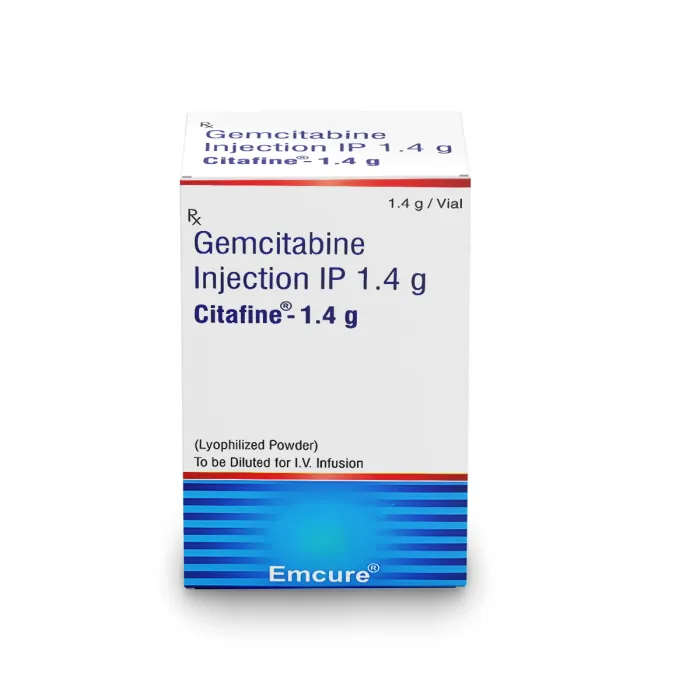
Citafine 1400 Mg Injection
Starting at just
$292.97
In stock
Only %1 left
SKU
CMS5373
Citafine 1400 mg is a chemotherapeutic agent used to treat various types of cancer in adult patients. Its primary ingredient is Gemcitabine, which is a nucleoside analog antimetabolite. Gemcitabine works by interfering with cancer cell DNA replication and repair, ultimately leading to cancer cell death.
It is primarily indicated for pancreatic cancer, non-small cell lung cancer, bladder cancer, and breast cancer, either as monotherapy or in combination with other anticancer agents. Emcure Pharmaceuticals Ltd is the leading manufacturer of Citafine 1400 mg.
This medication requires careful administration by healthcare professionals in clinical settings with appropriate monitoring for potential adverse effects, including myelosuppression, pulmonary toxicity, and renal impairment.
Citafine 1400 mg delivers Gemcitabine, which acts by incorporating itself into DNA during cellular replication. Once inside the DNA, it prevents further DNA synthesis and triggers apoptosis (programmed cell death) in rapidly dividing cancer cells. This mechanism makes it particularly effective at disrupting the abnormal growth cycles of cancer cells while allowing normal cells some recovery time between treatments.
Citafine is used for treating multiple types of cancer:
It is crucial to note that Citafine must be administered under direct medical supervision with regular monitoring of blood counts and organ function.
Citafine is a prescription medication that should be administered only by qualified healthcare professionals. Here are the general guidelines:
Cheap Medicine Shop provides other strengths for Citafine:
| $114.98/injection | |
| $28.13/injection |
Citafine can cause significant side effects that require monitoring. Common side effects include:
These adverse effects usually resolve quickly. However, if they persist, they may require medical supervision and necessitate dose adjustments or supportive care measures.
 Liver disease
Patients with liver impairment should be treated with caution. Regular monitoring of liver function tests is essential before and during treatment. Treatment should be discontinued if liver toxicity progresses.
 Kidney impairment
Regular assessment of renal function is recommended throughout the treatment course. Consult a doctor for safety.
 Pregnant and breastfeeding women
Citafine 1400 is contraindicated during pregnancy as it can cause fetal harm. Women of childbearing potential should use effective contraception during and for 6 months after treatment. Breastfeeding should be discontinued during Citafine treatment and for at least one week following the final dose due to potentially serious adverse reactions in nursing infants.
 Avoid
Avoid
Alcohol should be avoided during treatment as it may exacerbate liver toxicity. Live vaccines should not be administered during treatment due to immunosuppressive effects. Individuals should also avoid grapefruit and grapefruit juice, which may interfere with drug metabolism. Supplements containing St. John's Wort may reduce drug effectiveness and should be discontinued.
Citafine 1400 is primarily used to treat several cancer types, like pancreatic cancer, non-small cell lung cancer, bladder cancer, and metastatic breast cancer. It disrupts cancer cell DNA synthesis, preventing tumor growth and spread.
No, Citafine 1400 is specifically approved for certain cancer types, including pancreatic, non-small cell lung, bladder, and breast cancers. Its efficacy varies by cancer type, and oncologists determine its appropriateness based on cancer pathology and patient factors.
Administration typically follows a weekly schedule for 2-3 consecutive weeks, followed by a rest period, completing a treatment cycle. The exact schedule varies by cancer type and individual treatment protocols established by the oncologist.
Yes, hypersensitivity reactions can occur, ranging from mild rash to severe anaphylaxis. Patients should be monitored during infusion, especially during the first administration. Emergency equipment should be readily available during treatment administration.
Contact your oncologist immediately to reschedule. Never double dose to make up for a missed treatment. Your doctor will adjust your treatment schedule based on your specific protocol and current blood count values.