
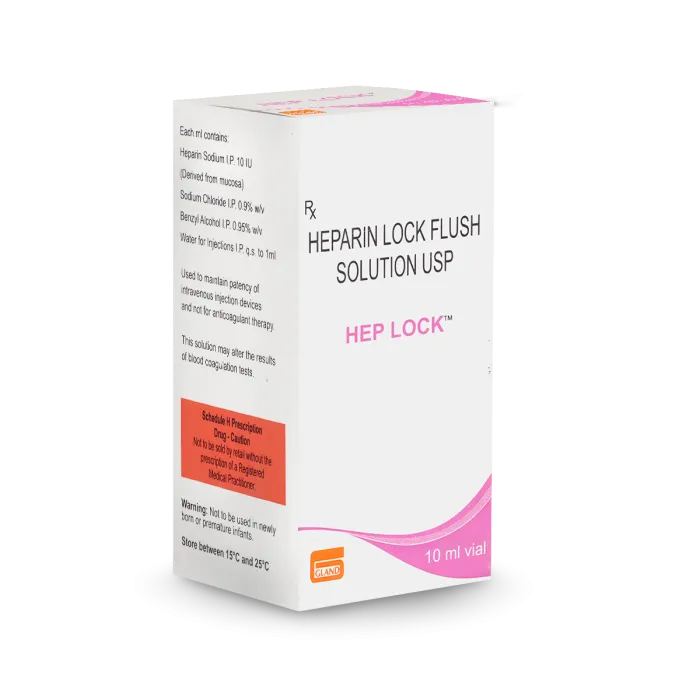
Hep Lock Solution 10 ml
Starting at just
$9.38
In stock
Only %1 left
SKU
CMS8541
Hep Lock Solution is an anticoagulant that prevents the formation of abnormal blood clots and stops the existing ones from growing bigger. It contains an FDA-approved active ingredient, Heparin, which is in the blood-thinning (anticoagulant) drug class. Glant Pharma Limited manufactures the product.
Heparin binds to antithrombin III and helps it work faster to block clotting factors like thrombin and factor Xa. It helps prevent blood clotting in the body, particularly in the legs, lungs, and heart.
Some common side effects include mild pain, swelling, and allergic reactions. There is also a change in bleeding, which increases if it is taken with other blood thinner medications. Alcohol can also cause adverse effects, which patients should avoid. Other significant interactions include liver and kidney disease.
Inform your doctor about any bleeding disorders or ongoing anticoagulant therapy, and consistently report unusual bleeding or signs of allergy immediately. Regular review and monitoring ensure safe use in clinical settings.
Hep Lock Solution provides the following benefits as an anticoagulant:
This medication is prescription-based; patients should take it only under medical supervision. Here are some general guidelines for this medication:
The strengths and substitutes of Hep Lock Solution available at Cheap Medicine Shop are:
| Hep Lock Solution 10 ml | $1.69/Injection |
| Hep Lock Solution 2 ml | $1.21/Injection |
The side effects of Hep Lock Solution are:
These side effects are usually mild and will disappear as the body adjusts to the solution. However, if they continue or worsen, consult a doctor immediately.
 Liver disease
Hep Lock Solution should be used with caution in patients with liver disease, as liver impairment can increase the risk of bleeding due to reduced clotting factor production. Close monitoring is essential while taking the medication.
 Kidney impairment
It is generally safe for patients with kidney impairment to use the medication, with no possible dose adjustments required. However, as a precautionary measure, consult a doctor before its use.
 Pregnancy and breastfeeding
Hep Lock Solution is generally safe during pregnancy and breastfeeding, with no possible risk to the fetus or the infant. However, as a precautionary measure, consult a doctor before using it.
 Avoid
Avoid
Avoid taking the medication if you are allergic to Heparin. Alcohol can also have some adverse effects, including the risk of bleeding, which patients should avoid.
Yes, Heparin is considered a high-risk medication primarily because it has a narrow therapeutic window and a significant potential to cause serious adverse effects, especially bleeding complications. Improper dosing or errors in administration can lead to life-threatening hemorrhage, Heparin-induced Thrombocytopenia (HIT), or other severe events.
Hep Lock Solution does not negatively affect fertility. Instead, it is sometimes used therapeutically in women experiencing infertility, recurrent implantation failure (RIF), or recurrent pregnancy loss, especially when related to thrombosis or certain immune factors.
Careful management of the concentration of the heparin lock Solution is crucial because it directly affects its efficacy and safety. 1000 units/ml is considered the standard concentration for catheters. Using higher concentrations, however, significantly increases the risk of systemic anticoagulation, which can lead to severe bleeding complications due to the lock solution leaking into circulation.
Yes, Hep Lock Solution can interfere with various laboratory blood tests, especially coagulation tests like aPTT and INR, by falsely prolonging clotting times.
Yes, Heparin, the active ingredient in Hep Lock Solution, can cause an increase in potassium levels (Hyperkalemia) in some patients. This effect is rare but has been reported, especially with prolonged use or higher doses of Heparin.