
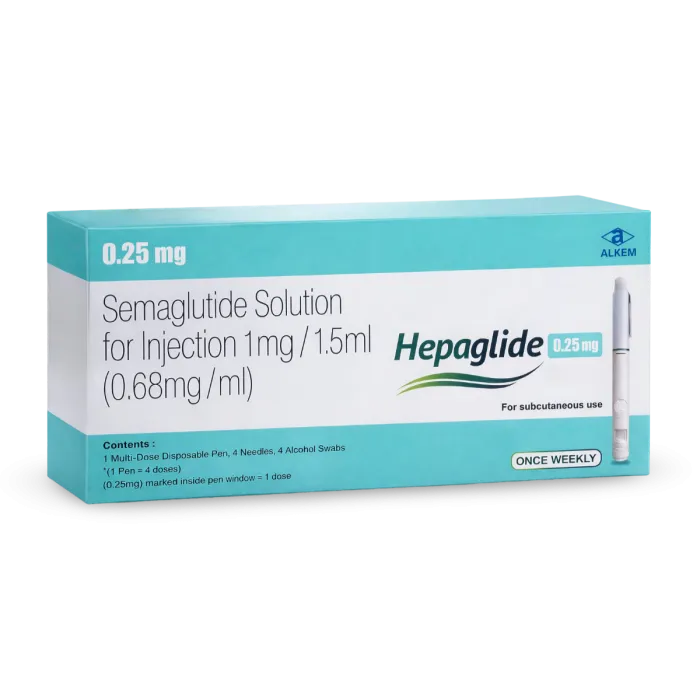
Hepaglide 0.25mg Injection
Dosage
Starting at just
$63.53
In stock
Only %1 left
SKU
CMS9002
Hepaglide 0.25 mg Injection is used for weight management in individuals with Obesity and related conditions, including heart disease. Its active ingredient, Semaglutide base (0.25 mg), is an FDA-approved glucagon-like peptide-1 (GLP-1) receptor agonist. Manufactured by Alkem Laboratories Ltd under strict GMP guidelines, it helps control hunger, slow digestion, and manage blood sugar levels. It is the starter dose, intended to gradually introduce the medication and minimize potential side effects as the body adjusts.
Semaglutide mimics a natural hormone that supports regulating appetite, digestion, and blood sugar control. It is mainly used for long-term weight management in patients (ages 12 and older) with Obesity or overweight and associated health conditions. It also helps treat Nonalcoholic Steatohepatitis (NASH) with moderate to advanced liver scarring.
Hepaglide 0.25 mg is injected subcutaneously once a week, incorporated with a healthy diet and exercise. The initial dose is low and is gradually increased up to 0.25 mg depending on tolerance. The medication is administered using a multi-dose pen, which comes with needles and swabs.
If you overdose, seek immediate medical attention. If you miss a dose, take it within 5 days and continue with your weekly schedule. If more than 5 days have passed, skip the dose and take the next one on time.
Common side effects of this solution are nausea, vomiting, diarrhea, stomach pain, constipation, and headaches, which usually improve with time. Seek medical attention if you experience severe abdominal pain or allergic reactions.
Avoid alcohol, as it can cause fluctuations in blood sugar and worsen side effects. Stay hydrated and inform the doctor of any other medications or conditions, such as thyroid problems, to avoid potential interactions.
Store Hepaglide in the refrigerator at 2-8°C, and avoid freezing. After the first use, it can be stored at a temperature below 30°C for up to 56 days, away from light.
With Semaglutide as the active ingredient, Hepaglide 0.25 mg Injection provides several key benefits, particularly in weight management and metabolic health. These benefits include:
Hepaglide 0.25 mg Injection is a prescription medication and must be used exactly as prescribed by your doctor. Follow these general instructions for proper use:
Right now, only 1 strength of Hepaglide is available at Cheap Medicine Shop. However, you can find effective substitutes with the same active ingredient to suit your medical requirements. Always consult a doctor before opting for them.
| Wegovy 1 mg | $207.58/Injection |
| Wegovy 2.4 mg | $405.83/Injection |
This once-weekly subcutaneous injection is typically well-tolerated when taken as prescribed. However, mild, temporary side effects can still occur at the initial stage of the treatment as your body adjusts to the medicine. If they continue or worsen, consult a doctor immediately.
Common Hepaglide 0.25 mg injection side effects are:
 Liver Disease
There is limited information regarding the use of Hepaglide 0.25 mg in patients with liver disease. It’s important to inform your doctor about any liver conditions, as the medication may lead to elevated liver enzymes or other complications.
 Kidney Impairment
Caution is advised when using Hepaglide in patients with kidney issues, as it may worsen kidney function or worsen dehydration-related problems, such as vomiting. Close monitoring is essential for those with kidney impairment.
 Pregnant and Breastfeeding women
Hepaglide is not safe to use during pregnancy due to the chance of congenital disabilities or pregnancy loss. It should be stopped at least 2 months before planning to get pregnant. It is also not recommended for use during breastfeeding, as it could harm the infant.
 Avoid
Avoid
Do not use Hepaglide if you are allergic to Semaglutide. Avoid alcohol while using Hepaglide, as it can intensify nausea, vomiting, dehydration, and the risk of low blood sugar, especially when combined with Insulin or Sulfonylureas. Also, refrain from driving or operating machinery if you experience symptoms like weakness, shakiness, confusion, or lightheadedness.
Yes, Hepaglide 0.25 mg Injection can be used for weight loss without obesity. It is prescribed for individuals with a BMI (Body Mass Index) of 27 or higher, provided they have weight-related conditions such as Type 2 Diabetes, High Blood Pressure, and Sleep Apnea. Consult your doctor to confirm suitability.
Yes, Hepaglide 0.25 mg Injection can be used in adolescents aged 12 years and older. It is approved for use in those who meet specific criteria for obesity. However, it is not recommended for children under 12 years as its safety and efficacy have not been fully established for this age group.
No, you should avoid taking Hepaglide 0.25 mg Injection if you have a history of Pancreatitis. Hepaglide contains Semaglutide, which may increase the risk of pancreatitis or worsen existing conditions. Consult a healthcare professional for alternative treatments.
Yes, Hepaglide (Semaglutide) can be used to treat Non-alcoholic Fatty Liver Disease (NAFLD), particularly Noncirrhotic Nonalcoholic Steatohepatitis (NASH) with moderate to advanced liver scarring. It mimics GLP-1, a natural hormone that helps regulate hunger, digestion, and blood sugar levels, improving metabolic health and reducing liver fat.
No, it is not recommended to take Hepaglide 0.25 mg Injection with high-fat foods. The active ingredient, Semaglutide, slows gastric emptying, and high-fat foods already take longer to digest. This combination can prolong the time food stays in your stomach, leading to nausea, bloating, and discomfort.
No, do not use Hepaglide 0.25 mg Injection if the solution looks cloudy, discolored, or contains visible particles. The solution should be clear and free from any abnormalities before injection. If you notice anything unusual, discard the cartridge and use a new one after consulting your doctor or pharmacist.
Yes, monitoring is needed during treatment with Hepaglide 0.25 mg Injection. Your doctor may check your body weight, blood sugar levels (if you have Diabetes), and liver and kidney function during therapy. Regular follow-up visits help track progress, manage side effects, and adjust treatment as necessary.