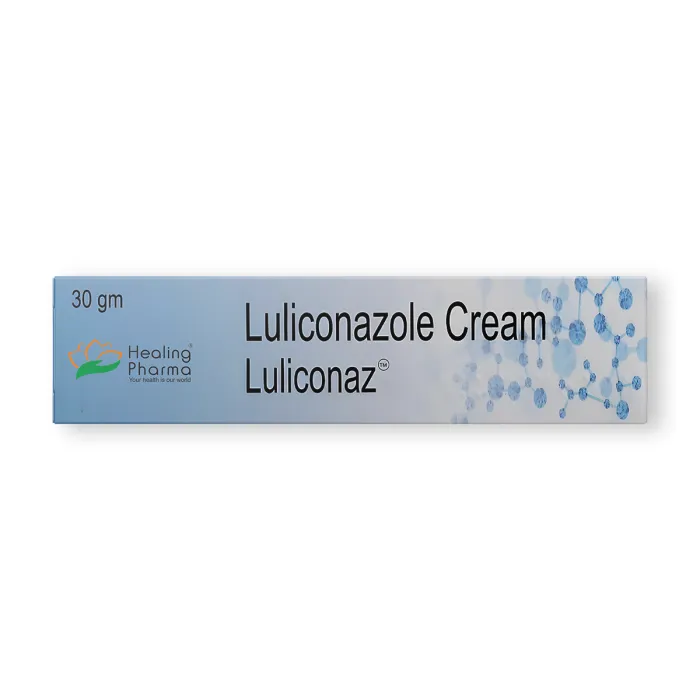
What is Luliconaz 30 gm cream
Luliconaz 30 gm cream is an antifungal topical medication for various fungal skin infections. Its primary ingredient is Luliconazole (1% w/w), which is an imidazole antifungal agent. Healing Pharma India Pvt Ltd manufactures Luliconaz 30 gm cream.
Luliconazole works by inhibiting the synthesis of Ergosterol, an essential component of fungal cell membranes. This causes increased cell permeability and leads to fungal cell death. It is effective against dermatophytes, yeasts, and certain molds that cause common skin conditions like athlete's foot, jock itch, and ringworm.
Luliconazole side effects are generally mild and may include local irritation, redness, or burning sensation at the application site. Discontinue use if severe irritation occurs. Store at room temperature, away from direct sunlight and moisture.
Keep the tube tightly closed when not in use. It is crucial to note that it is for external use only. Do not use if pregnant or breastfeeding unless prescribed.
What are the benefits of Luliconaz 30 gm cream
Luliconaz cream contains Luliconazole, an azole antifungal that inhibits the enzyme lanosterol 14α-demethylase. This disrupts Ergosterol biosynthesis, which is essential for fungal cell membrane integrity. It leads to increased membrane permeability and, ultimately, fungal cell lysis.
The benefits of Luliconaz 30 gm cream include:
- Broad-spectrum activity against dermatophytes, yeasts, and molds.
- Rapid onset of action, with symptomatic relief often beginning within days.
- High clinical cure rates for Tinea Pedis (athlete's foot) and Tinea Corporis (ringworm).
- Once-daily application regimen enhancing treatment compliance.
- Low incidence of side effects compared to other antifungal agents.
It is crucial to note that a complete treatment course must be followed, even if symptoms improve quickly, to prevent the recurrence of infection.
How to take Luliconaz 30 gm cream
Luliconaz 30 gm cream is a prescription medication that should be taken per your doctor's instructions. Here are the general guidelines:
- Apply a thin layer of Luliconaz cream to the affected area and surroundings once daily.
- Wash and dry the affected area before each application.
- Continue treatment for the full prescribed period (typically 1-2 weeks for most infections)
- Do not cover the treated area with airtight bandages or wrappings unless specifically directed by your doctor.
Strength and substitutes
The substitutes available for Luliconaz cream at Cheap Medicine Shop are:
What are the side effects of Luliconaz 30 gm cream
Luliconaz 30 gm cream is generally well-tolerated. However, it may cause side effects, including:
- Local irritation or burning sensation
- Redness or swelling at the application site
- Dryness or peeling of skin
- Itching or stinging
- Contact dermatitis (allergic skin reaction) in rare cases
These adverse effects generally do not require medical consultation and disappear as treatment progresses. However, if symptoms worsen or persist, consult your healthcare provider.
Safety Advice
 Liver disease
Luliconaz cream is for topical use with minimal systemic absorption. No dosage adjustment is necessary for patients with liver disease. The medication can be used safely as directed by patients with any degree of hepatic impairment. Consult a doctor before use.
 Kidney impairment
Due to minimal systemic absorption, Luliconaz cream can be used by patients with kidney impairment without special precautions. No dose adjustment is required, even in patients with severe renal dysfunction. Ask a doctor before use.
 Pregnant and breastfeeding women
Luliconaz should be used during pregnancy only if prescribed and needed, though topical use poses minimal risk due to limited absorption. Breastfeeding women can use the cream but should avoid application near the breast area and ensure the medication is wiped off before nursing.
 Avoid
Avoid
Avoid applying near the eyes, mouth, or mucous membranes. Do not use occlusive dressings over the treated areas unless directed by your doctor. If using other topical medications, consult your healthcare provider about the proper timing and sequencing of applications.
FAQs
Are there any known drug interactions with Luliconaz 30 Gm cream?
When applied topically, Luliconaz cream has minimal systemic absorption, resulting in a very low risk of drug interactions. However, always inform your doctor about all your medications, including other topical treatments applied to the same area.
What is the recommended way to apply Luliconaz 30 Gm cream?
Apply a thin layer to clean dry affected areas once daily. Gently massage until absorbed. Wash hands before and after application, unless hands are being treated. Continue using as prescribed, even after symptoms improve.
How long does it take for Luliconaz cream to start working?
Most patients notice improvement in symptoms like itching and redness within 1-3 days of starting treatment. Complete resolution typically requires the full treatment course (usually 1-2 weeks). Continue using as prescribed even after symptoms disappear.
Can Luliconaz cream be used for nail fungus?
Luliconaz cream is primarily designed for skin fungal infections and may be limited in its effectiveness for nail fungus. Nail fungal infections (Onychomycosis) typically require oral antifungal medication or specialized nail formulations for effective treatment. However, a doctor may prescribe the cream.
Is it normal to experience burning when applying Luliconaz cream?
Yes, mild, temporary burning or stinging upon application may occur and usually subsides quickly. If burning is severe or persistent, or if you develop increasing redness, swelling, or other signs of irritation, discontinue use and consult a healthcare provider.