
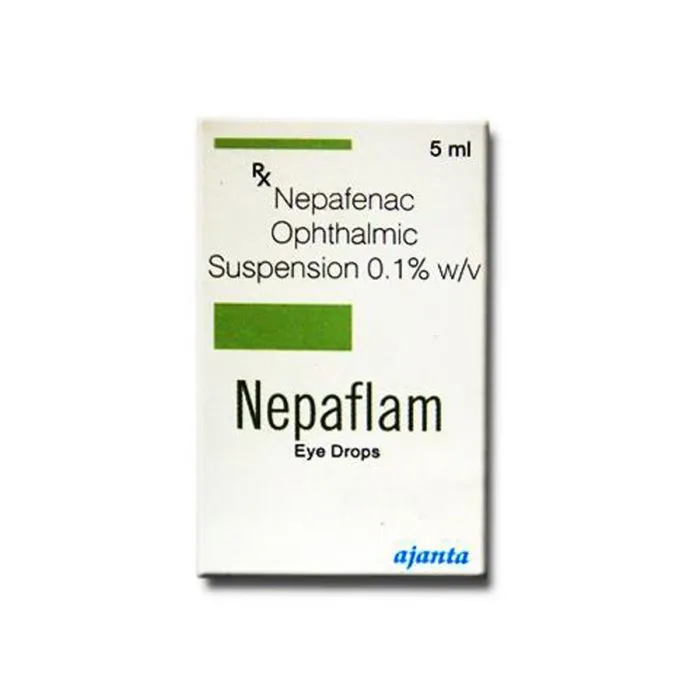
Nepaflam 5 ml
Starting at just
$18.30
In stock
Only %1 left
SKU
CMS2029
Nepaflam 5 ml is an ocular pain-relief medicine that helps relieve eye pain, redness, and inflammation after cataract or other eye surgeries, and lowers the risk of postoperative Macular Edema. The active salt is Nepafenac 0.1% w/v, which belongs to the ophthalmic Non-steroidal Anti-inflammatory Drug (NSAID) group. Nepaflam is manufactured and marketed by Ajanta Pharma Ltd.
Nepafenac works as a pro-drug. After you instill it into the eye, it penetrates the cornea and is converted into amfenac. This active form blocks cyclo-oxygenase (COX-1 and COX-2) enzymes and reduces prostaglandin production, thereby decreasing pain, swelling, and redness in eye tissues. Doctors mainly prescribe Nepaflam to control inflammation and pain after cataract or other intraocular surgeries and to minimize the risk of postoperative Macular Edema, particularly in high-risk patients, including those with Diabetes.
You should use Nepaflam Eye Drops exactly as advised by your ophthalmologist. A typical adult dose is 1 drop in the affected eye 3 times daily. Wash your hands, gently shake the bottle, instill one drop, and keep the eye closed for a minute. If you miss a dose, apply it as soon as you remember, unless it is almost time for the next dose. Do not double the dose. In case of accidental overdose, rinse the eye with water and contact the doctor immediately if irritation continues.
Some people may experience mild burning, stinging, blurred vision, redness, or eye discomfort. Seek medical help immediately if you experience severe eye pain, sudden vision changes, intense redness, swelling, or signs of an allergic reaction. Use Nepaflam with caution if you have dry eye, corneal problems, Diabetes, or if you are using steroid eye drops. Avoid it if you are allergic to nepafenac or other NSAIDs.
Store the bottle below 25°C, away from light and moisture, and keep it tightly closed. Nepafenac is FDA-approved for ophthalmic use, and Nepaflam is produced in GMP-compliant, WHO-certified manufacturing facilities.
This NSAID eye drop is effective for patients with post-cataract-surgery inflammation and pain. Some of the benefits of Nepaflam 5 ml are:
Nepaflam 5 ml is a prescription eye drop that should be used only under medical guidance. However, you can follow these general guidelines for its proper use:
The strengths and substitutes of Nepaflam 5 ml available at Cheap Medicine Shop are:
| Nepaflam OD 3 ml | $10.18/eye drop |
Like any other eye drop medication, Nepaflam 5 ml can also cause side effects. They are usually mild and will go away as you adjust to the medication. However, if they continue or worsen, consult a doctor immediately. Some common side effects are:
 Liver Disease
People with liver conditions can generally use Nepaflam safely because only a minimal amount of the medicine enters the bloodstream. Still, you should tell your doctor if you have any liver problems. In cases of severe liver disease or if the drops are used for an extended period, your doctor may recommend monitoring as a precaution.
 Kidney Impairment
Nepaflam is usually safe for patients with kidney problems since it is applied to the eye and has minimal systemic absorption. However, always inform your ophthalmologist about any kidney condition, particularly if longer-than-usual treatment is planned.
 Pregnant and Breastfeeding women
Pregnant or breastfeeding women should use Nepaflam only when clearly necessary and under medical advice. Although systemic absorption is very low, it is essential to consult an ophthalmologist before starting treatment.
 Avoid
Avoid
Avoid touching the dropper tip to prevent contamination and infection. Do not use Nepaflam if you are allergic to Nepafenac, Aspirin, or other NSAIDs. Avoid wearing contact lenses during eye inflammation and for at least 10 minutes after application, and do not use the drops longer than prescribed.
No, you should not use Nepaflam without a prescription. It is a prescription eye drop that must be used only under an ophthalmologist's guidance to ensure correct dosing, duration, and safe use after eye surgery or inflammation.
No, you should avoid driving immediately after using Nepaflam. The drops may cause temporary blurred vision or eye discomfort, so wait until your vision becomes completely clear before driving or operating machinery.
No, Nepaflam does not treat dry eyes. It is designed to reduce eye pain and inflammation after eye surgery, not to lubricate the eyes. For dry eye symptoms, your doctor may recommend artificial tears or other specific treatments.
No, people who are allergic to aspirin or other NSAIDs should not use Nepaflam. Nepafenac belongs to the NSAID group, and using it may trigger an allergic reaction. Always inform your ophthalmologist about any known medication allergies before starting treatment.
Yes, Nepaflam may delay wound healing, especially with prolonged use or when used together with steroid eye drops. This is why it should be used only for the prescribed duration and under close ophthalmic supervision.
No, Nepaflam does not directly cause eye infections. However, improper use, contamination of the dropper tip, or prolonged use can increase the risk of infection, so it is important to follow hygiene instructions and use the drops only as prescribed.
No, you should not wear contact lenses while using Nepaflam. The drops can irritate the eyes, and lenses may increase the risk of contamination or reduce the medicine's effectiveness. Remove lenses before application and wait at least 10 minutes before reinserting them, or follow your ophthalmologist's instructions.