
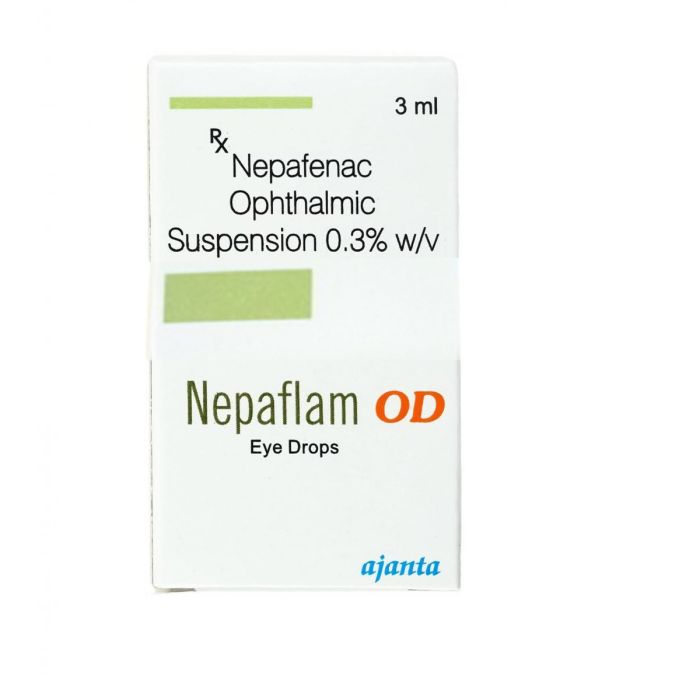
Nepaflam OD 3 ml
Starting at just
$20.40
In stock
Only %1 left
SKU
CMS2028
Nepaflam OD 3 ml is an ophthalmic Nonsteroidal Anti-inflammatory Drug (NSAID) eye drops solution. It is designed specifically for postoperative eye inflammation management and ocular pain relief following cataract surgery and other eye procedures. Ajanta Pharma, India, manufactures Nepaflam OD 3 ml in GMP-compliant facilities with strict sterility standards.
The active ingredient in this medicine is Nepafenac (0.3% w/v), an FDA-approved nonsteroidal anti-inflammatory medication that provides enhanced prostaglandin inhibition in ocular tissues through once-daily dosing. This NSAID eye drops formulation works by inhibiting Cyclooxygenase (COX) enzymes, particularly COX-1 and COX-2, which are responsible for prostaglandin synthesis.
Prostaglandins are key inflammatory mediators that cause eye swelling, pain, and discomfort following surgical procedures. By blocking their production, Nepafenac effectively reduces inflammation, controls eye swelling, and provides significant ocular pain relief. It also relieves redness, itching, and watery eyes after surgery.
Nepafenac is a prodrug that penetrates the cornea and is converted to its active form, Amfenac, within ocular tissues, providing superior therapeutic efficacy. The typical Nepaflam OD dosage is one drop in the affected eye once daily, for the prescribed postoperative period. Common side effects include temporary eye discomfort, foreign body sensation, increased tearing, and mild blurred vision.
Before using Nepaflam OD, inform your doctor about any bleeding disorders, Aspirin sensitivity, or other eye conditions. Patients with known hypersensitivity to NSAIDs should use this medication with caution. Contact lens wearers should remove their lenses before using Nepaflam and wait at least 10 minutes before reinserting them.
Store Nepaflam eye drops at room temperature (below 25°C). Protect the bottle from light, and keep it tightly closed. Once opened, use within 4 weeks and keep out of reach of children.
Nepaflam offers important therapeutic benefits for patients undergoing eye surgery and requiring surgical eye care:
Nepaflam OD 3 ml is a prescription eye drop medication that should be used as directed by a healthcare professional. Here are general guidelines:
Nepaflam is available in the following formulation at Cheap Medicine Shop for convenient ophthalmic NSAID therapy:
| Nepaflam 5 ml | $6.12/bottle |
Like any medication, Nepaflam OD may cause some side effects. Most of these are mild and temporary, resolving as the eye heals and adjusts to the medicine. However, consult a healthcare professional if they persist or worsen:
 Liver Disease
Patients with liver disease can generally use Nepaflam OD safely, as topical ophthalmic NSAID therapy results in minimal systemic absorption. However, inform your healthcare provider about any liver conditions before use. While systemic effects are rare with eye drops, patients with severe impairment should be monitored during prolonged use to ensure optimal safety.
 Kidney Impairment
Nepaflam OD 3 ml can be used in patients with kidney impairment without specific dosage adjustments, as the medication is applied topically with minimal systemic absorption. However, inform the ophthalmologist about any kidney problems before use, especially if using the medication for extended periods beyond the typical postoperative treatment duration.
 Pregnant and Breastfeeding women
Pregnant and breastfeeding women should use Nepaflam OD 3 ml only under strict medical supervision and when clearly necessary. While systemic absorption from eye drops is minimal, discussing with an ophthalmologist is vital.
 Avoid
Avoid
Avoid touching the dropper tip to any surface to prevent contamination and potential eye infections. Patients with known hypersensitivity to Nepafenac, Aspirin, or other NSAIDs should not use this medication due to the risk of severe allergic reactions. Do not wear contact lenses during active eye inflammation or for at least 10 minutes after applying drops. Avoid using Nepaflam OD for prolonged periods beyond the prescribed duration, as extended NSAID use may delay corneal healing.
Nepaflam OD contains a higher concentration of Nepafenac (0.3% w/v) compared to standard formulations (0.1% w/v). This higher strength is usually used once daily instead of three times. It provides equivalent or superior anti-inflammatory efficacy with improved patient compliance and convenience.
No, Nepaflam OD 3 ml is specifically designed for postoperative eye inflammation and ocular pain management following cataract surgery, not for allergic conditions. Eye allergies require antihistamine or mast cell stabilizer eye drops. Consult your ophthalmologist for proper allergy treatment.
The typical duration for using Nepaflam OD 3 ml after cataract surgery is 2 weeks. However, your ophthalmologist may adjust this duration based on your individual healing response and inflammation levels. Some patients may require extended treatment to achieve optimal postoperative outcomes and control eye swelling.
If you miss a dose of Nepaflam OD 3 ml, apply it as soon as you remember. However, if it is almost time for your next scheduled Nepafenac dose, skip the missed dose and continue with your regular once-daily schedule. Do not apply extra drops to compensate.
Yes, Nepaflam OD 3 ml is often prescribed alongside steroid eye drops after cataract surgery to manage postoperative eye inflammation. The combination provides complementary anti-inflammatory effects. Wait at least 5-15 minutes between applying different eye medications to ensure proper absorption of each medication during surgical eye care.
No, Nepaflam OD 3 ml should not be refrigerated. They should be stored at room temperature, ideally below 25°C. Protect the bottle from light by storing it in the original carton. Once opened, use within 4 weeks, discard any remaining solution, and never freeze the medication.
No, Nepaflam OD may cause temporary blurred vision immediately after application. Avoid driving until your vision clears, which usually takes a few minutes. If blurred vision persists or worsens, contact your ophthalmologist. Consider applying the drops at times when you won't need to drive immediately afterward.
Yes, Nepaflam OD 3 ml can be used in children aged 10 and above undergoing cataract surgery under medical supervision. However, the safety and efficacy in children under 10 have not been extensively studied. So, they should avoid it or consult an ophthalmologist for advice.