
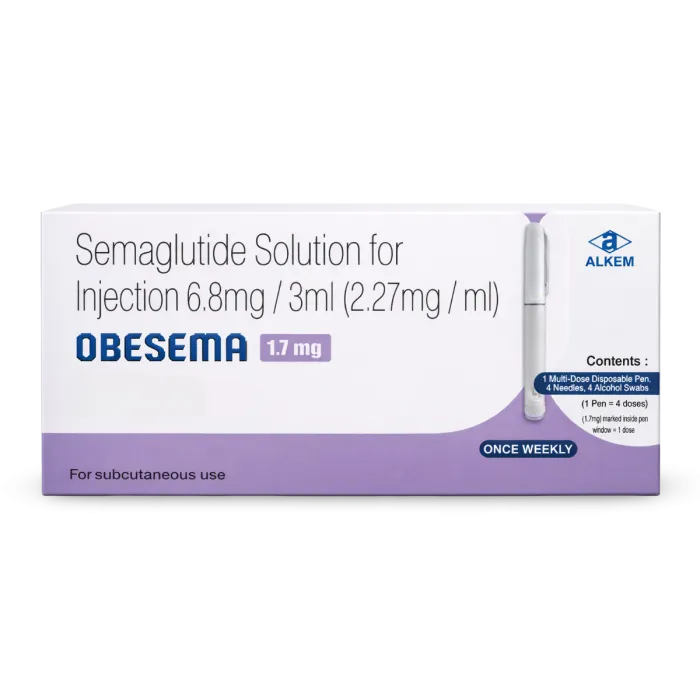
Obesema 1.7mg Injection
Dosage
Starting at just
$88.24
In stock
Only %1 left
SKU
CMS9009
Obesema 1.7 mg Injection is a chronic weight management medicine used to treat Obesity in adults. It contains FDA-approved Semaglutide base, a Glucagon-Like Peptide-1 (GLP-1) receptor agonist. It is available as a Semaglutide 1.7 mg pre-filled pen for convenient use.
Alkem Laboratories Ltd. manufactures Obesema 1.7 mg Injection in a Good Manufacturing Practice (GMP)-compliant unit. Its manufacturing meets World Health Organization (WHO) quality standards.
This Semaglutide injection mimics the GLP-1 hormone, which regulates appetite and blood sugar levels. As an effective appetite control medicine, it slows stomach emptying and reduces overall food intake, supporting steady weight loss.
Obesema 1.7 mg Injection is used to manage chronic Obesity in adults alongside a reduced-calorie diet and regular physical activity. Doctors may also recommend it for individuals with weight-related health matters such as Type 2 Diabetes or High Blood Pressure.
The standard Obesema 1.7 mg Injection dosage is once weekly, injected under the skin of the abdomen, thigh, or upper arm. If a dose is missed, take it as soon as possible within five days. If more than five days have passed, skip the missed injection and resume the regular schedule.
In case of a Semaglutide overdose, contact a doctor or poison control center immediately. Common Obesema 1.7 mg Injection side effects include nausea, vomiting, diarrhea, and stomach discomfort. Get immediate medical attention if severe reactions occur.
Do not inject into skin that is damaged, bruised, or tender. People with a history of Pancreatitis, thyroid tumors, or kidney problems should consult a doctor before use. This weight loss injection may interact with Insulin or other Diabetes medicines, affecting blood sugar levels. Always inform the doctor about all current medications.
Store the pre-filled Semaglutide pen in a refrigerator between 2°C and 8°C, hidden from direct light and heat; do not freeze the injection.
Obesema 1.7 mg Injection offers several benefits for individuals managing chronic Obesity and excess weight. Its active ingredient, Semaglutide, mimics the GLP-1 hormone to regulate appetite and support sustainable weight loss:
Obesema 1.7 mg Injection is a prescription weight loss medication that must be administered strictly by a qualified healthcare professional. Do not attempt to self-administer this injection.
Here are general guidelines for taking this medication:
Currently, Obesema injections are available only in a strength of 1.7 mg of Semaglutide. However, Cheap Medicine Shop offers alternative strengths or formulations of this weight-loss injection. Always ask your doctor before switching products.
| Wegovy 0.5 mg | $270.58/injection |
| Wegovy 1 mg | $270.58/injection |
| Wegovy 1.7 mg | $378.77/injection |
| Wegovy 2.4 mg | $405.83/injection |
Like any medication, Obesema injection may cause some side effects. Most are mild and temporary and subside as the body adjusts. Consult a doctor if they persist or worsen:
 Liver Disease
Obesema is generally safe for individuals with mild liver impairment. However, those with severe liver disease should consult a doctor before use, as Semaglutide's safety in this condition has not been fully established.
 Kidney Impairment
Obesema injection is generally safe for individuals with mild to moderate kidney impairment. Those with severe kidney disease should use it cautiously and only under medical supervision, as dehydration from side effects like vomiting or diarrhea may worsen kidney function.
 Pregnant and Breastfeeding women
Obesema 1.7 mg is unsafe during pregnancy and breastfeeding. Semaglutide may harm the unborn baby or pass into breast milk. A doctor must be consulted before use.
 Avoid
Avoid
Individuals with a known allergy to Semaglutide should avoid this injection. Alcohol consumption should be limited, as it may affect blood sugar levels. This weight loss injection may interact with Insulin, Sulfonylureas, and other Diabetes medicines, increasing the risk of Low Blood Sugar. Always inform the doctor about all current medications before starting treatment.
The recommended dose of Obesema 1.7 mg Injection is once weekly, injected under the skin of the abdomen, thigh, or upper arm. Always follow the dose schedule prescribed by a doctor, as the starting dose may be lower and gradually increased depending on individual response and tolerance.
The most common side effects of Obesema 1.7 mg Injection include nausea, vomiting, diarrhea, constipation, and stomach discomfort. These side effects are usually mild and improve as the body adjusts to the medication. However, a doctor should be consulted if any side effects persist or become bothersome.
Yes, Obesema 1.7 mg Injection is intended for long-term chronic weight management when used under medical supervision. Regular check-ins with a doctor are important to monitor progress, manage any side effects, and adjust the dosage as needed throughout the course of treatment.
Obesema 1.7 mg Injection should not be used by those who are pregnant, breastfeeding, or allergic to Semaglutide. Those with a personal or family history of thyroid tumors, Pancreatitis, or severe kidney or liver disease should also avoid this medication without consulting a doctor first.
Yes, Semaglutide, the active ingredient in Obesema 1.7 mg Injection, belongs to a medication class also used in the management of Type 2 Diabetes. However, Obesema is specifically indicated for chronic weight management. A doctor should be consulted to determine whether it is appropriate to manage Diabetes alongside weight concerns.
Most individuals begin to notice gradual weight loss within the first few weeks of use. However, significant results typically appear after 12 weeks or more, especially when the injection is taken with a reduced-calorie diet plan and regular exercise as directed by a doctor.
Yes, Obesema 1.7 mg Injection is designed as a pre-filled pen for self-administration at home. A doctor should demonstrate the correct injection technique before starting. The injection is given under the skin of the abdomen, thigh, or upper arm once every week.