
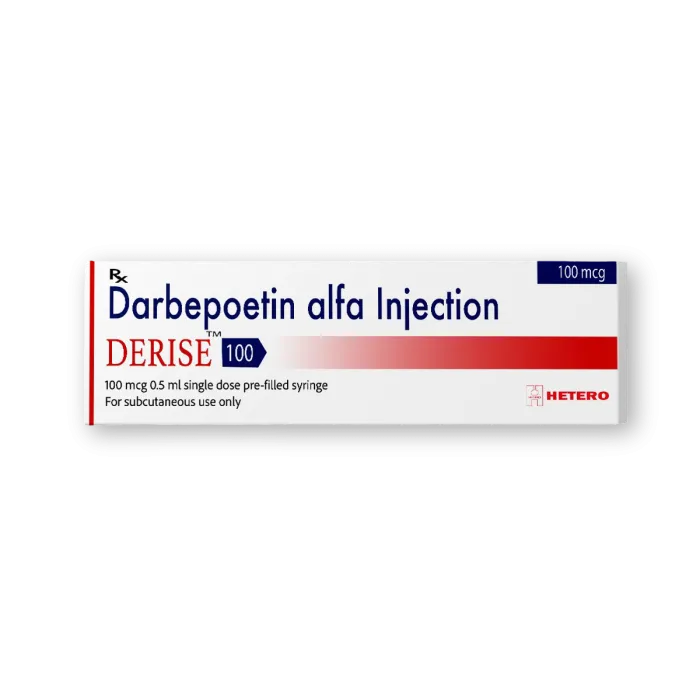
Derise 100 Pre-filled Syringe
As low as
$195.00
In stock
Only %1 left
SKU
CMS4392
Derise 100 is a prescription injection used for treatment of anemia due to Chronic Kidney Disease (CKD) or Cancer. Its primary ingredient is Darbepoetin Alfa, an Erythropoiesis-stimulating Agent (ESA). Hetero Drugs Ltd manufactures Derise 100.
This medicine stimulates red blood cell production in the bone marrow by mimicking the Erythropoietin hormone. It helps increase hemoglobin levels and reduce the need for blood transfusions. The pre-filled syringe format ensures accurate dosing and convenient administration.
Common Derise injection side effects include headache, high blood pressure, nausea, fatigue, and injection site reactions. Severe side effects may include blood clots, stroke, or heart attack. Store the injection in the refrigerator between 2-8°C and protect from light. Do not shake the syringe before use.
Individuals with liver or kidney conditions should practice caution. Pregnant or breastfeeding women must ask a doctor before using Derise injection, as it may be harmful.
Derise 100 works by binding to Erythropoietin receptors on red blood cell precursors in bone marrow. This stimulates the production of erythrocytes (red blood cells), increasing oxygen-carrying capacity throughout the body. The medication has a longer half-life than natural Erythropoietin, allowing less frequent dosing.
Key benefits include:
It is crucial to note that hemoglobin levels must be monitored regularly to avoid exceeding target ranges.
Derise 100 is a prescription medication that should be administered as per your doctor's instructions. Here are the general guidelines:
The strengths and substitutes available at Cheap Medicine Shop are:
| $44.87/injection | |
| $35.48/injection |
Derise is generally well-tolerated when used appropriately. However, it may cause side effects, including:
Most of these adverse effects typically do not require medical consultation and disappear as your body adjusts. Always seek medical guidance for severe effects.
 Liver disease
Patients with liver disease should use Derise with caution as hepatic impairment may affect drug metabolism. Regular monitoring of liver function tests is needed. Dose adjustments may be needed based on individual patient response and laboratory values.
 Kidney impairment
Derise is primarily used in patients with CKD. However, those with severe kidney impairment require careful dose titration and frequent hemoglobin monitoring. Regular assessment of kidney function and electrolyte levels is essential during treatment.
 Pregnant and breastfeeding women
Derise should be used during pregnancy only if the benefits justify the risks to the baby. It is unknown whether Darbepoetin Alfa passes into breast milk. Consult a healthcare professional before using the injection during pregnancy or breastfeeding.
 Avoid
Avoid
Avoid alcohol consumption, as it may worsen anemia symptoms. Do not take any iron supplements unless prescribed by your doctor. If experiencing dizziness, avoid activities requiring alertness. Do not use live vaccines without medical consultation.
Initial response typically occurs within 2-6 weeks of starting treatment. Hemoglobin levels gradually increase over several weeks. Your doctor will monitor blood tests regularly to assess effectiveness and adjust dosage accordingly.
Yes, after proper training from healthcare professionals, you can self-administer subcutaneous injections. Always follow sterile injection techniques and rotate injection sites. Never reuse syringes or share them with others for safety reasons.
Take the missed dose of Derise injection as soon as you remember, unless it's almost time for your next scheduled dose. Do not double doses to make up for missed ones. Contact your healthcare provider for guidance on maintaining your dosing schedule.
Derise injection can be used long-term under medical supervision with regular monitoring. Your doctor will assess hemoglobin levels, blood pressure, and overall health status. Long-term safety depends on proper dosing and monitoring protocols.
Yes, but maintain cold chain storage using insulated containers with ice packs during travel. Carry prescription documentation and allow extra time for airport security screening. Never leave medication in hot cars or direct sunlight.