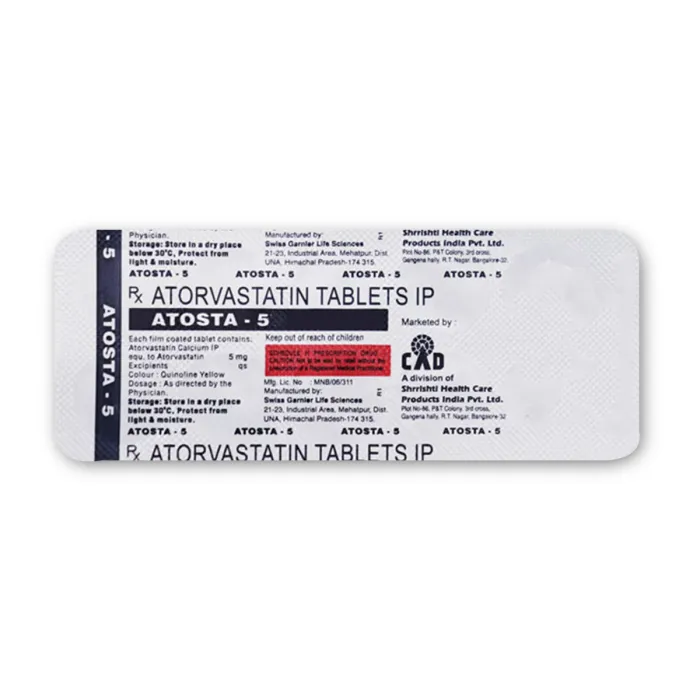
What is Atosta 5 mg tablet
Atosta 5 mg tablet is a lipid management medication that effectively manages cholesterol and triglyceride levels. It effectively lowers cholesterol levels and reduces the risk of heart conditions such as heart attacks and strokes.
It contains Atorvastatin, which belongs to the statin medication class or 3-hydroxy-3-methylglutaryl-coenzyme A (HMG-CoA) reductase inhibitors. Atorvastatin acts as a selective and competitive inhibitor of the HMG-CoA reductase enzyme. This gets converted to Mevalonate, a key step in cholesterol biosynthesis.
This inhibition decreases cholesterol synthesis in the liver and significantly increases the LDL receptors on the surface of hepatic (liver) cells (hepatocytes). These LDL receptors increase the liver's ability to remove LDL from the bloodstream.
Atorvastatin also reduces triglyceride and very low-density lipoprotein cholesterol (VLDL-C) levels in the blood. If these lipids are high, they can increase the risk of cardiovascular conditions. Additionally, Atorvastatin slightly increases high-density lipoprotein cholesterol (HDL-C) or good cholesterol levels.
Take the Atorlip tablets in the dose and duration your doctor recommends. The Atosta 5 mg dosages depend on the patient's medical condition, response to treatment, age, and concurrent medications. Avoid missing a dose; if it is done, take it as soon as you can recall. Avoid if it’s close to the next dosage, and follow your routine. In cases of overdose, immediate medical attention is required.
What are the benefits of taking Atosta 5 mg tablet
Atorvastatin in the Atosta tablet inhibits the HMG-CoA reductase enzyme to reduce cholesterol synthesis and lower the body's bad cholesterol or LDL levels.
The Atosta 5 benefits are as follows:
- High Cholesterol treatment: It reduces High Cholesterol levels.
- Cardiovascular risk reduction: The medication helps to lower the triglyceride and VLDC levels. This prevents the risk of cardiovascular conditions, especially in individuals with Type 2 diabetes and Hypertension.
How to take Atosta 5 mg tablet
Atosta 5 dosages are a prescription-based medication that should be taken when administered by your doctor. Follow the general instructions to take this medication:
- Take the Atorvastatin tablets at a fixed time. Sometimes, a doctor will prescribe them in the evening, as your body makes most cholesterol.
- Swallow the tablet with water. Do not crush, chew, split, or break it.
- You can take these pills with or without food. However, if they cause stomach discomfort, it is recommended that you take them after food.
- Take 1 dose of Atosta 5 mg in 24 hours.
Strengths and Substitutes
Atosta is not available in any other strengths. However, Cheap Medicine Shop offers several substitutes at affordable prices.
View All Substitutes
What are the side effects of Atosta 5
Atosta 5 is generally well-tolerated among individuals. While effective, it can cause some side effects. These are usually mild and often disappear when your body adjusts to the dosage.
The common side effects include:
- Headache
- Muscle pain
- Diarrhea
- Cold-like symptoms such as runny nose
- Nausea
Consult a healthcare professional if these continue to cause you discomfort or worsen.
Safety Advice
 Liver disease
Taking Atorvastatin 5 mg is not advised in patients with liver conditions. Consult a doctor as dose adjustments may be needed.
 Kidney impairment
Take Atosta with caution in patients with kidney conditions. Atorvastatin may lead to complications; hence, a doctor's consultation is needed.
 Pregnant and breastfeeding women
Do not use Atosta 5 mg if you are pregnant, planning to conceive, or nursing. In pregnant women, Atorvastatin can potentially harm the fetus. Whereas, in nursing women, it can pass to the baby, posing health risks. Hence, consult a doctor.
 Avoid
Avoid
Do not consume alcohol while taking Atosta tablets, as it may affect liver function. Consult a doctor for personalized guidance.
FAQs
What food/drinks should I avoid when taking Atosta 5 mg tablets?
When taking Atosta tablets, avoid consuming grapefruit or grapefruit juice. Taking it can increase blood levels of the medication and may lead to complications like liver damage and muscle problems. Consult your doctor for personalized advice.
Can Atosta 5 tablet cause muscle problems or muscle injury?
Yes, taking Atosta tablets can cause muscle problems. This happens due to a reduced oxygen supply to these muscle cells, which leads to fatigue or muscle weakness. These effects may significantly interfere with your daily activities. If this happens in your case, consult your doctor for better guidance.
Can the Atosta tablet interact with other medicines?
Yes, Atosta tablets can interact with certain antibiotics, antifungals, HIV protease inhibitors, and other lipid-lowering therapies. Hence, inform your doctor about all your medications and supplements for safe use.
Will taking Atosta 5 tablet lead to an increase in my risk of Diabetes?
Yes, taking Atosta may slightly increase the risk of developing Type 2 diabetes if already at risk. Tell your doctor about the condition, as this medication can raise your blood sugar. They may advise monitoring your blood sugar levels more closely for the first few months.
What should I know about High Cholesterol?
Cholesterol is a type of fat present in your blood. Total cholesterol comprises LDL and HDL, which can accumulate in arteries and increase heart disease and stroke risk. HDL helps remove LDL from the bloodstream. Elevated triglycerides, another blood fat, are also harmful to you.