
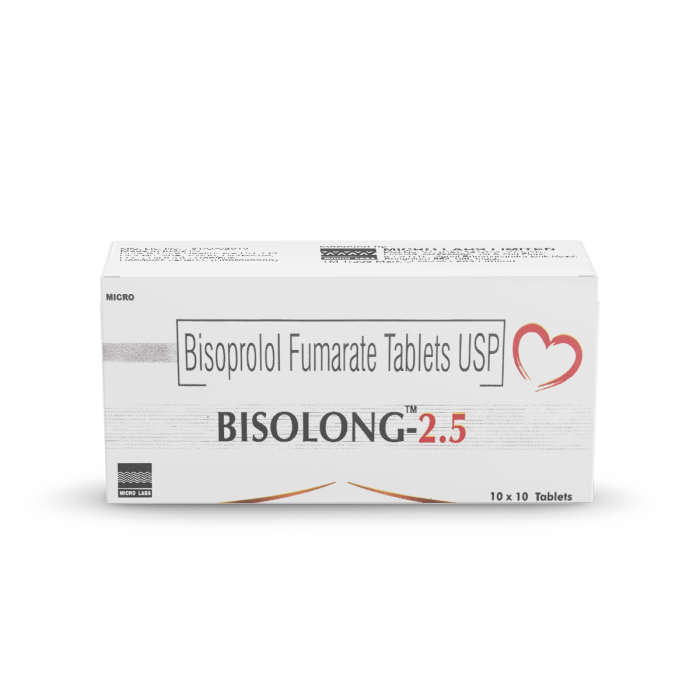
Bisolong 2.5 Mg Tablet
Starting at just
$36.68
In stock
Only %1 left
SKU
CMS6936
Bisolong 2.5 is a prescription medicine used in the treatment of Hypertension (High Blood Pressure), Angina (chest pain), and heart failure. It contains Bisoprolol, which is a beta-blocker medication.
Bisolong blocks certain stress hormones (like adrenaline) that increase heart rate and blood pressure. This helps lower blood pressure, reduce the heart’s workload, and improve oxygen supply to the heart.
Bisoprolol in Bisolong selectively targets beta-1 receptors in the heart, slowing the heart rate and decreasing the force of heart contractions. This leads to improved heart efficiency, reduced oxygen demand, and High Blood Pressure management. As a result, Bisolong lowers the risk of heart attacks, strokes, and complications related to heart failure.
Do not stop taking Bisolong suddenly, as it may lead to rebound Hypertension or heart complications. Caution is advised for individuals with Diabetes, as Bisolong can mask signs of low blood sugar. Patients with Asthma or lung disorders should consult their doctor, as beta-blockers can cause breathing difficulties.
Regular heart rate and blood pressure monitoring are necessary to ensure effectiveness and avoid complications. Bisolong 2.5 is a well-tolerated medication when taken under a doctor’s supervision. However, always follow your prescribed dose and medical advice for safe and effective use.
It is manufactured by Micro Labs Limited in WHO-certified laboratories.
Bisolong offers multiple benefits for people suffering from hypertension, angina, and heart failure. By reducing stress on the heart, it enhances overall heart function.
Key benefits of Bisolong tablet include:
Bisolong is widely prescribed for its ability to enhance heart efficiency and prevent cardiovascular diseases, ensuring a healthier life.
Bisolong tablets must be taken as prescribed by your doctor. Some general guidelines for its use are:
There are no strengths available for Bisolong on Cheap Medicine Shop but you can browse through its various substitutes:
| $2.1 per 10 tablets | |
| $1 per 10 tabletS | |
| $2.8 per 10 tabletS |
Bisolong 2.5 is generally well-tolerated, but some individuals may experience mild to moderate side effects. Most side effects improve as the body adjusts to the medication. However, if any symptoms persist or worsen, consult your doctor.
Common side effects include:
 Liver disease
Bisolong should be used with caution in patients with liver disease. Dose adjustments may be required based on liver function tests.
 Kidney impairment
Patients with kidney disease should take Bisolong carefully after consulting their doctor. Regular kidney function monitoring is recommended.
 Pregnant and breastfeeding women
It is not recommended for use during pregnancy and breastfeeding unless prescribed by a doctor. Avoid while breastfeeding, as small amounts of Bisoprolol may pass into breast milk and affect the baby’s heart rate and breathing.
 Avoid
Avoid
Limit or stop alcohol consumption as it can worsen dizziness and low Blood Pressure.
No, Bisolong 2.5mg Tablet is not a diuretic. It belongs to the beta-blocker class of medications and works by slowing the heart rate and reducing blood pressure. However, it may be prescribed alongside a diuretic for better blood pressure control.
Bisolong 2.5mg Tablet is usually taken in the morning, with or without food, at the same time each day. Taking it in the morning helps prevent dizziness or fatigue that may interfere with your daily activities. Follow your doctor’s guidelines for the best results.
If you forget to take a dose of Bisolong, take it as soon as you remember. However, if it is time for your next dose, skip this missed one and continue your regular schedule. Do not take two doses to make up for the missed one, as it may cause low blood pressure or slow heart rate.
You may start feeling better within a few hours to a few days after starting Bisolong 2.5mg Tablet. However, it may take a few weeks to experience its full benefits. Keep taking the medication regularly, even if you feel well.
Along with medication, maintain a healthy lifestyle by eating a balanced diet, reducing salt intake, exercising regularly, and managing stress. Avoid smoking, excessive alcohol consumption, and caffeine, as they can affect blood pressure control. Regular health check-ups are also recommended.