
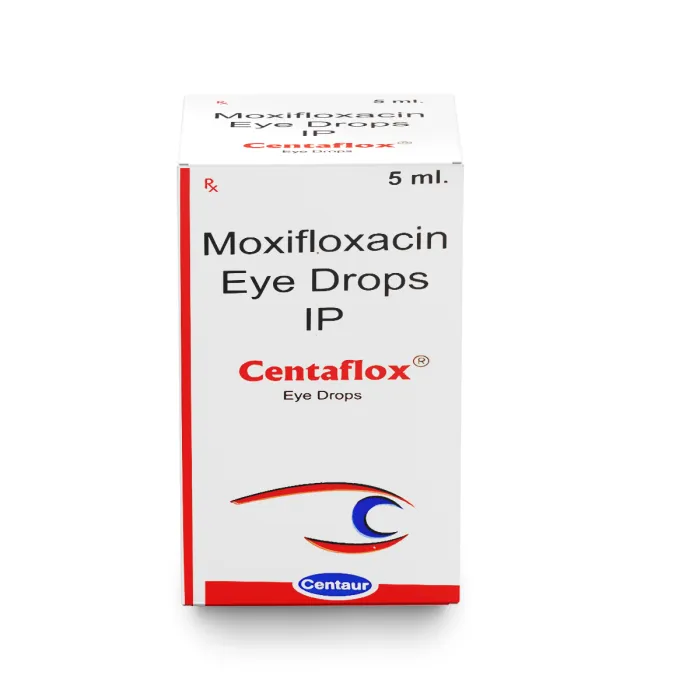
Centaflox eye drop 5 ml
Starting at just
$16.40
In stock
Only %1 left
SKU
CMS1896
Centaflox eye drops are an ophthalmic antibiotic for treating bacterial eye infections in adults and children. Their primary ingredient is Moxifloxacin, a member of the fluoroquinolone class of antibiotics.
It effectively treats Conjunctivitis (pink eye), Keratitis, and other bacterial infections of the external parts of the eye by targeting the bacteria that cause these conditions. These eye drops work by inhibiting bacterial DNA gyrase and topoisomerase IV, essential enzymes needed for bacterial DNA replication and repair, thereby preventing bacteria from growing and multiplying.
Centaur Pharmaceuticals is the leading manufacturer of Centaflox eye drops. This prescription medication should only be used under medical supervision, as improper use may lead to antibiotic resistance or treatment failure.
Side effects of Centaflox are generally mild and may include temporary eye irritation, burning sensation, or blurred vision, but serious allergic reactions are rare. Always complete the full course of treatment to ensure complete eradication of the infection.
Centaflox eye drops deliver potent antibacterial action directly to the site of infection through its active ingredient, Moxifloxacin. It works by inhibiting two essential bacterial enzymes, DNA gyrase and topoisomerase IV, crucial for bacterial DNA replication, transcription, repair, and recombination.
Centaflox effectively kills susceptible bacteria or stops their growth by disrupting these vital processes, allowing your eye to heal naturally.
Centaflox is effective against a wide range of eye infections:
It is particularly valuable for its broad-spectrum activity against gram-positive and gram-negative bacteria, making it a versatile treatment option for ocular bacterial infections.
Centaflox eye drops are a prescription medication that should be used as per your doctor's instructions. Here are the general guidelines:
Currently, there are no strength alternatives available for Centaflox. However, you can check the following substitutes:
| $4.56/ eye drop | |
| $4.81/ eye drop |
Centaflox is generally well-tolerated. However, it may cause side effects, including:
These adverse effects typically do not require medical consultation and disappear shortly after application. However, consult your doctor if they persist or worsen or if you experience severe eye pain, swelling, or discharge.
 Liver disease
Centaflox drops are administered topically with minimal systemic absorption, making it generally safe for patients with liver disease. However, inform your doctor about any liver conditions before starting treatment. No specific dose adjustments are typically required for patients with liver impairment.
 Kidney impairment
Due to minimal systemic absorption of topically applied Centaflox drops, no dose adjustments are typically necessary for patients with kidney disease. However, inform your doctor about kidney conditions before starting treatment, especially if you have severe kidney impairment.
 Pregnant and breastfeeding women
Centaflox drops may be unsafe in these phases and should be used during pregnancy only if needed and when potential benefits outweigh the risks. Consult your healthcare provider before using Centaflox.
 Avoid
Avoid
Using Centaflox with contact lenses is not recommended, as lenses can absorb the solution's preservatives, potentially causing irritation. If you must wear contact lenses and your doctor approves, remove them before application and wait at least 15 minutes before reinserting.
Yes, but inform your doctor about all medications you're taking. If using multiple eye medications, wait at least 5 minutes between applications. Certain oral medications like antacids containing magnesium or aluminum may interact with systemically absorbed Moxifloxacin, though this risk is minimal with eye drops.
Some individuals can experience a temporary burning sensation or irritation immediately after application. This is usually mild and resolves quickly. If you experience severe burning, pain, or persistent irritation, discontinue use and consult the healthcare provider immediately.
No, complete the full prescribed course even if symptoms improve. Stopping early may allow surviving bacteria to multiply, potentially causing a recurrence of infection with antibiotic-resistant bacteria. Always follow your doctor's instructions regarding the duration of treatment.
No, Centaflox eye drops are a prescription medication that should only be used under medical supervision. Self-diagnosis and treatment of eye conditions can be dangerous, potentially delaying proper treatment or masking severe underlying conditions requiring different interventions.
No, remove contact lenses before applying Centaflox eye drops. It is best to avoid it during treatment. However, if your doctor approves, remove the lenses before administration and wait at least 15 minutes before reinserting them.