
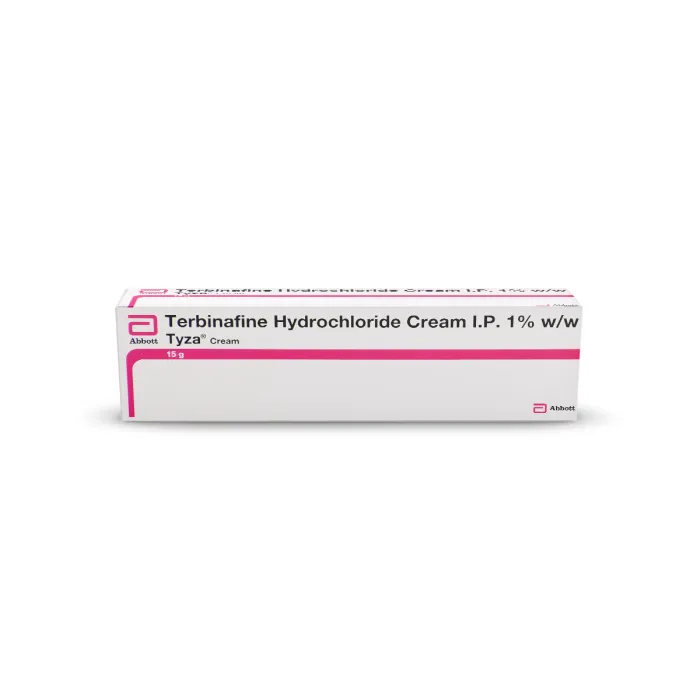
Tyza Cream
Starting at just
$20.58
In stock
Only %1 left
SKU
CMS5928
Tyza Cream is a topical antifungal medication manufactured by Abbott Healthcare Pvt. Ltd. It contains Terbinafine (1% w/w) as its active ingredient, which belongs to the allylamine class of antifungal agents. Tyza is used to treat fungal skin infections, including Athlete's foot, Ringworm, Jock itch, and diseases affecting areas like the scalp, nails, genitals, and buttocks.
Tyza (Terbinafine) works by inhibiting the enzyme Squalene Epoxidase, which is essential for fungal cell membrane synthesis. This disruption in cell wall formation leads to the death of the fungus, effectively treating the infection and preventing its spread. The cream relieves symptoms like itching, redness, and scaling caused by fungal infections.
For external use only, do not apply to wounded or irritated skin. Avoid contact with the eyes, mouth, and mucous membranes.
Since this cream is applied externally, interactions with systemic medications are rare. However, avoid combining it with other topical treatments without consulting a doctor, as this may cause irritation or reduce effectiveness.
Tyza Cream offers several benefits in treating fungal skin infections. It contains Terbinafine, a potent antifungal agent that disrupts the fungal cell membrane by inhibiting Ergosterol production, essential for fungal survival. This mechanism eliminates the fungus and prevents its spread, addressing the root cause of the infection.
The cream is highly effective in treating conditions like Athlete's foot, Ringworm, and Jock itch. It alleviates symptoms such as redness, itching, and scaling, providing relief and promoting faster healing. Its easy-to-apply consistency ensures proper absorption into the affected areas. Tyza is a reliable solution for managing fungal skin infections by offering targeted action with minimal side effects.
Following are the general guidelines for using this cream:
Consult a dermatologist for personalized advice, especially if you have pre-existing conditions or are taking other medications.
There are no other strengths of Tyza available at Cheap Medicine Shop; however, you can check out its substitutes:
| $2.47 / tube | |
| $4.35/ tube | |
| $1.11/ tube |
The following are the common side effects of Tyza:
These issues usually occur if you have applied the cream on broken skin or if the dosage is more than needed. In case of persistent symptoms, contact your doctor.
 Liver disease
Due to limited information on the use of Tyza in patients with severe liver disease, it should be used cautiously. Dose adjustments may be required, so it is always best to consult your doctor.
 Kidney impairment
Patients with underlying kidney impairment should consult their doctor, as limited information is available.
 Pregnant and breastfeeding women
Tyza is probably unsafe for both pregnant and breastfeeding women. They should consult their dermatologist for recommendations.
 Avoid
Avoid
Avoid applying Tyza on broken or irritated skin, which may cause adverse effects.
No, Tyza is not a steroid. It is an antifungal medication that contains Terbinafine (1% w/w), which belongs to the allylamine class of antifungal agents. It is effective against fungal infections on the skin.
Due to limited safety and efficacy data, Tyza is not recommended for use in children below 12. While it can be used in children above 12, it is advisable to consult a healthcare professional before applying it to younger children.
Tyza typically improves symptoms like itching and redness within a few days of consistent use. However, depending on the severity and location of the fungal infection, it may take 2-4 weeks for the infection to clear completely. For toenail infections, the treatment might take longer.
You can use Tyza for the duration prescribed by your doctor, which typically varies from 1 to 2 weeks, depending on the severity and the type of the infection. Sometimes, the treatment may be extended if the infection is unclear within this timeframe.
Yes, Tyza can be used on private parts, such as the genital area, to treat fungal infections like Jock itch. However, it is crucial to follow precautions and use them only as a healthcare professional directs. Women should avoid any contact with mucous membranes, such as the urethra or vaginal opening.